
The Bittersweet Windup
The “windup of summer” is a glorious way to describe this bittersweet time of year, at least for me. The bitter part comes as I mourn the loss of sunlight as we approach the Autumnal Equinox. But on the sweet side, I relish the last sunny days that are nice, but not too hot, so I feel energized again in the garden.
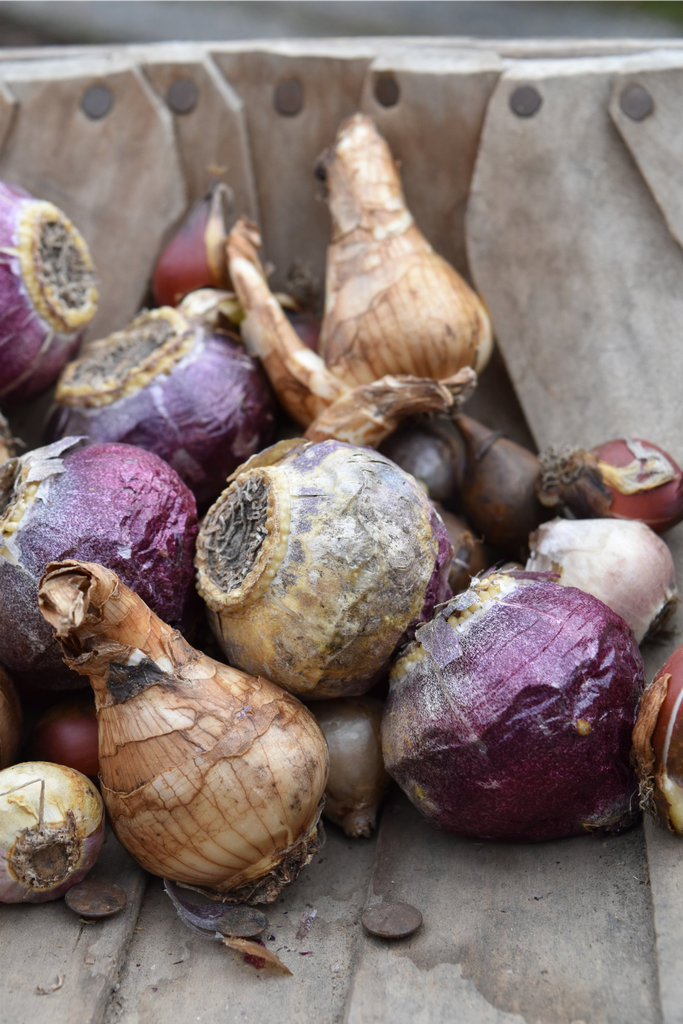
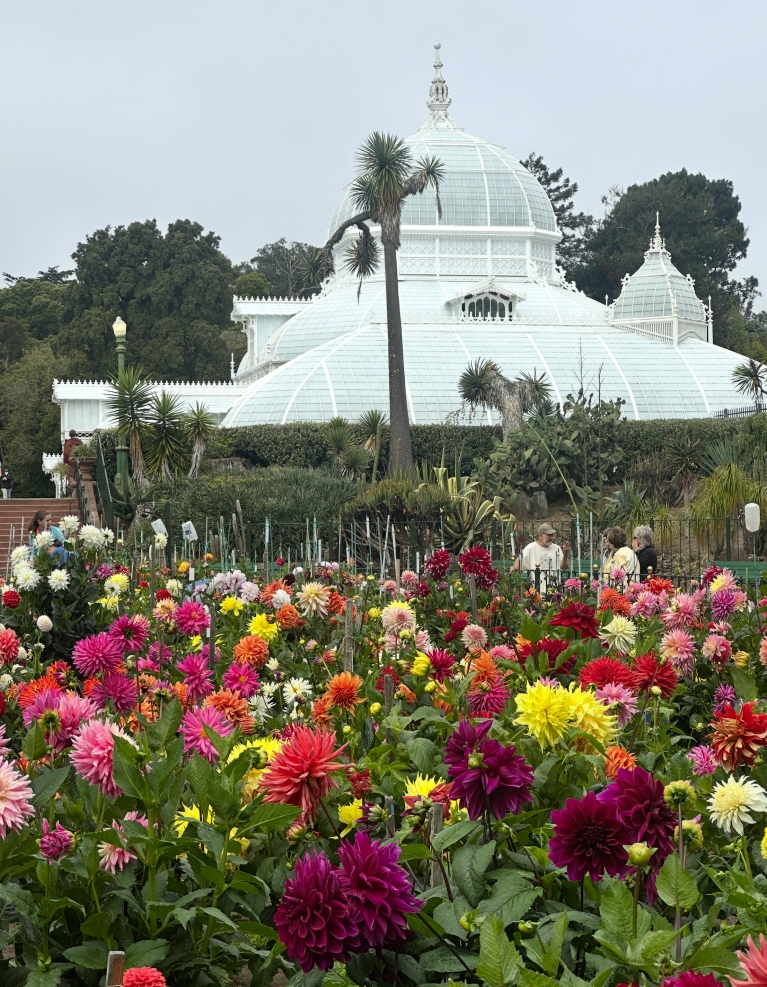
I am enjoying seeing the hummingbirds on my salvias getting one final drink of nectar before they head south. The dahlias are at last blooming and decorating both the garden and the house. The North American flowers in the Rain Garden and Moon Beds are shining. The asters in particular are making a great show. But as sentimental thoughts linger in my head about the last blooms of summer, I am also looking forward. The season for planting of spring-blooming bulbs in containers and in the ground is coming up, and that is exciting as I imagine the show next year. These brownish bulbs are symbol that all is not lost and there will be another spring to look forward to.

I know that some of you reading this will be gardeners who wonder how I could be sad about the approaching winter. My lovely neighbor, Marian, was one of those gardeners. She loved the thought of bringing her houseplants back inside, cleaning off her gardening tools, and hanging them up for a few months of peace and quiet. She enjoyed the whole circular passage of the seasons and made the most of each and every ritual of the year.
I have been thinking about this a lot recently, and wondering if I can run away to somewhere warmer this winter, or would that just mess with my internal nature clock? Is it better to stay with your planted bulbs and fully experience the turning of the earth and the resulting seasons? Or am I a creature of the sun—as long as it is not too hot?
Let me know what you think. Are you a snowbird that flies south for the winter, or do you love winter and outdoor snow and ice activities? What is your favorite season? Let me know, and I will report back in a future newsletter.
Before You Garden
I have been on the road a lot this summer, as those of you who follow me on my @jennyrosecarey Instagram account will have seen. There are many more stories to tell, and images of some of my favorite things to see, including garden ideas, flowers, and plant combinations.
This article and more are on my blog – BeforeYouGarden.com
Check out all of the articles here about gardens, gardening, books, flowers, and more.
Plant of the Month: Tall Sedums (Hylotelephium)

Tall sedums are perennials that come into their own in September and October. Their characteristic flat- to dome-shaped flower clusters are great for pollinators because they provide a perfect butterfly and bee landing spot. For most of the gardening year, sedums are a background plant. They have spring interest as the fleshy leaves emerge from the ground like miniature rose clusters. By midsummer, the succulent leaves look decorative at the front or mid-front of the border.
In the garden bed, the flower heads add a strong horizontal element. The different cultivars have a range of flower and leaf colors, including creams, minty greens, deep pinks, burgundies, bronzes, and russets. These hues contrast well with other flowers that are in bloom now, such as purple asters and yellow daisies of all types.
There are some standard sedum cultivars that have been available for many decades, including ‘Autumn Joy’, which I am sure was the first one that I grew. Henry Mitchell (our author of the month) describes Sedum ‘Autumn Joy’ as “one of the few plants I would call indispensable”’ Other popular sedum cultivars include the dark-leaved and dark-flowered ‘Matrona’, the green-leaved and pink-flowered ‘Neon’, and the dark-leaved and reddish-flowered, ‘Red Cauli’. You may find this plant listed in catalogs and at nurseries as Sedum, or by its newish rather unpronounceable Latin name, Hylotelephium spectabile.
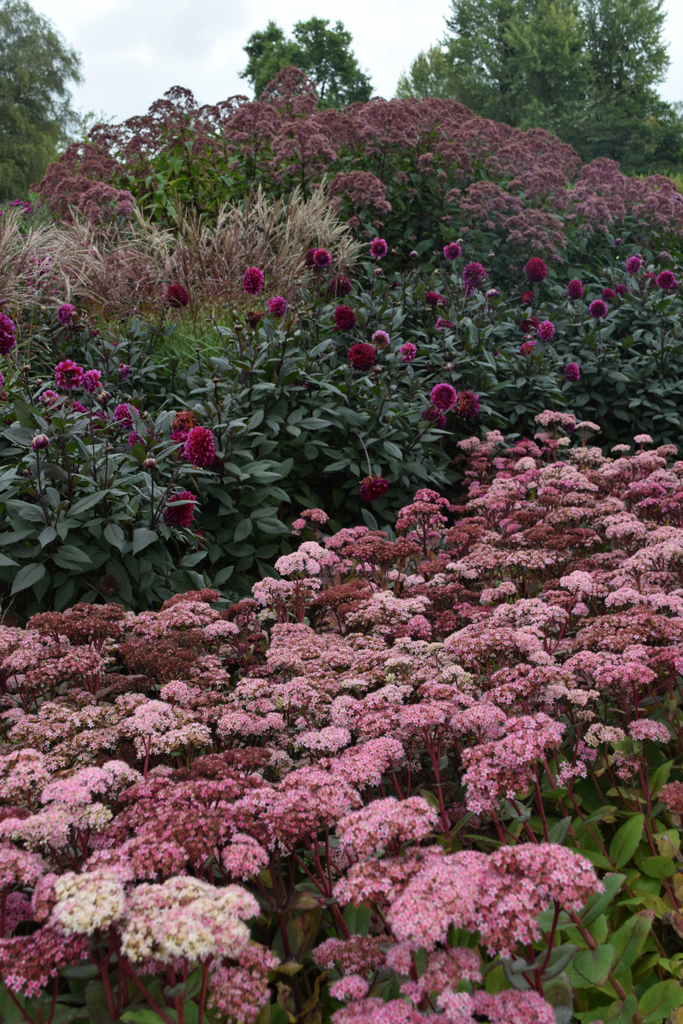
Whatever sedums you choose, I have found them to be reliable plants as long as they are in full sun, have adequate drainage, and there are not too many rabbits. I have found that bunnies seem to eat my sedums, so we have most of them growing inside a fenced area. Automatic irrigation systems are not good for sedums because they have succulent leaves that help them resist drought. Too much water turns the whole plant moldy, and then, they rot away.

To make more plants from your existing patch, dig and divide the whole plant, or take cuttings from the shoots. This process is especially easy to do as they are emerging from the ground in the spring. If your sedums grow too tall for the space, you can nip back the tops in mid-spring, and they will shoot again from the base.
Curious About My Garden?
Last Open Garden of the Year – September 25th 2026, from 10 am to 12 noon. Come and see what the garden looks like in this late summer season.
Please email wonderful Helene to let us know that you are coming – at jennyrosecarey@gmail.com
Open Garden at Northview – April 16th, June 4th, and September 25th. From 10am to 12 noon. Please carpool because parking is limited, so bring a friend and walk around together. Wear garden-friendly clothes and shoes. Pink hats or outfits are encouraged.
Book of the Month:
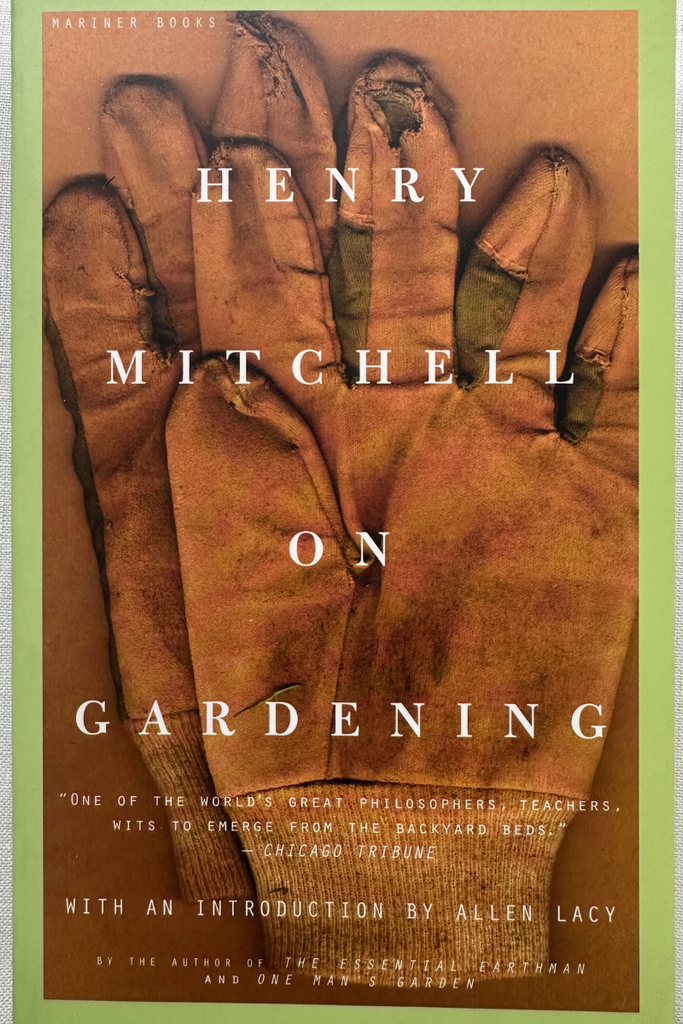
Henry Mitchell on Gardening
I have mentioned Henry Mitchell in this newsletter before (see February 2024). This third compilation of his Washington Post articles was published after his death in 1993. The introduction to the book is by the garden writer Allen Lacy. Allen tells the funny story that Henry sold the rights to his writing to his wife, Ginny, for a dollar. She wanted to see his columns made into another book, and Henry was not convinced. It is thanks to Ginny that we can read this collection.
All of Henry’s articles and compilations bring out his wit and astute observational skills. He is also down-to-earth in his comments, which makes the gardener who reads the words feel comforted that they are not doing anything wrong. For example, he says, ‘So many things in a garden are purely optional.’ And he is right. Gardening is full of preferences, and there is no one way to do things.
Gardeners can again identify with Henry as a fellow of the soil when he says things like, ‘The pools did not get their mid-December cleanup. That is because I was too lazy and too cold to do it.’ He is honest and open about his gardening practices, and the reader is less intimidated.
To me, the best part of Henry’s writing is that he has a wide knowledge of plants and the people who go with them. His philosophical thoughts make me stop and reread that section to make sure I have extracted all that I can from his musings. I will leave you with one of my favorites.
‘Gardens are like people’s lives: they aim at different goals, all more or less legitimate. But this means a superb garden of one type will draw only blank astonishment from a gardener whose plot is of another type.’
In Case You Were Gardening…
Growing Flowers for a Garden Wedding Reception – August 3, 2026
In The Pink – Flowers Version – May 19, 2026
You Are Not Alone In Your Garden – October 8, 2023
If you like this newsletter, please tell your gardening friends about it. It is easy to subscribe by contacting me via my website.
If you would like to see photos of my garden at Northview and images of my garden travels, please follow me on Instagram @NorthviewGarden and @JennyRoseCarey
Bye for now,

Want More? Check Out My Books!
While shady areas can be a challenging area for gardeners, Glorious Shade shows you how to make the most of it by helping you chose the right plants for the space and sharing key designing and maintenance tips.
The Ultimate Flower Gardener’s Guide gives gardeners the confidence needed to create the flower-filled garden of their dreams. Instead of concentrating primarily on color, it brings flower shape and texture to the fore, helping homeowners to create cohesive, yet unique, flower gardens.
The Essential Guide to Bulbs is a gorgeously photographed, comprehensive, and inviting resource. While many gardeners may be familiar with the early show of spring bulbs, there are so many more to choose from that provide three-season color, drama, and spontaneity in the garden.
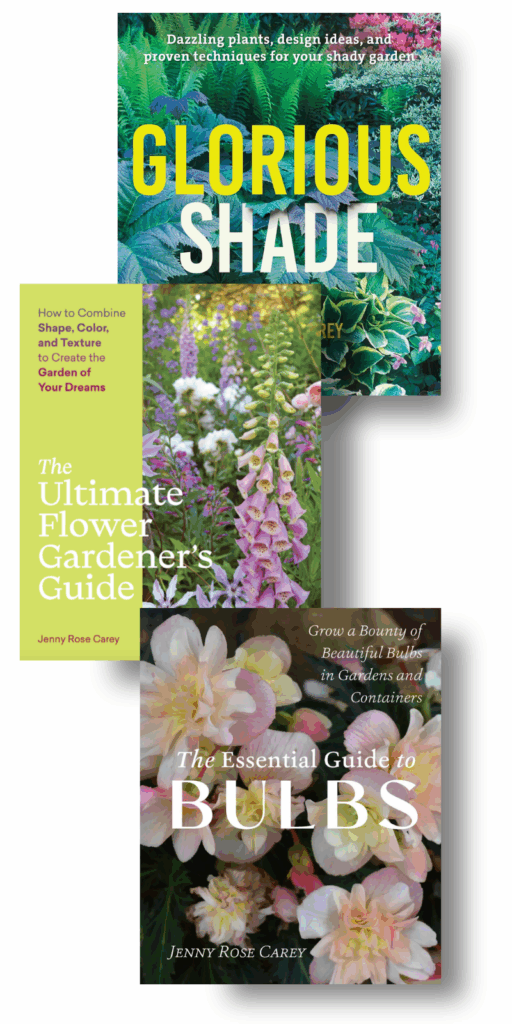
Not only are these books an excellent addition to your gardening book collection, I personally sign every book purchased directly from my website as a special thank you.


Leave a Reply