
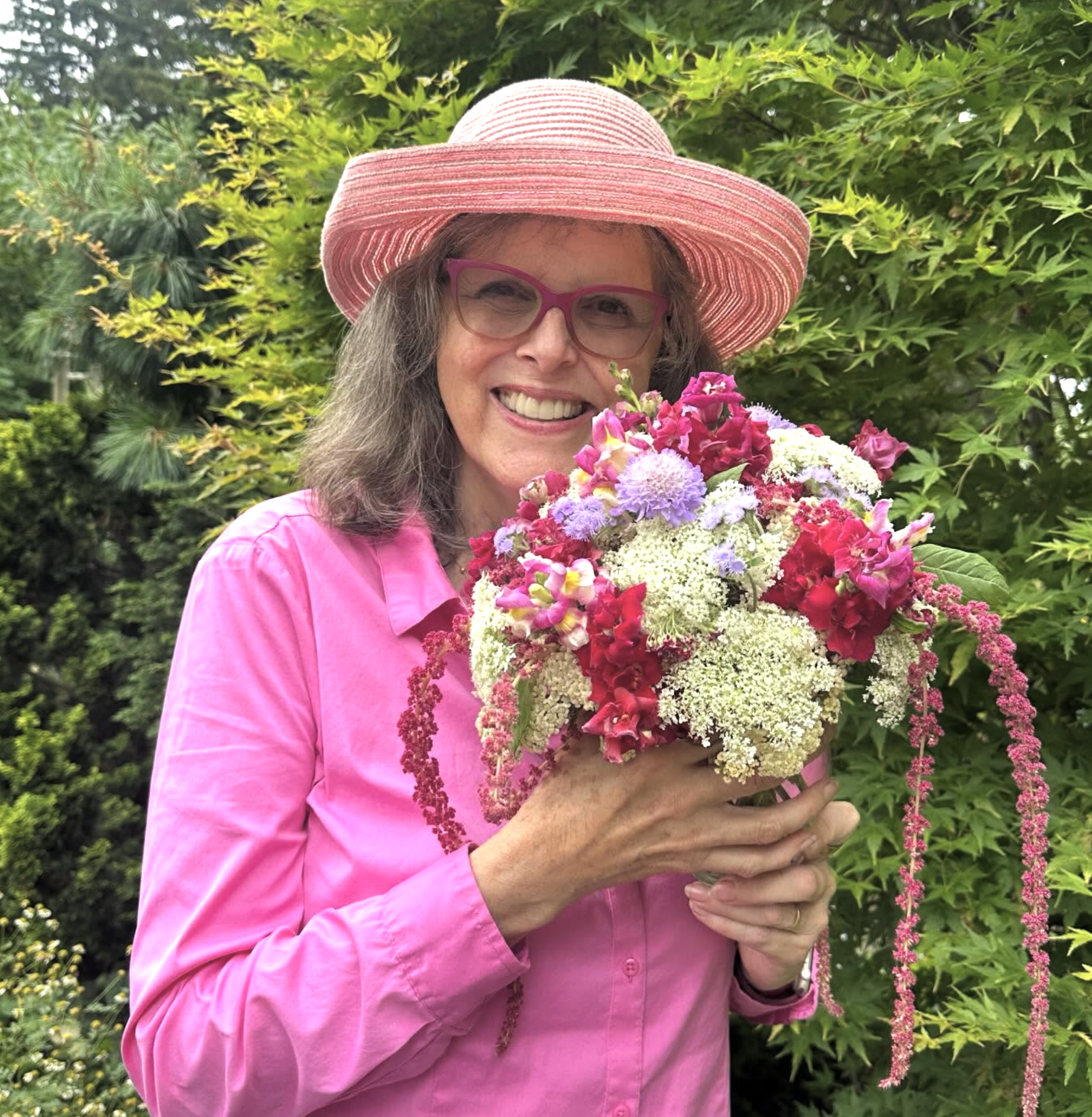
Jenny Rose Carey holding a bouquet of flowers including the tassels of amaranths, snapdragons, scabiosa, and Queen Anne’s Lace.
Growing Garden Flowers for a September Wedding Reception
The invitations have been sent, the tents are ordered, and outfits are being planned. There is excitement in the air at Northview about the upcoming wedding reception for a lovely friend that is to be held here this September. Luckily, we have had some practice at hosting weddings in the garden and providing the floral decorations.
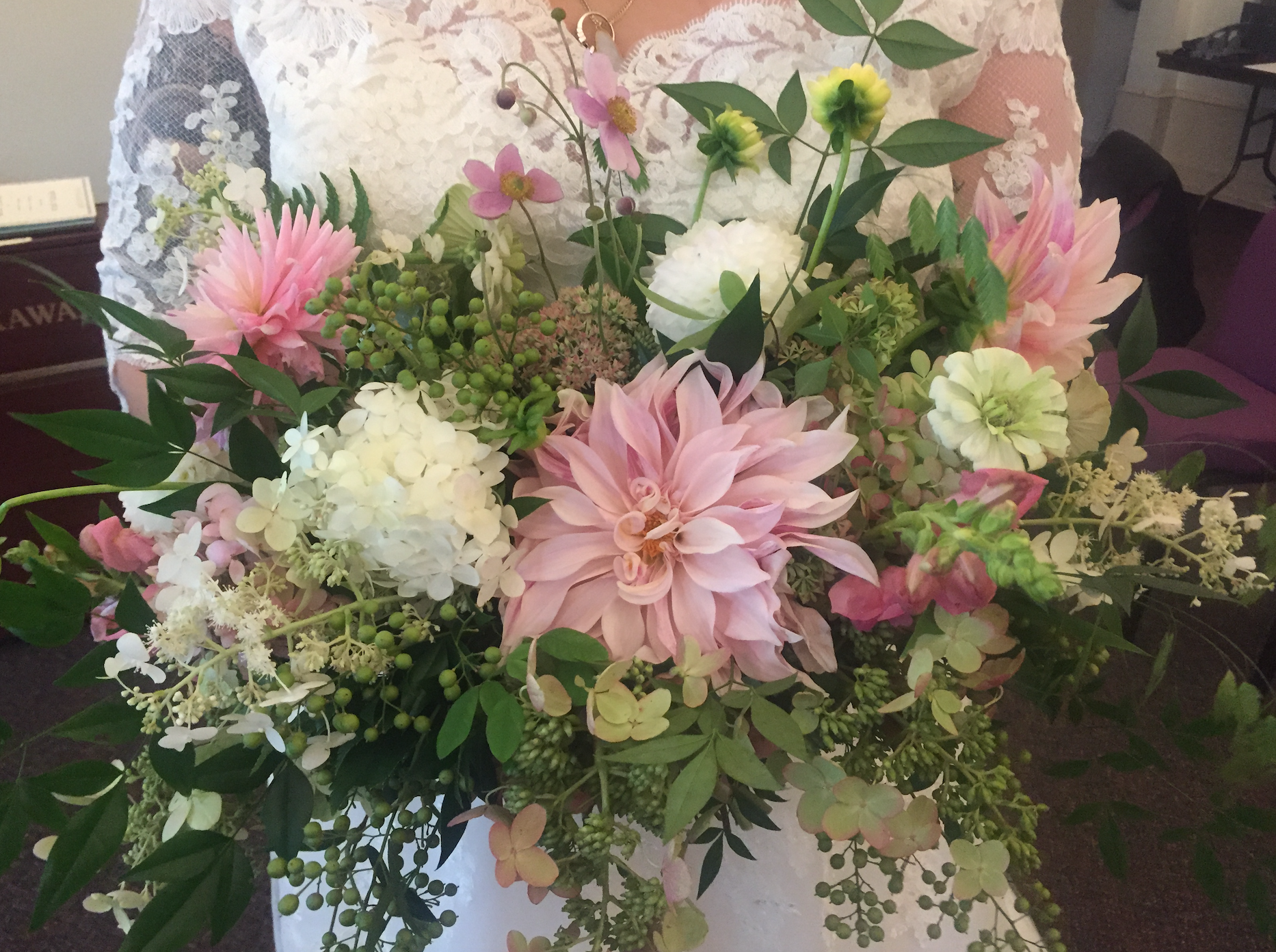
Bouquet for one of my daughters at her September reception in the garden. Dahlias, hydrangeas, cosmos, Japanese anemones, zinnias, and more.
Practice Arrangements Ahead of Time
We are working on the garden to make it a lovely place for the guests to stroll in and then growing as many of the flowers for the arrangements as possible. We already know from experience which ones last well in water and will not wilt, but below I will list some of our favorites.

A small-scale trial run arrangement for a September Wedding Reception in our garden.
We are growing as many flowers as possible, but somewhere along the way we realized that we cannot denude the garden of flowers because we are also the garden where people will be mixing and mingling. Going to the next plan, we are going to pick from the garden and then source others from local flower growers. We are also hiring a couple of other people to help get the arrangements together – because I know that I will be pulled in many different directions during the days leading up to the event.
Growing Flowers for September
Growing flowers for any event has its ups and downs. This adventure has reinforced for us how much we rely on totally fenced-in areas for our best flower production because we have had so many munching animals this year that have thrawted flower production.
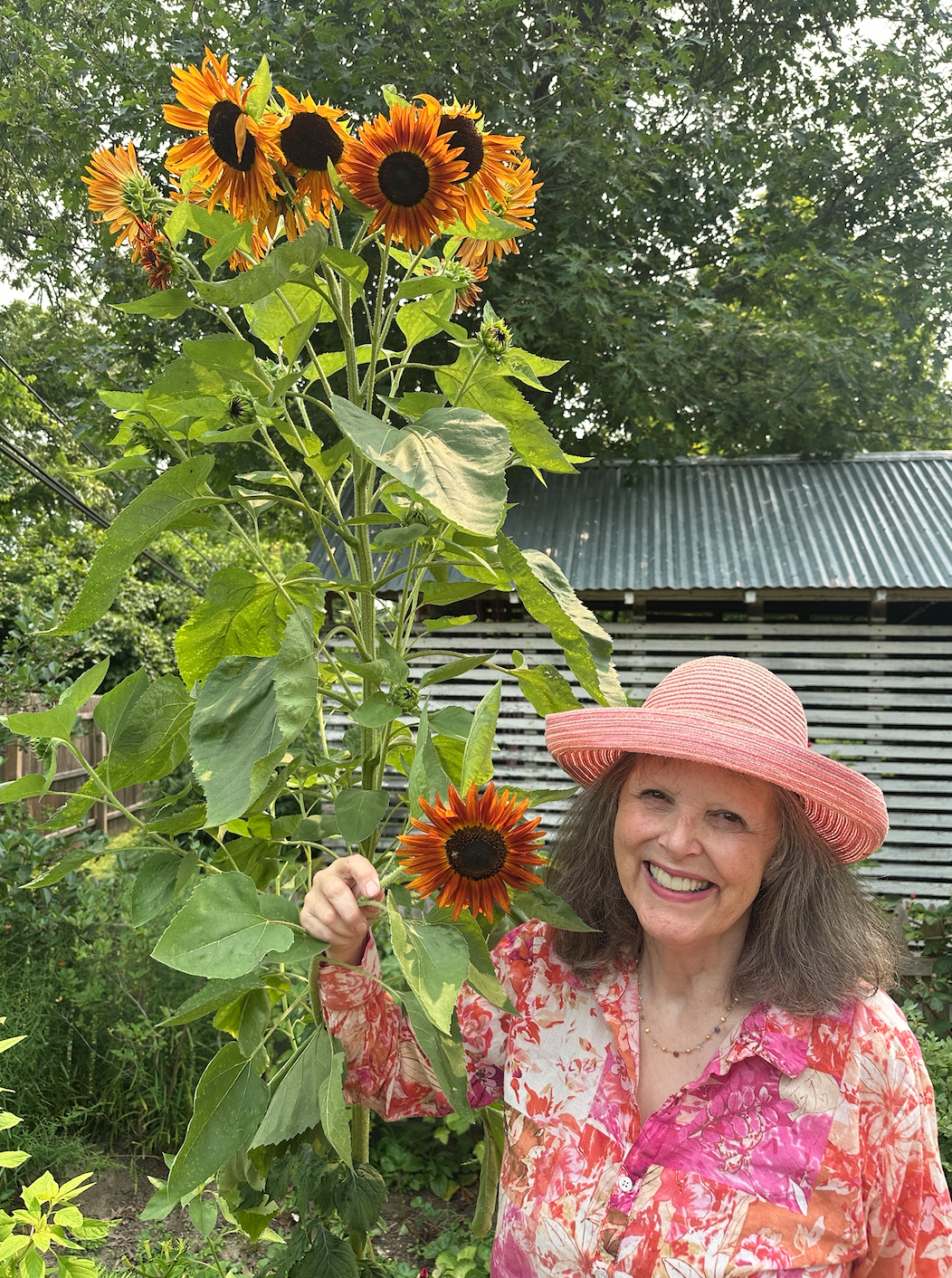
Jenny Rose Carey at Northview in the fenced-in garden called Fruit and Flowers – with one of the tall multi-headed sunflowers.
My Herb Garden is leaky as a sieve, and the fences don’t live up to their purpose, so they only keep some of the animals out some of the time. Some unnamed animal has been eating my baby flower plants, so there will be fewer useful cut flowers from there. The Cutting Garden and Fruit and Flowers have been more successful because we have concentrated on keeping out rabbits in particular.

Cutting a few flowers to see how they hold up in the vase is a great way to test things out in advance. Look at colors and shapes when making your selections for the wedding arrangements.
September Flowers
1. Dahlias
Dahlias deserve their reputation as the best cut flower for autumn. We are growing dark colored dahlias in particular this year for the wedding. Some of the plants are coming along nicely, while others unfortunately have been nibbled. Dahlias make more flowers as the days get shorter, so there is still time for flower production. We are keeping the plants well watered, especially during drought. We are also adding organic fertilizer every couple of weeks using one that is for boosting flowers.
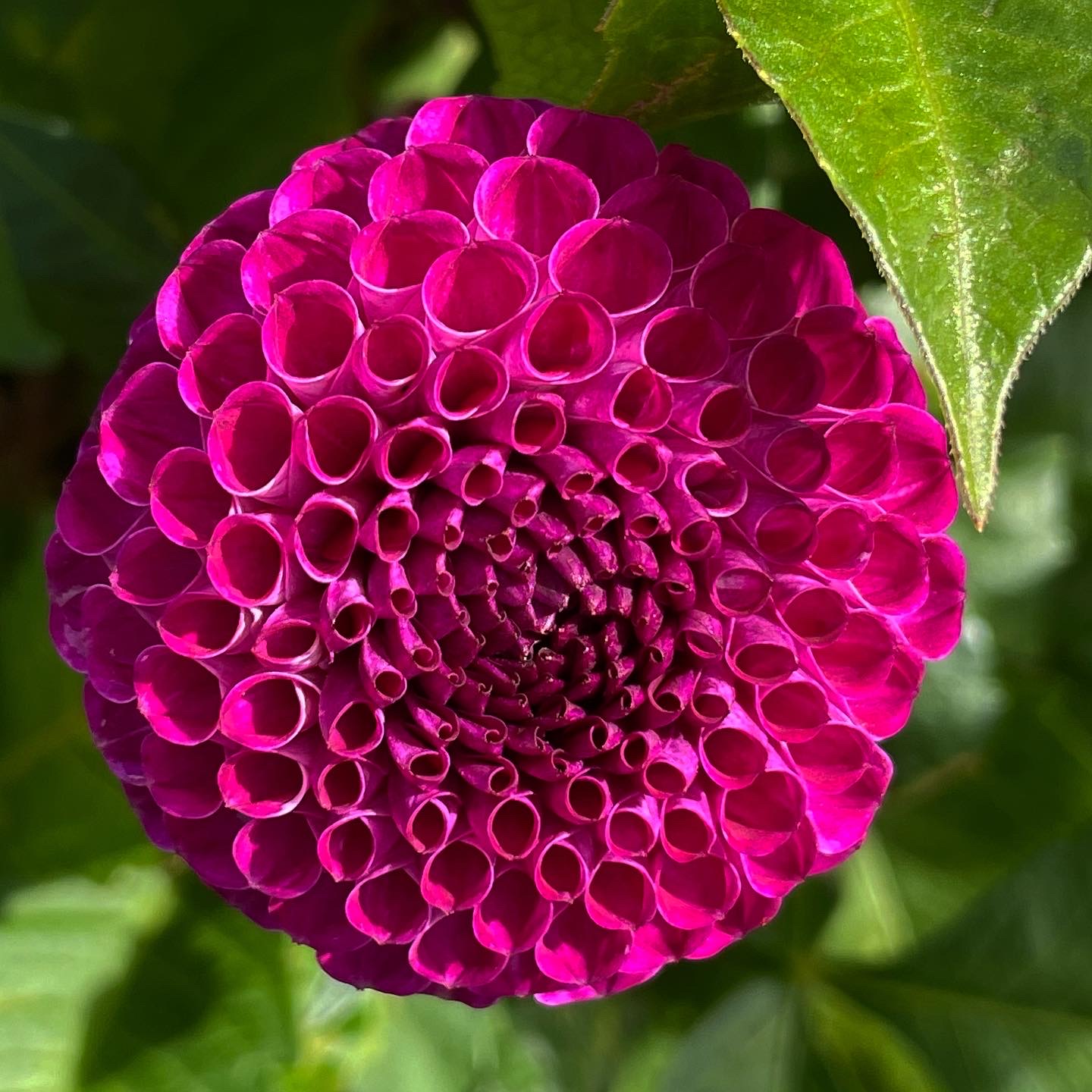
This ball-shaped dahlia is fantastic for arrangements.
2. Hydrangeas
Hydrangeas make great cut flowers, especially for September. We grow different types, but the one that will be the most helpful is ‘Limelight’. We have a large old plant and will be able to harvest many flower heads for the wedding. The heads will be tinged with purply-maroon by then, which will add extra shading and dimension to the arrangements.

Hydrangeas make great cut flowers. Cut them ahead of time and put them in a bucket of water up to their ‘necks’ to allow them to absorb lots of water before arranging with them. Keep them in a cool place out of the sun.
3. Cosmos
Cosmos adds a delicate airiness to the bouquet. They hold up well in the arrangement too. There are a range of colors and shapes; singles or semi-doubles like the one below, oranges, whites, pinks, and maroons.

Gorgeous cosmos seen at Wave Hill Public Garden in the Bronx. I visit other gardens to get ideas of what I want to grow next year.
4. Celosia and Amaranthus
Celosia and Amaranths have a similar role in arrangements. They are both easy to grow from seed sown in the spring. My favorite Celosias for arranging are the upright ones that add a different shape to the composition. Amaranthus will also be perfect for our September arrangements. Their dark foliage and tassel-like flowers are an added bonus.
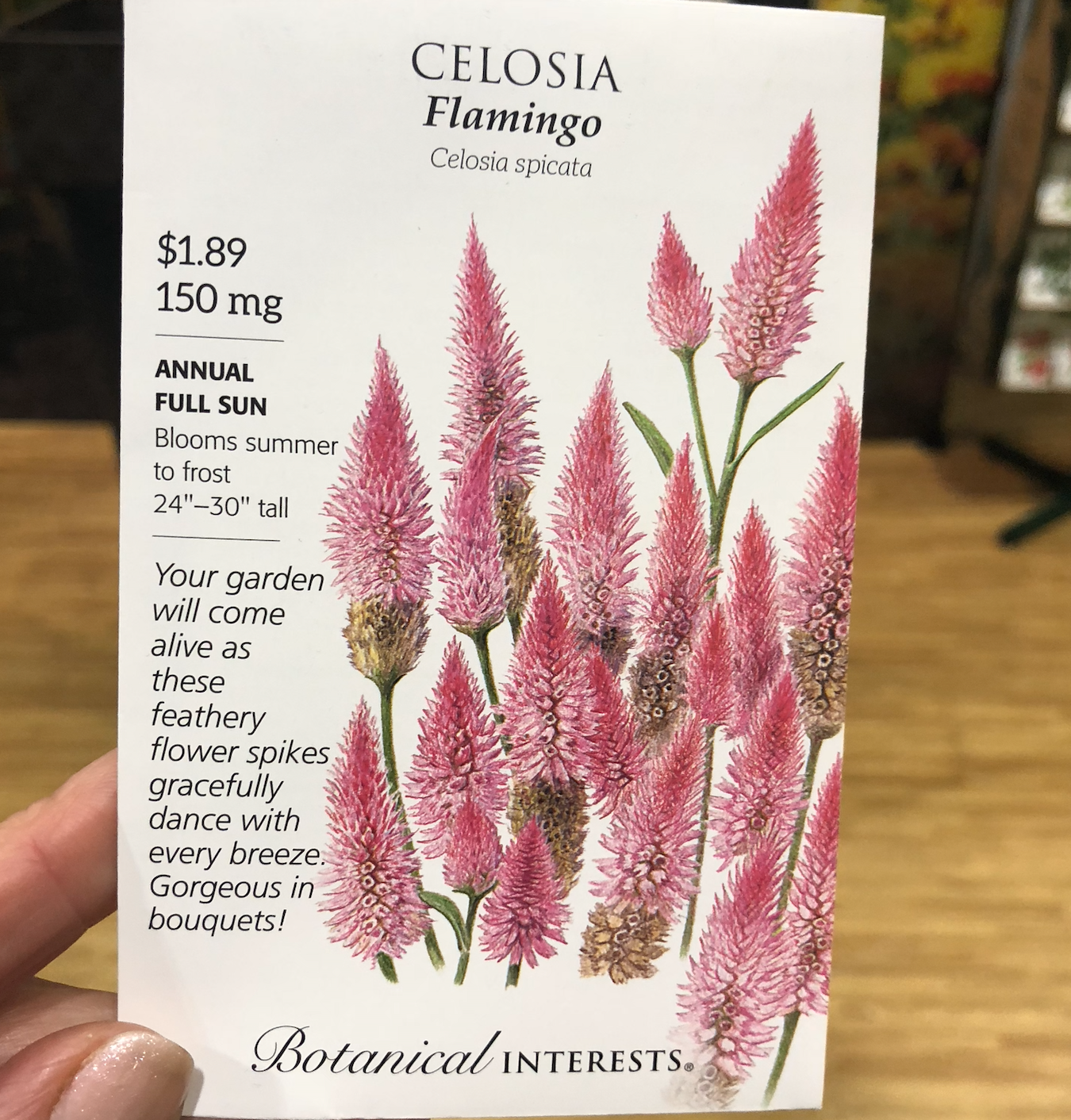
Botanical Interests seed packet for Flamingo Celosia.
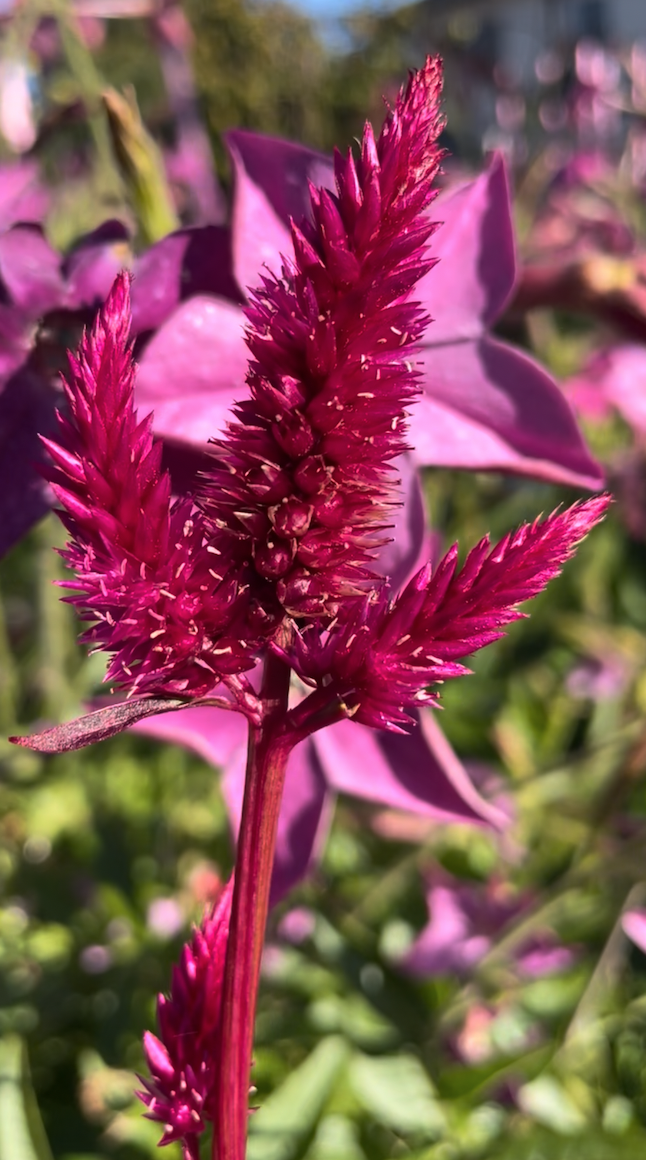
Upright celosia looks so good in arrangements.
5. Lisianthus and Gomphrena
Lisianthus are the rose-like flowers at the bottom right of this arrangement. They are slow to grow from seeds, so we bought small plants. To keep them growing until the September Wedding, we have been cutting them back and making small posies for the house.
Gomphrena are the small ball-like flowers on the right. They are excellent as a cut flower and hold up for many days after cutting. To the left are Cosmos, and in the center is a dark Amaranth.

A bouquet at Northview with cosmos, lisianthus, verbena, amaranthus, and gomphrena.
6. Asters
These fall-blooming plants are perfect for autumn arrangements. They are daisy-shaped and multi-headed, so they make the perfect fill-in flower. They are perennial so the plants will return year after year to provide flowers for bouquets next year.

Aster tataricus makes a great cut flower for autumn.
7. Sunflowers
Multi-headed sunflowers are the best for use as a cut flower. We are growing dark colored flowers for the wedding. We are cutting off old flowers to keep the plant producing new flowers all season. These are annual sunflowers that are grown from seeds sown in the spring.
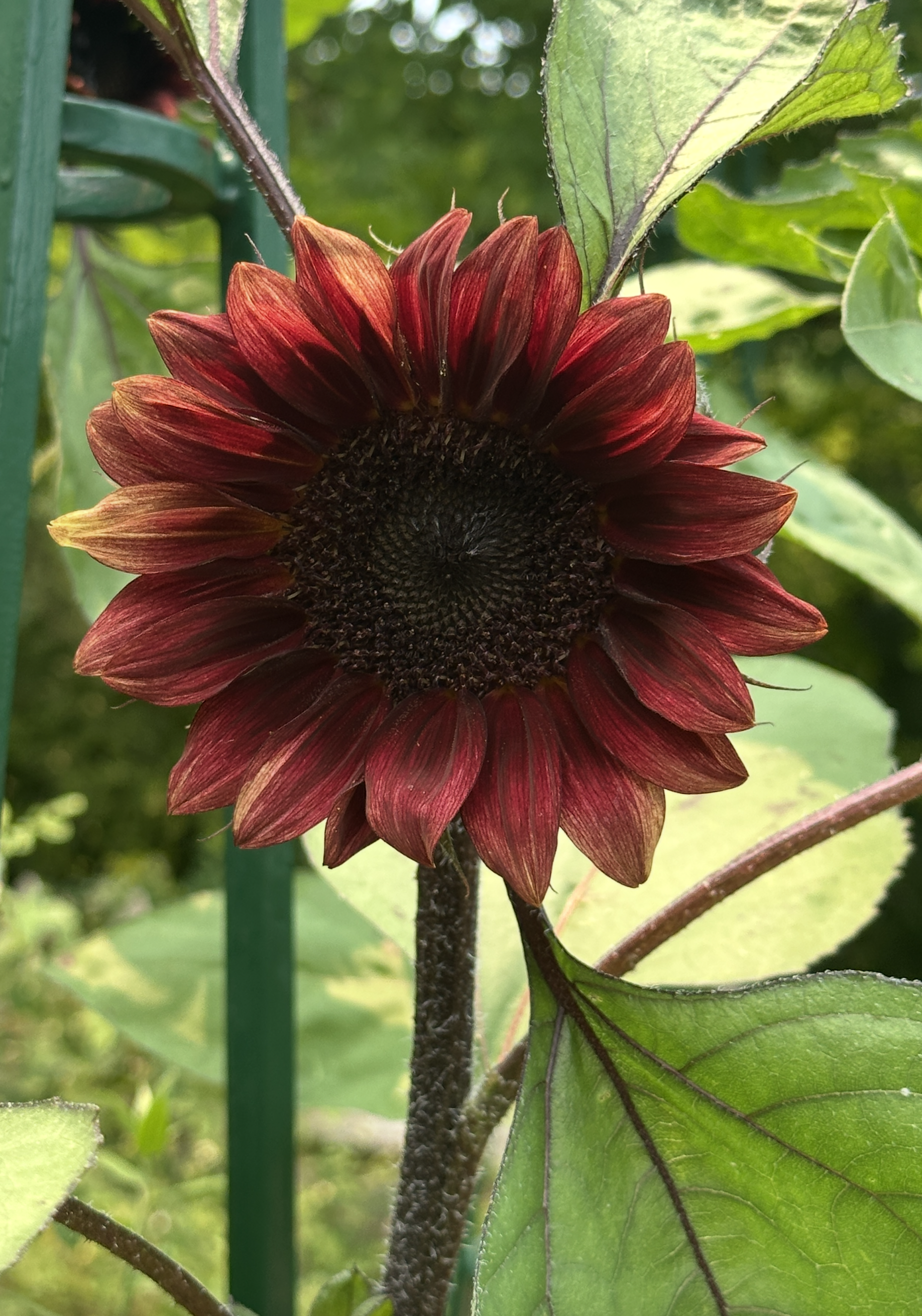
A very dark colored sunflower with be perfect for our September arrangements.
I will take photos to show you how the arrangements turn out. I hope that this selection of flowers help you to plan if you have an event in your garden that needs flower bouquets.
Bye for now Gardening Friends. I hope that your summer flowers are bringing you joy. Cheers, Jenny Rose Carey


Leave a Reply