
Greetings Gardeners,
I agree with Graham Stuart Thomas when he states that “September is a lovely month.” For me, it brings my birthday and maybe I can go on a fun outing—how about to a garden! When I was teaching full-time, September was back to school and the beginning of the academic calendar. In some ways this season seems like it is the beginning of the gardening year.
It is a great time to look at your late summer and early autumn garden, assess what did well, and what you would like to improve in future years. If you have ideas of how to improve your plant combinations, then plan now. Fall is a great time to move plants, dig and divide perennials, and plant new ones.
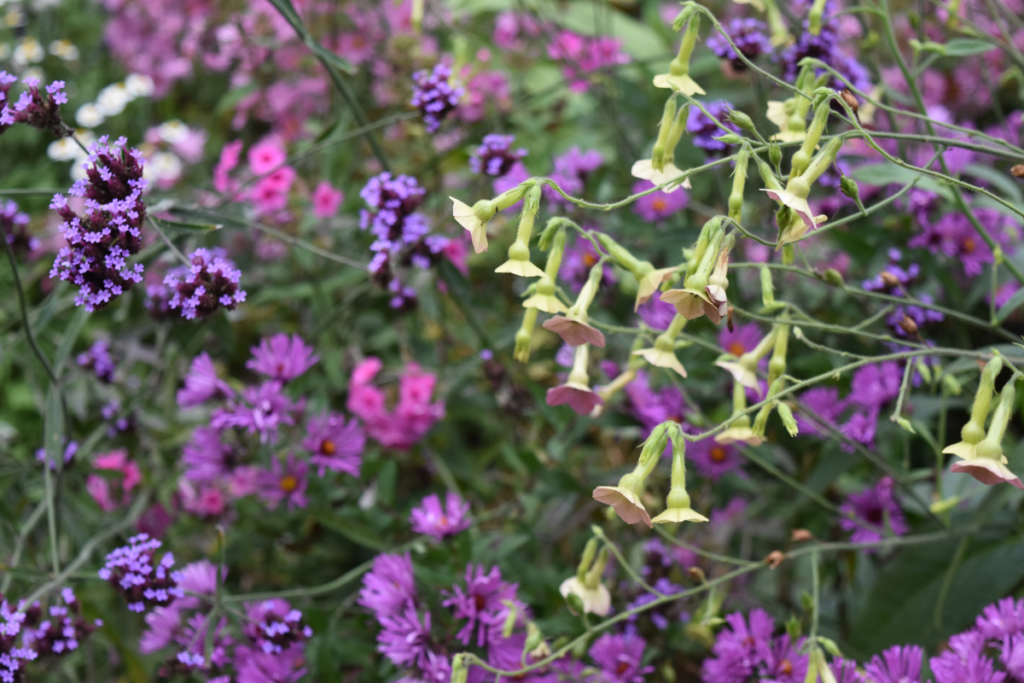
It is time to evaluate which plants you want to dig up and store over winter and which will become great compost. Now is also the time to plan your spring bulb display and if you haven’t bought your bulbs, it is time to do that.
So, what did Graham mean when he said “late summer” and “spring-like blooms”? All the usual fall-blooming flowers like asters, goldenrods, and Japanese anemones are in full swing. Alongside these are the ones that look more like spring flowers, such as Sternbergia lutea, the fall daffodil, Colchicum autumnale, the so-called autumn crocus that is not a true crocus, and real autumn-blooming crocuses such as Crocus sativus, which add to the confusion of the common name mix-up.
Enjoy these September days with plenty of flowers. To finish on another quote from the same article: “The transcendent beauty of flowers is something which is apt to be forgotten by young prospective gardeners, and also, I’m sorry to say, sometimes by their teachers.” Whether you are still learning about gardening or whether you teach others, remember to pause a while this month to just admire the beauty of the late-summer bloomers.
Chelsea Flower Show, September 2021

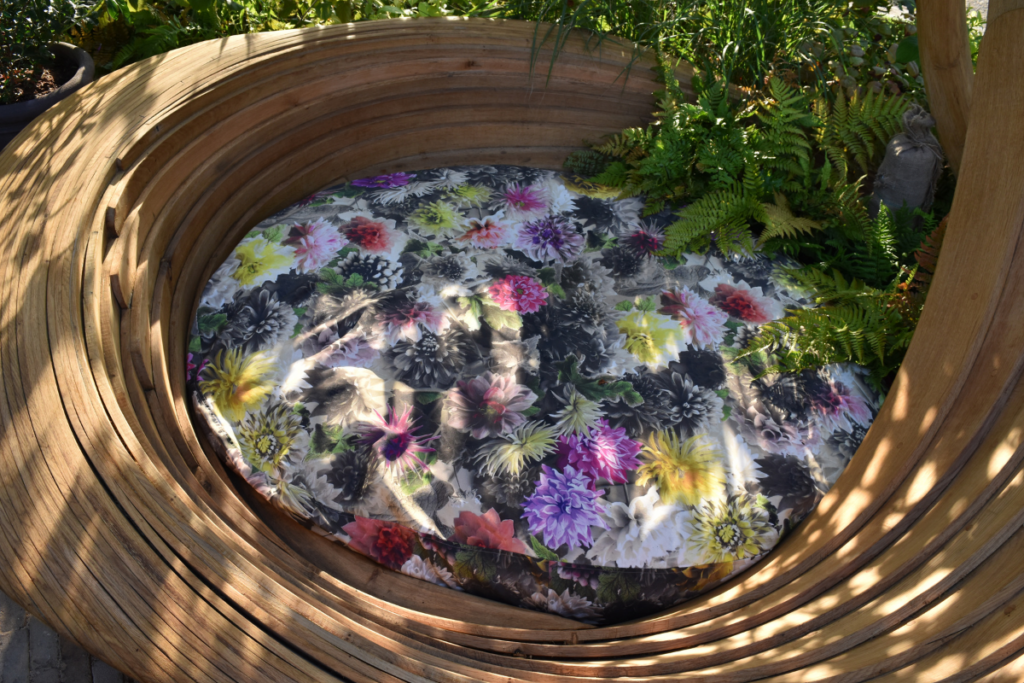
am including some photos of the Chelsea Flower when it was held in September 2021 rather than its customary May time slot. I had fun among a new palette of flowers that year that contained many bright hot-colored flowers. What I am highlighting this month is the innovative use of wood for structural features in the show gardens. I love the patina, color, and natural grain of wood as a garden material. It is part of nature, so it fits right into any garden.

Have a look at the photos and see if you can get ideas to incorporate wooden design elements. Last month in my beforeyougarden.com blog I talked about using natural twigs for staking plants. This takes the use of wood to a more design-focused level. I hope that you get some inspiration for something that you make yourself from wood to add to your garden.


Energize Your Gardens With Color

If you have read this email a few times you will probably have seen that I like bright pink. The good news is that the world is catching up with me. I am happy to report that pink is everywhere. It makes me so happy. Unfortunately, I can’t take credit for the transformation of the worldview, but I think that Barbie can.
I have pulled together some of my favorite brightly colored flowers so that when you are planning your garden for next year you can include some of these on your flowery wish list.
Plant of the Month: Japanese Anemone (Anemone x hybrida)

Grow Japanese anemone in a position that has at least four hours of sun for good flower production. In hot climates afternoon shade is needed. In temperate climates full sun is best. The roots of these autumn blooming anemones should be shaded, and the soil needs to retain moisture particularly during the growing period.

These plants are often for sale in the fall, while in flower, but they rarely have enough time to establish a good root system and can then die during that first winter in cold climates. If you find these anemones for sale next spring that is the time to buy them. I tried several times to get my favorite white anemone, ‘Honorine Jobert’, growing before I had luck. Now I have a nice patch that enhances a fence line.
If you can dig up a clump of anemones from a friend’s garden that is the best way to establish them. I received a lovely one called Anemone ‘Robustissima’ from a dear friend and they took with no problem. Even though they are sometimes hard to establish, once they get their roots down, they can romp through your flower bed. They are a feast-or-famine plant, but if you do get them doing well, then you can share them with your gardening friends and they will be very happy.
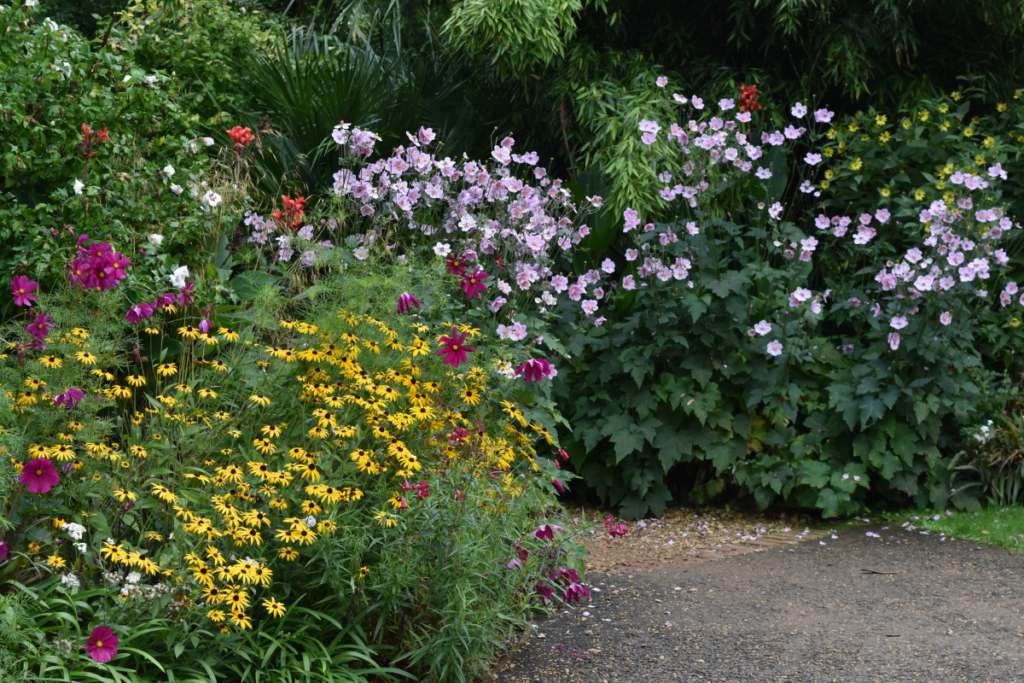
In the garden combine these tall anemones with other late-summer flowers like Rudbeckia, Cosmos, and Salvias. The anemones contrast in shape and color to create a lively autumn scene as here at the Abbotsbury Subtropical Gardens in Dorset, England.
Book Club: A Gardener’s Dozen
This book is one that I picked up last year in a lovely secondhand bookshop in the Peak District. It is one produced in England to accompany a radio show in 1980. Which when I first read it didn’t seem that long ago. I thought ‘Oh good I am reviewing a modern book this month’. I suppose it is relatively modern but 43 years ago. How time flies.
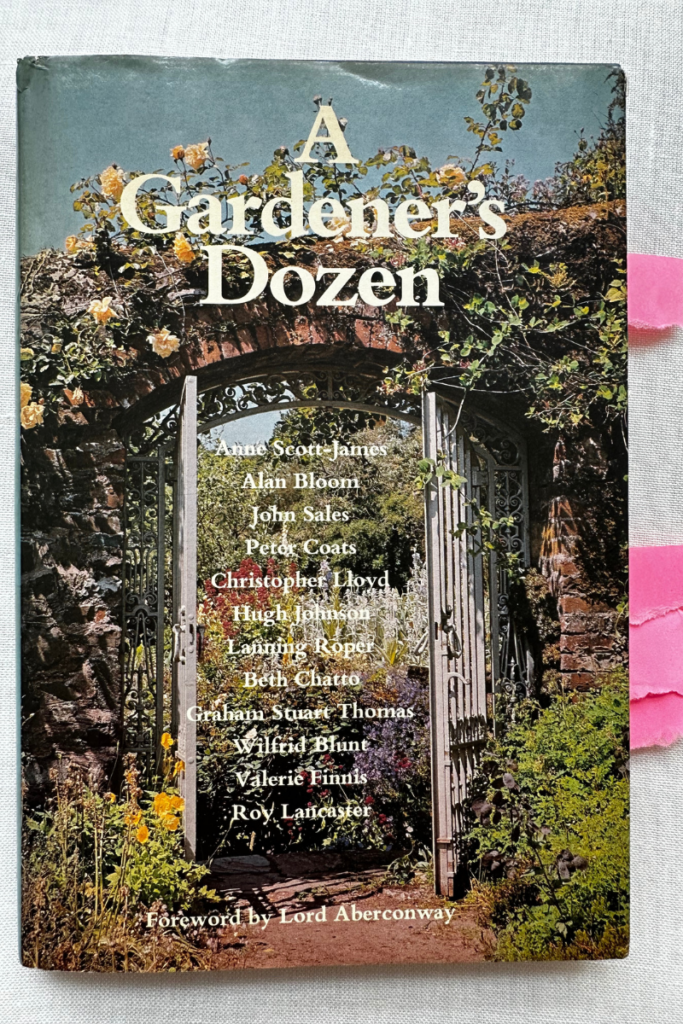
The book is composed of twelve mini essays, one for each month, by well-known British gardening authors of the time. Each writer discusses the plants that excite them during their given month and include personal reflections about their own gardens at that time of year. I love to listen to the radio and have done since I was a child. The book has a lovely conversational tone that is like listening to each gardener telling a story. I thoroughly enjoyed it, and I might continue to quote from it as the year goes on.
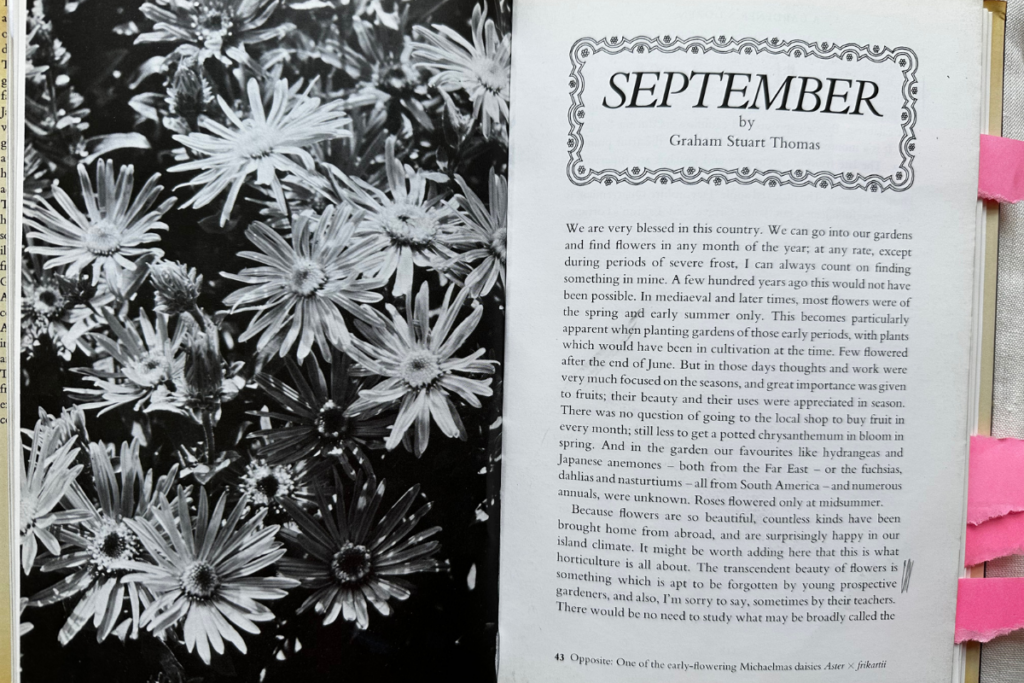
A little more from Graham Stuart Thomas about our plant of the month for September: “I think that the floral year provides no more beautiful flower—nor indeed, a more beautiful plant—than the Japanese anemone. It is so stately, with good foliage all summer…. Scent is, sadly, lacking, but it really has every other attribute.”
Enjoy your late summer garden!
Note: I am not sponsored to promote books found in these newsletters. They are featured because I truly love them.
If you like this newsletter, please tell your gardening friends about it. It is easy to subscribe by contacting me via my website.
If you would like to see photos of my garden at Northview and images of my garden travels, please follow me on Instagram @NorthviewGarden and @JennyRoseCarey
Bye for now,




Leave a Reply