
Blustering October Winds

Books move around my house, into bags, over to the Carriage House, and then back again. I delve into them in rather a random manner, sometimes reading for pleasure, or researching, and most often dipping in for a quick dose of fun or inspiration. These voices of past garden writers encourage me. They say, as if speaking personally just to me, “Here is what I was thinking the other day in the garden. Is gardening still as popular as when I was tilling my patch of ground?” I answer them back and say, “The world is a vastly different place, but we are carrying on where you left off, and love our gardens no less than you did.”
Maybe these silent conversations with long-dead gardeners are slightly strange, but they bring comfort to me. I am happy to be part of the continuing conversation about gardening. We can learn from the past, and we can differ from it. In this way, our gardening practices improve, and we get more delight from them.

The book choice this month came home from a used bookstore in Bath this summer. I had left it on the kitchen windowsill when I returned home, and it was only when ‘cleaning up’ (dreadful phrase), that I had a chance to open the book. October was on page one. I began to read and was immediately enchanted.
The quote above is H. H. Thomas’ first words. It is a perfect reflection of my own thoughts in October as the days get short and the “wind chants mournfully.” Luckily, he doesn’t leave us in this gloomy mood and later, on that same page, he brings us hope with the quote:
“To every gardener who loves the earth and the flowers it yields, the passing of one year is but the advent of the next.”
Despite the dark days of October, we gardeners have hopes for our 2025 garden to be more flowery and beautiful than this year.

September Roadtrip: A Review
The Before You Garden blog this month looks at my recent road trip to North Dakota, South Dakota, Minnesota, Wisconsin, Nebraska, and Iowa. Come with me as I visit some gardens along my 1,132-mile trip.
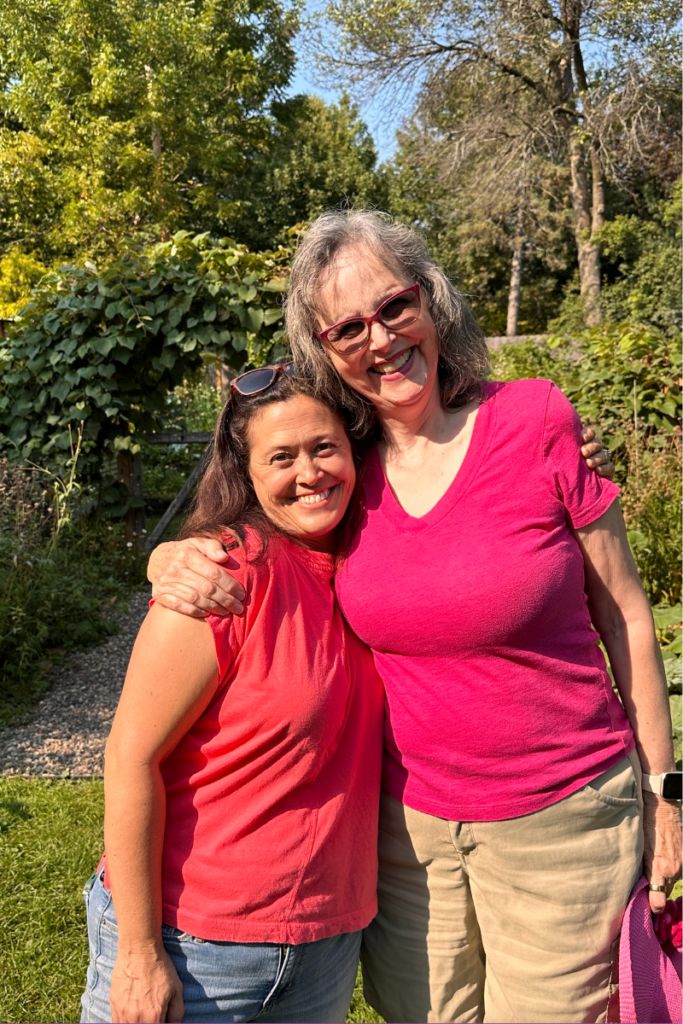
One of the highlights was visiting my Instagram friend Michelle at the garden outside Minneapolis. We felt like old friends. Follow her at @forksinthedirt
Plant of the Month:
Tagetes patula

One of the things to do in this “first” month of the gardening year is to look and see what is still blooming in your garden. If you feel that you need more color right now for the garden and the vase, consider adding some seed-grown tall, single marigolds.
I love to start plants from seed. My list for next year is already long, but these marigolds are near the top. They are rarely offered as small plants. The marigolds that you can buy already growing are often double flowered and not as tall as these. Try them around the vegetable garden, in raised beds or in large containers.
This marigold is called ‘Frances’ Choice’ from Select Seeds. I love the contrasting yellow and mahogany red-patterned flowers and the long stems that are great for cutting. The foliage quality is good, and smells the same as other marigold types. This is a large plant that blooms all summer as long as you keep cutting the flowers or deadheading it. At the end of the season, leave some flowers to mature so that you can save some seeds for next year. This photo is from Halloween day last year. What a great choice to arrange in a hollowed-out pumpkin.
A similar choice is the cultivar that has the delightful name of ‘Naughty Marietta’. This dates from the 1940s. There was an operetta that had the same name – I wonder if the plant was named for the title character? Seeds are available from Select Seeds or Botanical Interests.

Book of the Month:
Round the Year in the Garden
by H. H. Thomas
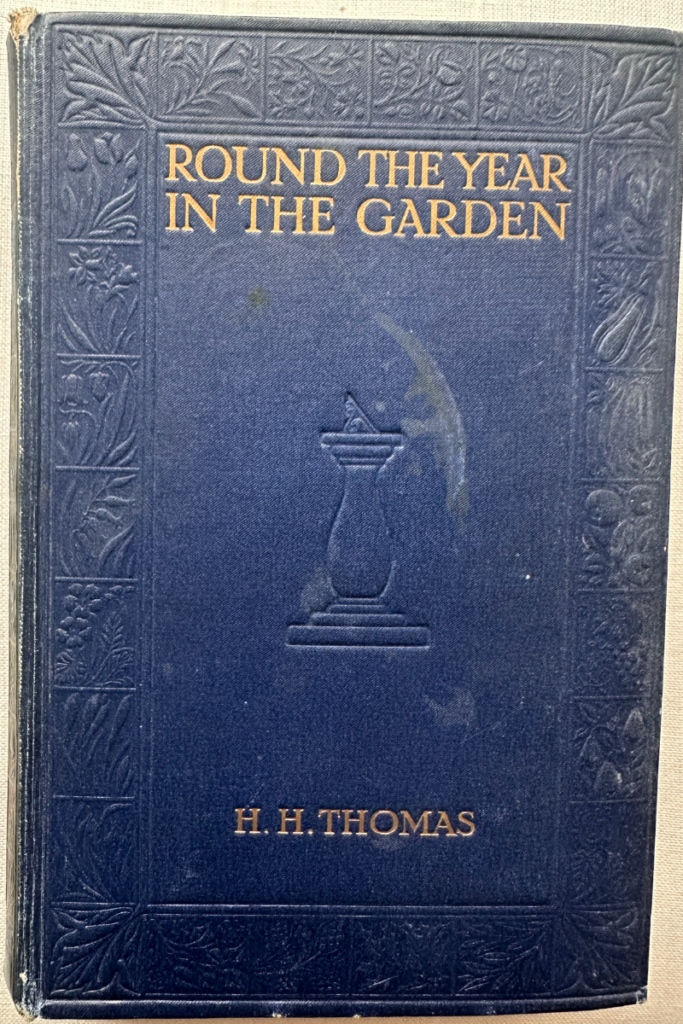
H. H. Thomas was an English garden writer and Kew Gardens trained horticulturist. This book was written in England before World War I changed gardens and gardening culture with the death of many of the gardeners in the fighting. Like many of the books that I enjoy, it is full of personal opinions and good advice. The style of gardening seems old-fashioned as does the clothing. It leans back to Victorian gardening methods where beds had one set of flowers for spring that were changed out for summer annuals. There is an emphasis on tender plants grown in greenhouses.
There are instructions for making a ‘Hot Bed’ that is ‘made of half strawy manure and half leaves, or wholly of manure’. This bed was used for growing early vegetables without a greenhouse.
As a garden historian, I love looking to see what cultivars were available 100 years ago. Some have survived; many are different. I also like looking at the illustrations. The color plates are individually printed and inserted.

I always learn something that I can think about. Here are a few nuggets from H.H.. (What does a person with two letters as their first name get called by their family – serious question?).
He has a section on ‘Flower Borders of One Colour’ that continues to fascinate. Various lists of flowers are provided, but he is not a big fan. He says, ‘One is apt, for example, to tire of a white border before the summer is over.’ As regards to yellow, it ‘is scarcely worth planting, for of yellow one tires soonest’.
H.H. is much more enamored with mixed color beds: ‘many charming effects, however, are obtained when planting is practiced without regard to strict colour arrangement, providing the plants are in bold, wide groups, and obviously discordant associations are avoided’. Having written that I realize that this advice echoes the discussion in the September newsletter.
On practical gardening matters, H.H. was an advocate of ‘saving seeds from home-grown plants’. He suggests that the seeds are sown fresh so that they ‘are almost certain to germinate’. Back when this book was written, most plants were obtained as seeds or bulbs. Garden centers were a thing of the future. If you wanted a plant, you grew it. For those of you who do not usually start your own plants from seed, maybe this coming year is the time to begin. Not only is it much cheaper, you get a much wider selection of possible plants (just like the marigolds above.)
Note: I am not sponsored to promote books found in these newsletters. They are featured because I truly love them.
In Case You Were Gardening…
A Rain Garden for Every Garden, September 2024
Sowing the Seeds of a Colorful Garden, March 2023
Japanese Maple Leaves, September 2013
If you want to read past issues of this e-newsletter, go to the top of this email and find the button that is labeled ‘View this email in your browser’. Then there will be a button second from the left, at the top, that says ‘Past Issues’. Press that and you will see a list of the past emails in the archives.
If you enjoy reading this newsletter regularly, please tell your gardening friends about it! It is easy to subscribe to it by contacting me via my website.
If you would like to see photos of my garden at Northview and images of my garden travels, please follow me on Instagram @NorthviewGarden and @JennyRoseCarey
Bye for now,




Leave a Reply