
Greetings Gardening Friends,
I was lucky to be brought up by a mother who was an English teacher and a father who was a botany professor. This has given me a perspective on the natural world that is based on scientific facts but at the same time appreciates the artistic. The quote above popped into my head as I woke to a misty autumn morning. The damp air hung over the long grasses in our uncut lawn area. As I walked around the garden, I could smell the slightly tangy smell of fallen leaves and there was a definite chill to the air.
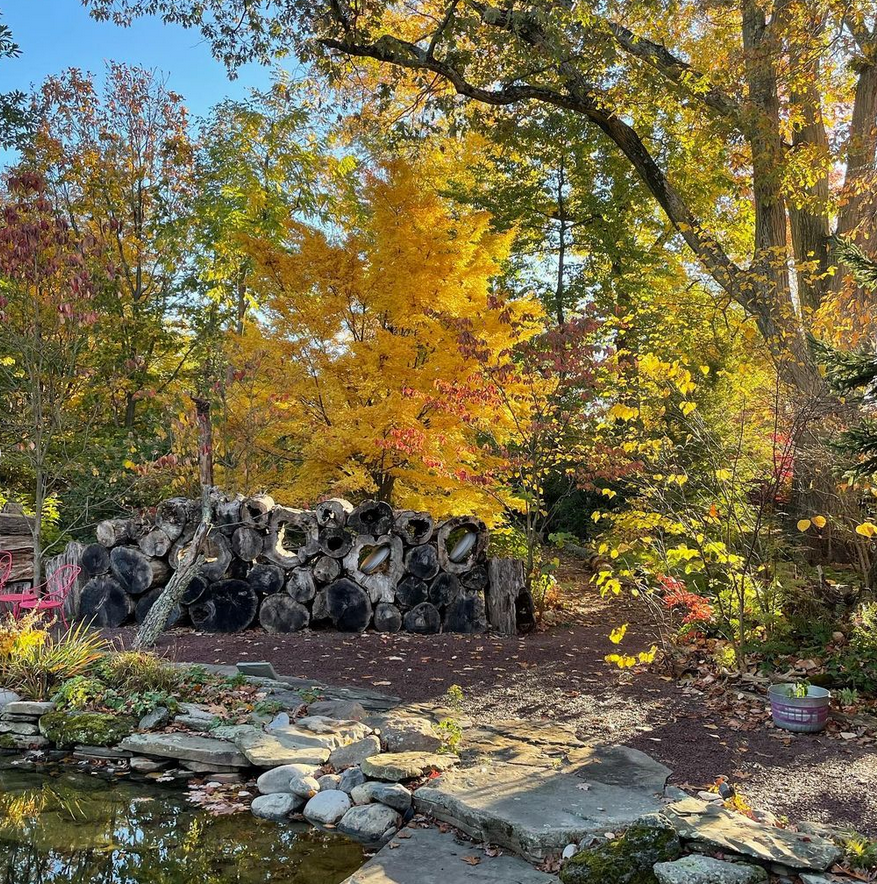
My perambulations continued and concurrently in my brain were the thoughts about the developments happening in the color-changing leaves and the words of the poem. Poems were very in favor among the contemporaries of Keats and continued strongly even through my childhood. We were required to learn and recite poems by heart and, by doing that, they have stuck in my brain and pop out every now and then.
I was talking to one of my sisters the other day—maybe it is time for a poetry revival, especially nature poems. They give us insights into the natural world that most of us don’t have, but that can show us a way to appreciate and express the thoughts and feelings that we have inside us. “To Autumn” was written by John Keats over two hundred autumns ago but it continues to evoke the changes that happen in gardens and natural areas.
Think about poems this month, especially ones that you learned as a child or have come to appreciate later in life. If you don’t have poetry memories, start now. I would suggest to you the poems of Mary Oliver, who passed away just a few years ago. She was an insightful lady who found words for the “unwordable.”
Jenny Rose Carey Garden Travels

I have been out on the road this fall with lectures from west to east. I had a lovely trip to Washington state with visits to the Chihuly Gardens and Glass near the space needle in Seattle and the Bloedel Reserve on Bainbridge Island.
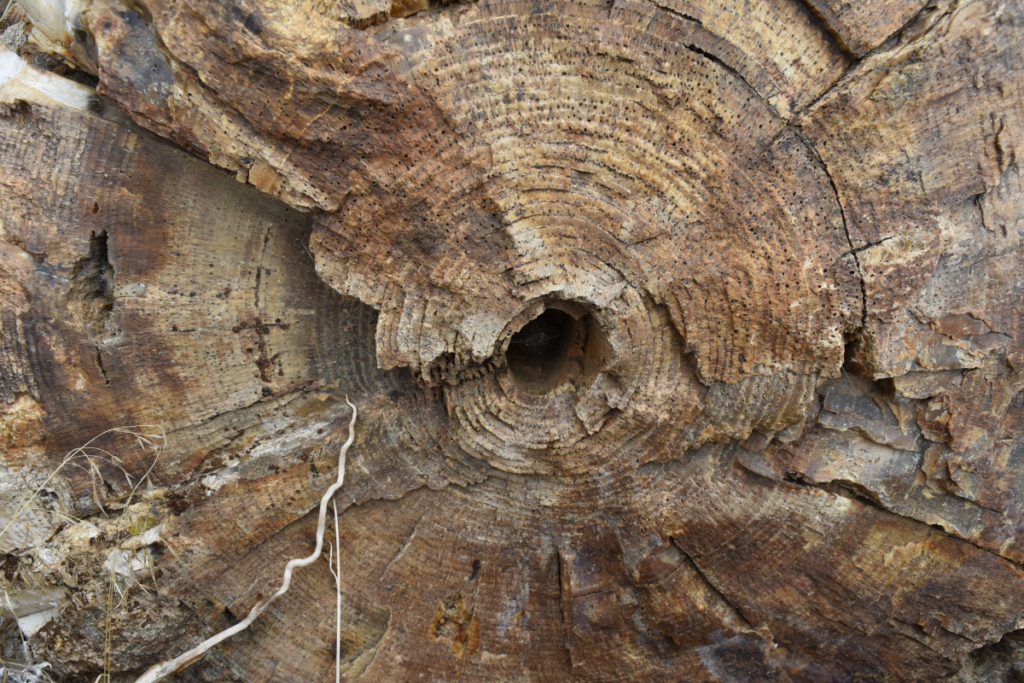
We then drove across the Cascade Mountains to Spokane via some fascinating places, including the Ginkgo Petrified Forest. Who knew that the Ginkgoes used to grow in North America?
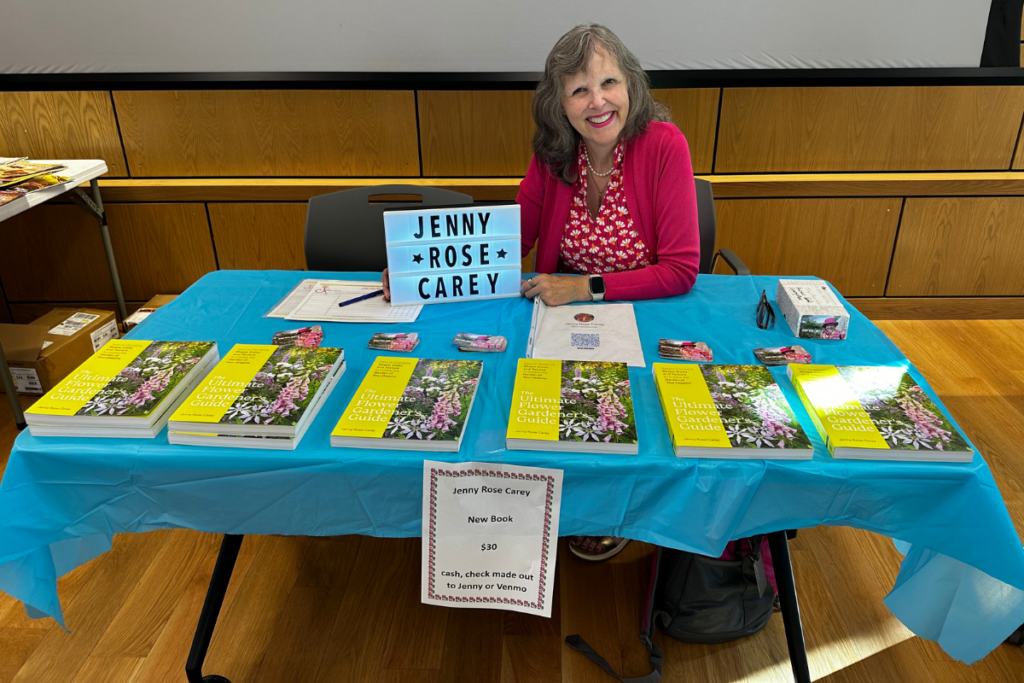
Thank you to The Inland Empire Gardeners for inviting me to speak. I really enjoyed meeting you. While in Spokane we stayed at The Historic Davenport Hotel, which is well worth a visit. Dinner in the Palm Court and at the Roof Garden Terrace bar were both delightful.

Manito Park was a real treat with the formal Duncan Garden, perennial gardens with quail running around, through to a manicured rose garden and a dahlia trial garden. I had very enjoyable days in Spokane.
Closer to home, I have given lectures in Pennsylvania and New Jersey. I really appreciate invitations to speak, and I am especially honored when I get return invitations.
Book Sighted

Thanks to those of you who send me sightings of my books in bookshops. I appreciate you looking for me and sometime rearranging when The UFGG ends up in the vegetable section!
“Berry Good” Ideas for Fall
Fruiting Plants

In keeping with Keats “mellow fruitfulness,” this month in my blog I explore fall fruits. Find out about some of the best plants to add to your landscape for autumnal berries and fruit for your enjoyment and for naturally feeding your birds.
Plant of the Month: Sweetbay Magnolia (Magnolia virginana)

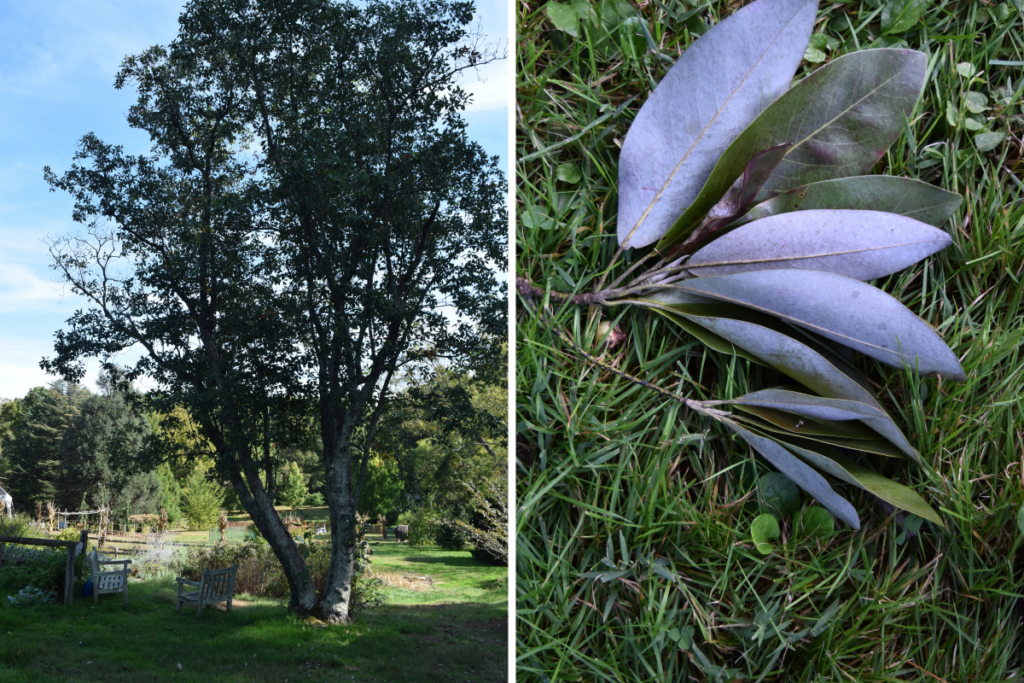
Swamp magnolias are native to the Eastern United States. They naturally grow where the soil is inundated in the spring and then stays reasonably damp throughout the growing season. They are a natural choice for the edges of a rain garden. Grow swamp magnolias in partial shade where they receive some sun but are close to other trees or a fence line for protection from the hottest sun. Their roots shouldn’t dry out completely, so to keep the soil moist, add plenty of leaf mold to the soil.
Look for this tree at native plant nurseries if you live on the East Coast of America. It is a good tree for all seasons. The silvery bark is lovely in the winter. Some genetic variants keep their leaves all winter and then gradually shed some throughout the year, but mostly in spring. The leaves are decorative with silvery undersides that show up nicely in even a slight breeze. They have a spicy scent when crushed that gives rise to one of their common names—sweetbay.
Flowers are produced in late spring and early summer. The cup-like blooms have a subtle but delicious citrusy scent. The flowers are creamy in color and have many anthers clustered in the middle. They are produced over the course of several weeks. Each flower opens in the day and closes at night for two or three days. Swamp magnolias are pollinated by beetles and some moths and butterflies. They are a larval host plant for several butterflies.
An important reason to grow this beautiful swamp magnolia is that the fall fruit is an important food source for birds. I know that they eat them in my garden because the shiny red-orange seeds disappear out of the seedheads. I went out to take a photo for this email, but the seeds had all been eaten by the time I went back out. They must be tasty and nutritious.
One thing to watch out for is that the whippy branches of the young tree are attractive to deer at this time of year when they are rubbing the velvet off their antlers. Protect the whole tree with a mesh wire circle until it has grown large enough to withstand deer pressure. Another protective method is to use three or four stout stakes angled out at about 45 degrees so that the deer cannot get its head near to the trunk.
Book Club: The Gardener’s Bed-Book
Richardson Wright was a prolific author about a hundred years ago. He was based in the little hamlet of Silvermine, Connecticut. I was lucky enough to visit his house and garden many years ago. No, not when he was alive but as a guest of the current owner. I was speaking for a nearby garden club, and I found out that one of the members owned Richardson’s house. I jumped at the invitation to visit. In fact, I might have invited myself.

The house and garden are charming. They are perched on a hill by the side of a little side road in the wooded part of the state. Numerous changes in level provide interest as you walk around the garden. The house is modest but full of lovely old details.
Richardson’s writings are sometimes dated but still interesting. This particular book is laid out so that you read one of the mini essays each night before bed. There are so many fun facts contained in the journey throughout the year. Richardson was well read and uses poems and historical facts liberally sprinkled throughout his writings.

I picked up my copy and the page opened at October 23rd. A New York Times clipping fluttered out from 1934 with advice on rock and alpine gardening. What really caught my eye was the entry on that page entitled “The Peregrination of Gardeners.” Richardson can be rather pompous and wordy, so if you don’t remember the meaning of “peregrination,” I don’t blame you. According to the Oxford Dictionary it refers to “a journey, especially a long or meandering one.”
Despite having a very comfortable and well-tended house and garden, it seems like Richardson liked to travel to see gardens. He says, “It is a pretty coincidence that those who enjoy gardens and gardening also enjoy travel. To be eternally contented to stay in one spot, satisfied with one’s immediate surroundings, is a sure sign of old age, decay and slowing-up of ambition.” Maybe he is a little rude about old gardeners but whether it is real travel or armchair travel, I agree with him that gardeners love to see other gardens.
Of course, back in his day books were in black and white and there was no television, but there were colored magazines. Richardson was editor of the well-respected publication House and Garden, which was founded in 1901. That was people’s avenue to vicarious garden travel. Whether you can travel to see gardens or enjoy gorgeous garden videos and photos, I hope that you get to enjoy some lovely gardens.
Note: I am not sponsored to promote books found in these newsletters. They are featured because I truly love them.
In Case You Were Gardening…
Hot Colors are Here
What to do do when the leaves come tumbling down
Tips to prevent snow damage to evergreen trees and shrubs
If you like this newsletter, please tell your gardening friends about it. It is easy to subscribe by contacting me via my website.
If you would like to see photos of my garden at Northview and images of my garden travels, please follow me on Instagram @NorthviewGarden and @JennyRoseCarey
Happy gardening this October!




Leave a Reply