
Managing Fallen Leaves

The memory of acrid-smelling bonfire smoke lingers in my brain. If I was lucky, I could help my grandfather build the pile. It was sited carefully so that once the ashes were cooled, they could be spread over the soil to make a wonderful alkaline addition for future plantings of cabbage or brussels sprouts. I also remember the urgent cry from my mother to come quickly and help get the laundry off the washing line because a neighbor had started a bonfire.
These days there are more regulations about burning things in your garden. My lovely neighbor, Marian, would get a special permit to burn her rose trimmings. I have not smelled bonfire smoke for years in suburban Philadelphia.
So, what do you do with your leaves now? Should you leave the leaves on your flower beds or should you take them away to make leaf mold as Mrs. Francis King suggested in 1927? My own approach is to do a bit of one and a bit of the other.
I have three designated leaf zones. This method of handling the many deciduous leaves that fall on my garden is not an exact science, but it has helped me rationalize my leaf management. Extra leaves, that are not needed where they fall, are shredded on the lawn using the mulching lawn mower. They are then piled up and taken to one of two leaf mold piles for later use after they rot down.
Zone 1 has all the leaves taken away from the beds. These include dry beds that are mulched with gravel and also the moss garden. These beds stays lean-and-mean because there are no leaves to rot down and increase the richness of the soil. The plants that grow in these beds need air circulation and light all winter and fallen wet leaves will often kill them. These plants include lavender, santolina, sedums, biennials with basal rosettes of foliage, and gray-foliaged plants.

In Zone 2, the leaves that fall are left but no extra leaves are added. These beds take a bit of finessing to make sure that winter-spring bulbs and other small plants are not smothered by masses of wet leaves. Most of the mixed flower planting areas get this treatment.
Zone 3 beds can have extra leaves added. During winter, the leaves shelter the soil surface and the invertebrates that live in the leaf litter. The organic matter, produced as the leaves rot down, eventually enriches the soil. Shaded garden beds get this treatment, as do naturalistic plantings, and any areas of the garden where the soil is looking bare or depleted.
Your approach to fallen leaves will vary according to your climate and the types of plants that you grow. What I do know is Mrs. Francis King was right not to waste her precious autumn leaf bounty.
November Blog:
Seedswomen of Minneapolis

A recent trip to the Anderson Horticultural Library at the Minnesota Landscape Arboretum, near Minneapolis was a wonderful treat on many levels. One of the best things in the Anderson Library was the display of seed catalogs in their collection that were produced by women growers. Thanks to the Anderson Horticultural Library for allowing me to photograph these images.
Plant of the Month:
Dryopteris erythrosora, Autumn Fern

As you look around the garden in November, make a note of any plants that are looking good. One that catches my eye at this time of year is the aptly named autumn fern, Dryopteris erythrosora. It has green leaves that are tinged with reddish-orange that reflect the autumnal colors of the deciduous trees above and the fallen leaves below. The cultivar ‘Brilliance’ has more of a red tinge to its fronds than the straight species. I have this fern planted around my copper teapot fountain to bring out its rich bronzy colors.
Not only do autumn ferns look nice now in the waning days of the gardening year, but they have also been good-looking plants throughout the growing season. In spring, the young fronds emerge as orangey curled up shoots. The dissected leaves grow and expand into handsome splayed mounds for the summer, and then continue to look good until frosts and snows knock them down.

In late winter, the squashed fronds can be removed at the base. In wild areas, the leaves can be left flat on the ground as a natural mulch for the new growth. Either way, they are an easy-care plant for a partly shaded spot. Give them plenty of leaf mold at some point in the year and they will reward you with profuse growth. Autumn fern is much more than a background shade plant. Give it a prominent spot where the shape of the leaves, the form of the plant, and the exquisite colors can be used to advantage in your designs.
Book of the Month:
Mrs. Francis King, The Flower Garden Day by Day, Frederick A. Stokes Company, 1927.
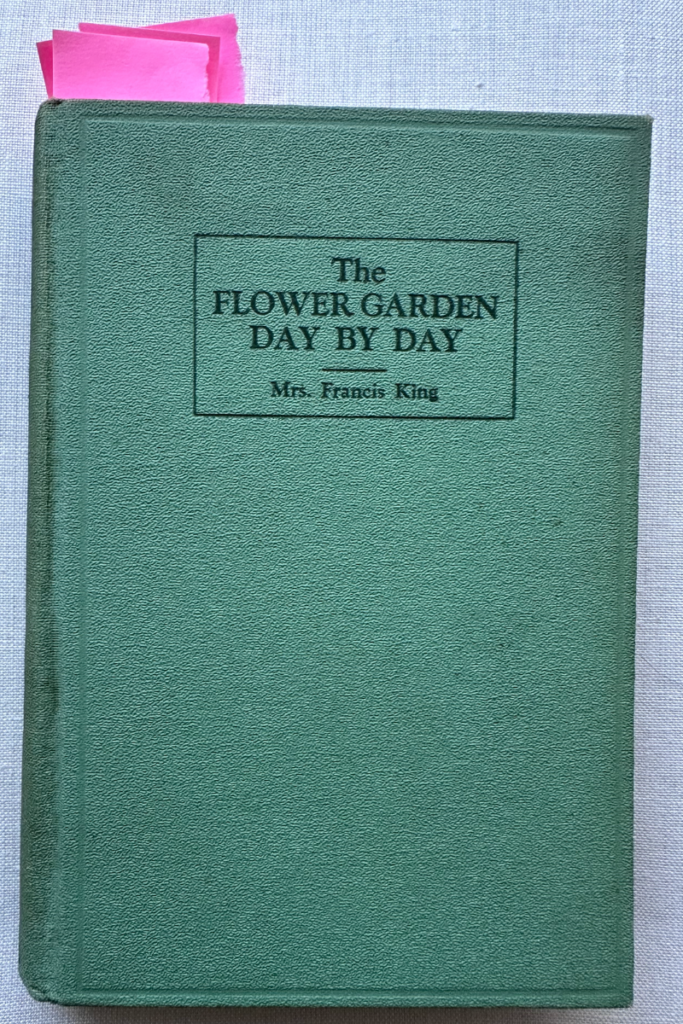
Louisa Yeomans King wrote her gardening books under the name of Mrs. Francis King. She was a prolific author of books and magazine articles who became the voice of American gardening for several decades in the early part of the twentieth century. Mrs. Francis King is a personal heroine of mine. From her first garden in Alma, Michigan, of her last garden in South Hartford, New York, she gardened and wrote to encourage others to garden too.
Louisa was passionate about gardening and learned all that she could from other American gardeners as well as English gardeners, especially the trend-setting Gertrude Jekyll. This is a fascinating relationship. Louisa visited Gertrude in England and then Gertrude wrote the forward to this book. (If you are new to this newsletter, go back to an earlier blog that talks about Gertrude’s garden at Munstead Wood.)
The Flower Garden Day by Day is a reference book to help gardeners learn what might need to be done in the garden at any time of year. On the opposite page, there was space for the owner of the book to write their own notes, but in all of the copies that I have seen there are no notes! However, when you are learning how the gardening year unfolds and what you need to do, this would have been a really useful book.

What can we gain from this book today? The quote at the top of this newsletter about composting reminds me of one of the reasons that I continue to dip into these old, long-forgotten gardening books. There is wisdom there. Wisdom that is several generations old. Not everything still translates but the things that do are worth paying heed to.
The other thing that comes through Louisa’s writing is her encouragement of readers to join or start a garden club. She knew that when we garden with others, we can help each other. On the entry for January 31st, she gives many benefits of being part of a garden club. She saves my favorite reason for joining or starting a garden club for last: “But finally and above all, for the perfect delight of a society which exists to further ‘the purest of human pleasures’.” I would agree. So listen to Louisa and join a garden club this winter. You will find life-long friends that share a common interest.
Note: I am not sponsored to promote books found in these newsletters. They are featured because I truly love them.
In Case You Were Gardening…
Upper Midwest Roadtrip – October 7, 2024
The Leaves Come Tumbling Down (and Then What) – October 27, 2022
Japanese Maple Leaves – October 28, 2013

If you want to read past issues of this e-newsletter, go to the top of this email and find the button labelled “View this email in your browser.” Then there will be a button second from the left at the top that says “Past Issues.” Press that and you will see a list of the past emails in the archive.
If you have enjoyed this email, please pass the word to your gardening friends to subscribe via my website jennyrosecarey.com, and follow me on my two Instagram accounts: @NorthviewGarden and @JennyRoseCarey
Bye for now,




Leave a Reply