
Finding Your Obsession
I have been thinking a lot recently about plant obsession. I think that spring lends itself to all kinds of gardening passions, due to the wide diversity of varied and beautiful plants that flower in spring. You could be obsessed by Virginia bluebells, or English bluebells. You could be an aficionado of flowering trees and shrubs. Or how about tulips? Slightly later on, you could fall for bearded irises or peonies. This month’s quote is about peonies, but how easily could these words be applied to rock gardening, herb cultivation, or hosta collecting?
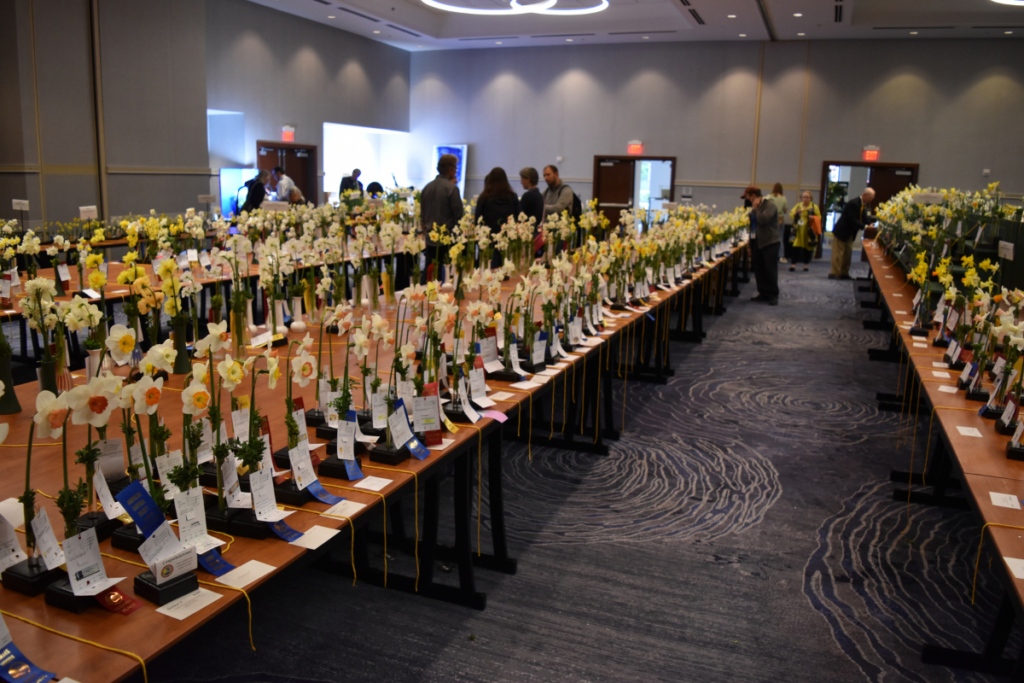
I was lucky enough to be able to attend the American Daffodil Society Convention in Virginia in this April. I do think that any plant society that has national or international meetings really brings together the most obsessed gardeners and growers. The ballroom was packed with thousands of cut daffodil stems and what a lovely sight it was. There was a daffodil (or ten) for every taste, from the big and bold to the teeny miniatures.
As you get into the gardening year, consider joining a plant group. I belong to quite a few plant groups, and I recently re-joined the Rose Society. Think about your current plant obsessions. There are groups to suit any interest. Look for indoor plant groups, hardy plant societies or groups that concentrate on rock gardens, herbs, daffodils, irises, hostas, primulas, ferns, and wildflowers among many others. There are local and national groups for you to join, and the dues are often quite reasonable. You receive lots of specialist growing information, you get to visit other member’s gardens, and often there are plant swaps or sales. All of that plus the camaraderie and community that is built on a mutual obsession for a particular type of plant. It really makes your heart sing!

I was recently interviewed by Craig McManus for “The Garden Question Podcast.” Below is the link to the interview that I did about the sensible use of water in your garden (Episode 158).

On the Road!
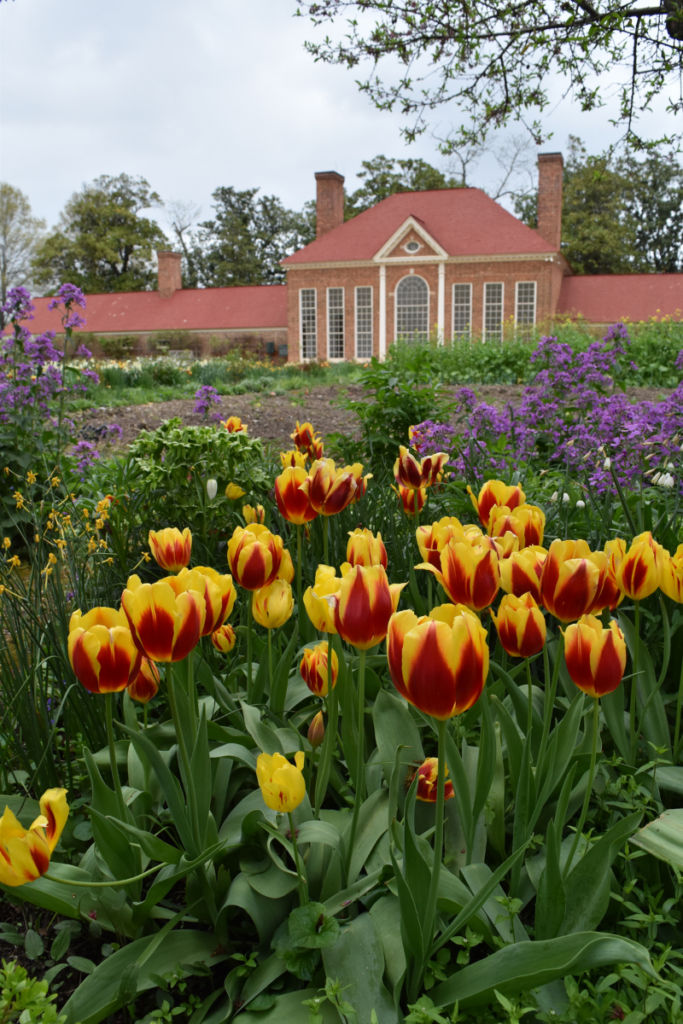
The recent trip to Virginia for the daffodil show included a side visit to Mount Vernon, the home and garden of George Washington. I have visited the garden quite a few times over the years, but I especially love being there in spring when the dogwoods and redbuds are blooming. I made a beeline for the Upper Flower Garden where the old-fashioned tulips were still in bloom. It was a rainy day but there was no dampening of spirits under my umbrella. My blog this month shares some images of and thoughts about my trip to Mt. Vernon and the old-fashioned plants found there.
Plant of the Month: Tree Peonies
Tree peonies are one of the true “bold beauties” of the late spring garden. The word “tree” may suggest to you that these plants are going to grow as tall as your house, but instead it refers to the woody base of the plant. In my climate, tree peonies can get three or four feet tall or occasionally six feet when they are grown in a sheltered corner. In temperate climates, they can grow to the size of a small tree or large shrub. They are long-lived plants that only achieve their true appearance after a few years in your garden.

Tree peonies are grown for their immense blooms held at the top of their stems. The colors are luscious shades of pink, white, yellow, maroon, and peach. There are singles and doubles.
Plant tree peonies in moist, well-drained, fertile soil in a bed that has dappled part shade or morning sun. The light in the early part of the day is best for tree peonies because it is not so intense as later on. Tree peonies need plenty of sunshine to produce strong growth and plentiful blooms but not so much that it scorches their delicate petals.
My lovely gardening neighbor Marian had a row of tree peonies by her driveway. When they were showing their bulging buds, she would erect a line of sheltering parasols to protect the plants from rain and sun. The plate-sized flowers were a sight to see when the buds opened to reveal their enormous flowers. I would get a call from Marian to say that they were in bloom and an invitation to come over for a cup of tea. That to me is the true definition of a bold beauty in your garden—a plant that is so special that it requires a toast to its beauty when it is in flower.
Book of the Month:
Green Thoughts: A Writer in the Garden
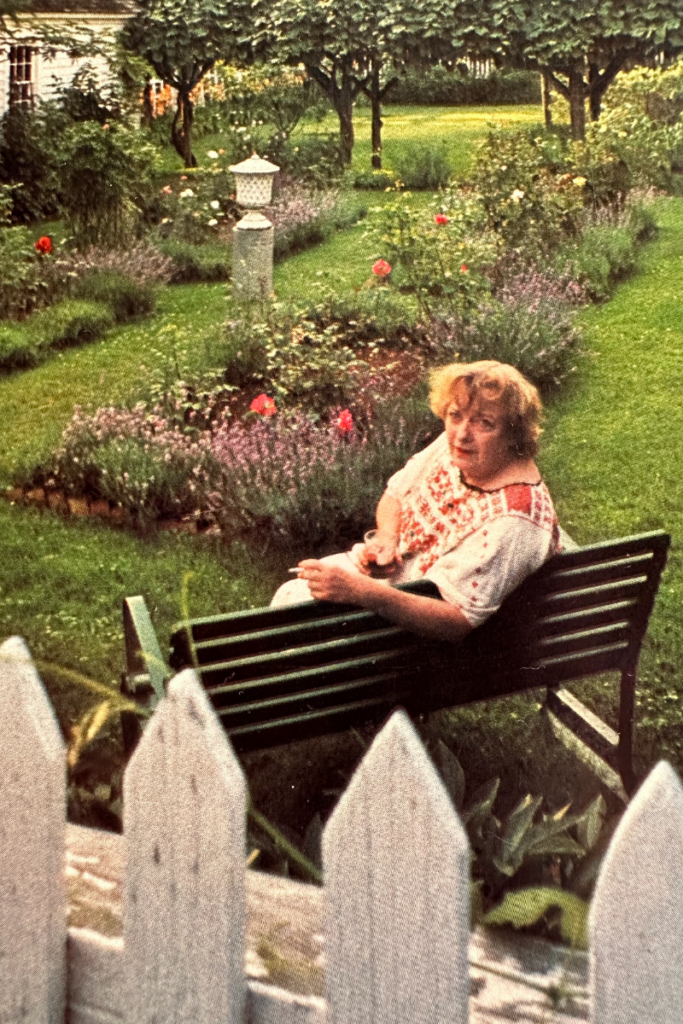
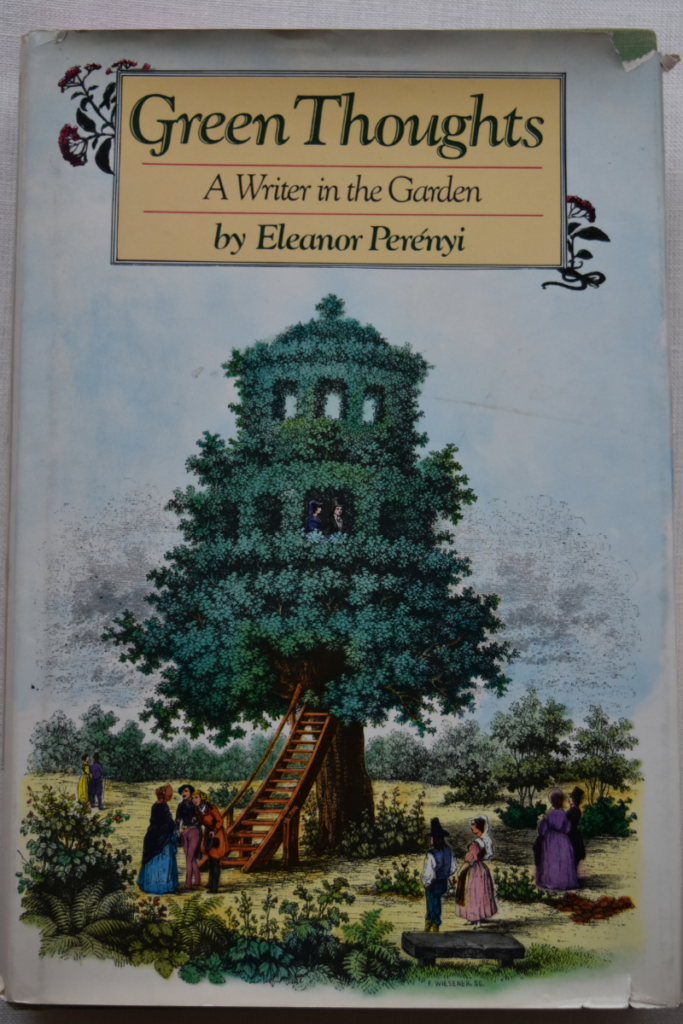
I have dipped into this anthology of garden writing many times over the years. Eleanor has a wonderful turn of phrase, astute observational skills, combined with a thorough knowledge of gardening. I love what she writes in the Foreword: “A writer who gardens is sooner or later going to write a book about the subject.” The quote at the top of this newsletter is just another example of her gardening attitude that mirrors my own. I wonder if it is because she had an international view on life and gardens.
Eleanor was born in 1918 and moved around the world as the daughter of a U.S. Naval Officer. At a young age, she married a Hungarian Baron and then after he died, she lived and gardened in Connecticut. Topics of conversation covered in the book (and it does feel like a conversation) cover a wide range including Tree Houses, Toads, and Tulips. Other intriguing entries are Failures, Magic, and Belgian Fence.
I am going to quote from Eleanor’s section on “Failures.” We all want to know that garden writers mess up their plantings just the same as every other gardener (which is, of course, true). On page 65, she has wise words for us all: “It takes a while to grasp that a garden isn’t a testing ground for character and to stop asking, what did I do wrong?” What a great way of looking at this perennial problem of perennials not being perennial or annuals not even lasting the season.
The final section, entitled “Woman’s Place,” is one of my favorite essays. Bear in mind that this was written in 1981 and that Eleanor had lived in Europe on the front lines of World War II. She could have been more influenced by her own generation, but she seems to have a refreshingly open view of women and their past roles in gardens.
She takes to task garden writers who skim over the way that women are portrayed in garden history. Women have always gardened. Eleanor makes the salient point that how and what they did in gardens was proscribed by men throughout history. Walled and enclosed gardens were often a method for confining them. She disagrees with other garden writers, even female ones, about their interpretation of texts written by men about women in gardens.
Eleanor passed away in 2009 after a long career in journalism and book writing. The only book that I have read of hers is Green Thoughts, and I am glad that she shared her contemplations with us in the pages.
Note: I am not sponsored to promote books found in these newsletters. They are featured because I truly love them.
In Case You Were Gardening…
A Classic English Garden – Longbarn – April 2024
Self Sown Flowers – September 2017
Tulip sylvestris: Wood Tulip – May 2014

If you like this newsletter, please tell your gardening friends about it. It is easy to subscribe by contacting me via my website.
If you would like to see photos of my garden at Northview and images of my garden travels, please follow me on Instagram @NorthviewGarden and @JennyRoseCarey
Bye for now,




Leave a Reply