
A New Book from an Old Friend
What hopeful words from the wonderful new book by my lovely English-American friend Pam Hubbard. It is published TODAY, so we are going to celebrate. The full title of the book is The Contemporary Cottage Garden, Climate-Friendly, Mindful Methods for Growing Flowers and Food. Pam’s book is illustrated with photos by the very talented photographer Rob Cardillo. Rob has won many awards for his brilliant photos, and they worked closely together on this book. Pam and I met some years ago, and we knew we shared a common gardening ethos.

We both grew up gardening in England and moved to Pennsylvania to carry on gardening in a totally different climate. She gardens in an area of Pennsylvania called The Poconos. This is a mountainous area, known for its natural beauty and cold, snowy winters. She lives north of me, and at a higher elevation, so she is a USDA Zone 5 rather than my Zone 6 to 7. She also gardens where the soil is rocky and hard to dig in places.
Pam has figured out how to continue cottage gardening in these conditions. She grows a garden that is packed with flowers and vegetables in a way that is rooted in the traditional gardening styles of her childhood. Yet, it is up to date in solving some of our difficult climate, weather, and pollution problems. To me, it is the best of the old combined with the best of the new. (See the Plants of the Month and Book Review below!)

Dates for Your Diary
Philadelphia Flower Show, Philadelphia, Pennsylvania
I will be speaking on The Essential Guide to Bulbs at the convention center in Philadelphia at the following times:
- Sunday, March 1st at 1pm – Know to Grow
- Saturday, March 7th at 4pm in the PHS Member’s lounge
Pam Hubbard will be hosting a book launch lecture at the same show during Know to Grow on Wednesday, March 4th at 4pm.
Matt Guilhem and I are going to do a report from the show for WHYY (90.9 FM). Our short radio segment of gardening airs at 4:44pm Eastern Time every Thursday. You can pick it up on your phone or computer even if you are not in our listening area.

Williamsburg Conference
I will be lecturing on the ‘History of Women in Horticulture’ at the Williamsburg Symposium on April 18th at 9 am. Register for the Symposium soon in case it sells out.
Curious About My Garden?
Throughout the spring and summer of 2026, I will be hosting three Open Garden days from 10am to noon at Northview, the four-and-half acres I call home. Full of intricately connected small gardens, whimsical fountains, native shade plants, and much more, a visit is sure to leave you with inspirations for your own gardens.
The entry fee to Open Garden Days is $20 per person. Parking is limited, so I advise carpooling if possible. Email me at jennyrosecarey@gmail.com to reserve your spot!
2026 Dates:
Friday, April 24th
Friday, June 5th
Friday, September 26th
Cottage Garden Plants of the Month

This month, I am sharing some of the characteristic cottage garden plants that Pam grows in her garden. We both love the loose style of planting that includes flowers and edibles in the same garden. Every year, Pam starts her annual flowers and vegetables from seed in her good-looking potting shed. A shed or an outbuilding is a great addition to a cottage garden. Pam also has a gazebo in her meadow.

She describes how to grow a meadow in her book. Pam grows flowers for all the seasons in the different sections of her garden. I think it is good to look forward to some spring and summer blooms this February.

Primroses
These spring bloomers are cultivated varieties of the ones that are English wildflowers. Pam grows them in moisture-retentive soil at the front of the flower bed around the pond.
Phlox
Border Phlox are one of the highlights of Pam’s summer flower garden. She grows a super patch of these scented wonders that are magnets for butterflies and other pollinators.

Hollyhocks
Hollyhocks are traditional cottage garden plants that bloom in late spring and early summer. They are perfect for the mid-to-back of a flower bed.
Liatris
Liatris is a summer-blooming native plant. Pam grows a perfect patch of these in her Pollinator Garden around her mailbox. The cultivar is called ‘Kobold’.

Pinks
Pam has a special section in the book where she describes gardening for the senses. One example of a plant that Pam grows are the flowers called Pinks. These are delightfully scented flowers, but the name is deceptive because they are not all pink in color. Plant these in well-drained soil with added grit. They are another front-of-the-border plant.
Book of the Month:
The Contemporary Cottage Garden
Pam’s life has been intertwined with gardening since she was a child. She uses this trove of garden applications to engage the reader with stories from her own experience. Then, she shows the reader how she uses thoughtful ways of gardening to solve problems, while still managing to develop a cottage style garden. Pam empowers readers to be part of this new movement, too.
Pam is a very practical gardener whose own garden is her greatest advertisement. You have never seen healthier cabbages or zinnias, or a more beautiful meadow garden abuzz with pollinators. I love to visit and sit down for a cup of tea with Pam. We sit outside in the gazebo in the summer, or inside by the fire in the colder months.

By reading this book, Pam invites you into her garden. She intimately shares her secrets with you in a sensible way that addresses the serious issues affecting our lives today. She gives you the tricks to help address issues such as pollution, climate, and weather problems. It is the perfect combination of detailed ways to improve your gardening methods, while not losing sight of the joys of growing beautiful flowers and tasty, healthful vegetables.
My personal favorite part of the book is Chapter 6, where Pam describes how to develop different types of cottage gardens to ease stress. In this chapter, she writes about her Serenity Garden, her Cutting Garden, and her Sensory Garden. Each of these areas have appeal at different times of year and on certain occasions. You will delight as she tells you of their development, and how you can achieve similar success in your own garden.
This book is well written and easy to read. It is a perfect book for gardeners who enjoys cottage gardens and would like to know more about the process of making one themselves. It is also a great book for anyone who would like to make a difference in their own lives and in the world at large through how they garden.

If you like this newsletter, please tell your gardening friends about it. It is easy to subscribe by contacting me via my website.
If you would like to see photos of my garden at Northview and images of my garden travels, please follow me on Instagram @NorthviewGarden and @JennyRoseCarey
Bye for now,

Want More? Check Out My Books!
While shady areas can be a challenging area for gardeners, Glorious Shade shows you how to make the most of it by helping you chose the right plants for the space and sharing key designing and maintenance tips.
The Ultimate Flower Gardener’s Guide gives gardeners the confidence needed to create the flower-filled garden of their dreams. Instead of concentrating primarily on color, it brings flower shape and texture to the fore, helping homeowners to create cohesive, yet unique, flower gardens.
The Essential Guide to Bulbs is a gorgeously photographed, comprehensive, and inviting resource. While many gardeners may be familiar with the early show of spring bulbs, there are so many more to choose from that provide three-season color, drama, and spontaneity in the garden.
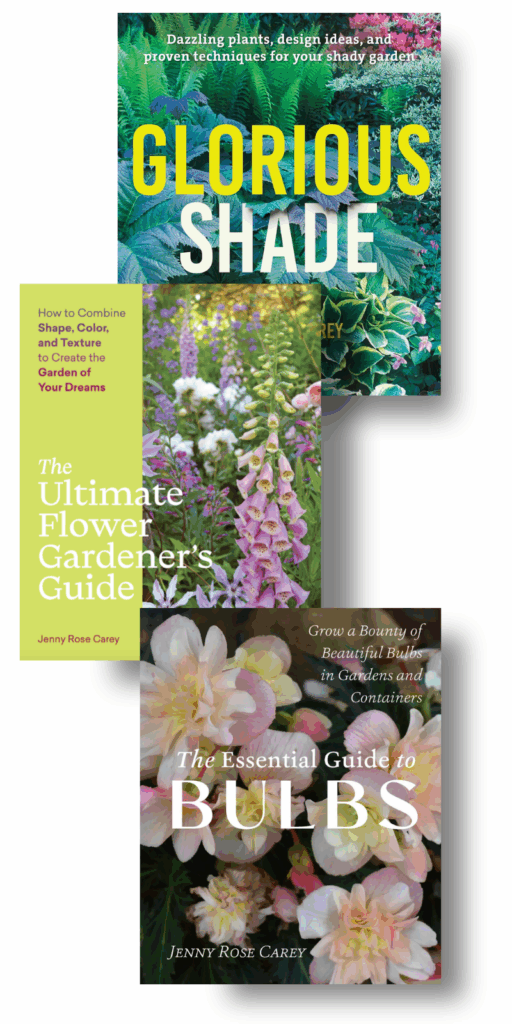
Not only are these books an excellent addition to your gardening book collection, I personally sign every book purchased directly from my website as a special thank you.


Leave a Reply