
The Subtlety of Winter Gardens
The quote this month really made me contemplate one undeniable fact. This winter I want to take time to pause amid the usual end of year chaos and be still in my garden. Marion’s quote above about “winter’s beauty,” is a lovely phrase for me to repeat when I walk around the garden. I want to think about the garden as different but not gone.
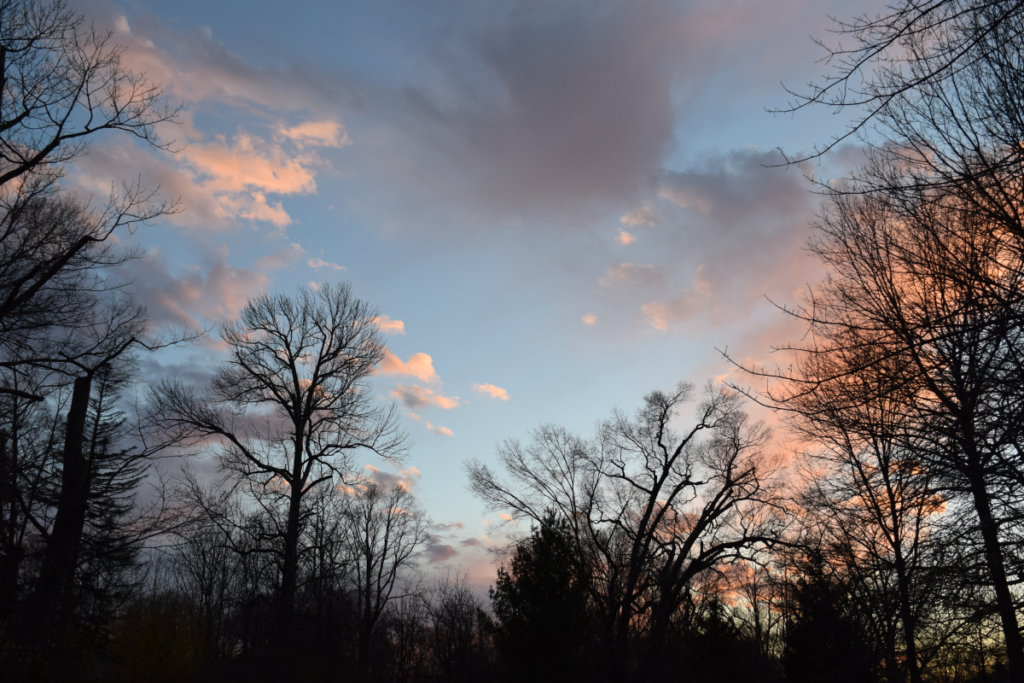
There are gardeners who need a restful couple of months. They have “worked” hard all of the growing season and need to put their feet up by the fire. I have put “worked” in quotes to highlight it. It is a common way to talk about what we gardeners do in the garden. I prefer to say that I have “played” in my garden. For me, winter is a struggle and always has been. I miss the daylight, I miss the general pottering or playing in my garden, I feel antsy.
This year, I am doing my best to get out and walk around the garden every day—whatever the weather. I want to be present in my garden and observe even small changes. I want to relish in the “trees in their dark tracery … etched against the cold blue sky.” This is my goal. Ask me how I did in the spring!.
Visiting Munstead Wood
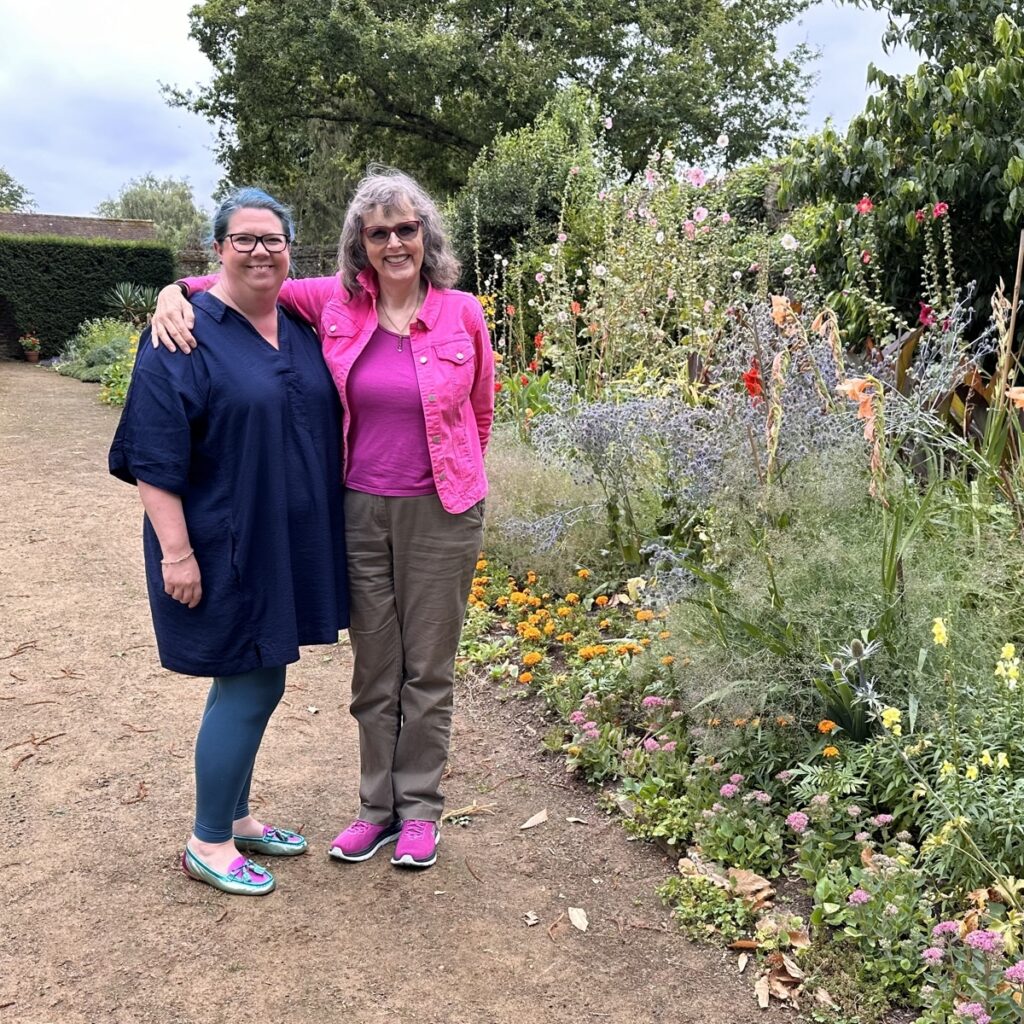

Gertrude Jekyll was an amazing gardener, garden writer, photographer, and garden designer who lived in England from the 1840s to the 1930s. She is a personal garden mentor for me especially for the way that she combined the artistic and practical approaches to gardening.
Plant of the Month:
Ilex verticillata, Winterberry
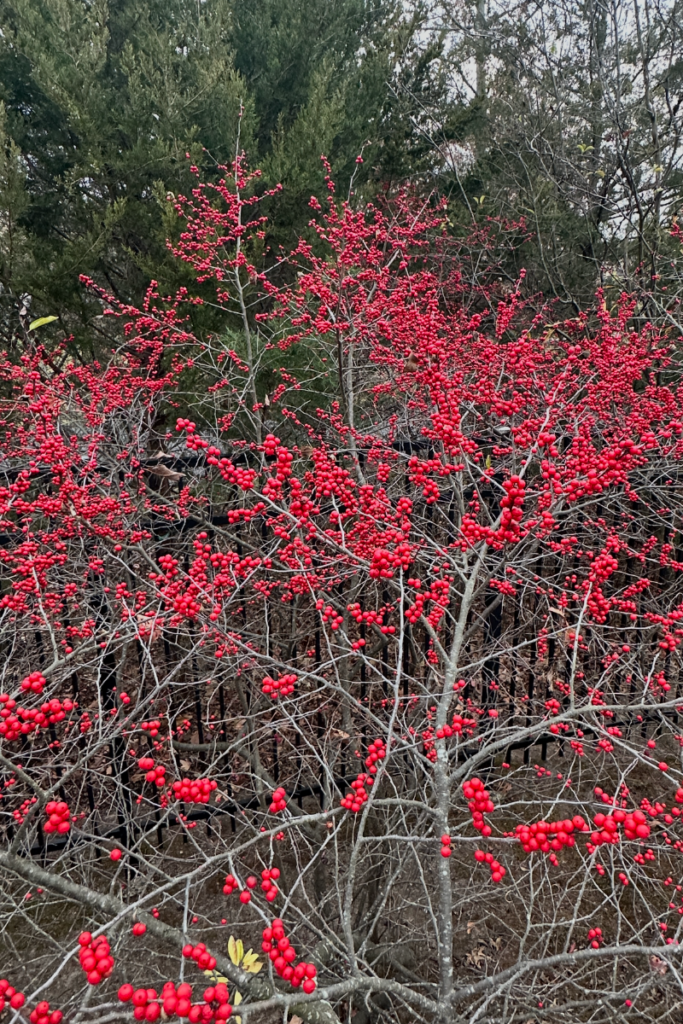
Hollies of all sorts are great for cheering up the winter garden and for cutting to have in the house. Last December, I discussed some evergreen hollies. This year, I am focusing on the deciduous ones that lose their leaves but keep their red or orange berries.
These hollies are shrubs that love moist places. They are perfect to plant in a rain garden, a swale, or in a naturalized area. They can be trimmed to create a semi-formal hedge, but they look best when grown in a shrubbery, in sun to part shade. They are native to the Eastern United States.
Like all hollies, they are dioecious, which means that the male and female flowers are on separate plants. To get a good fruit set, it is important to plant a male plant that will have no berries somewhere near the female plants that do bear berries. I usually suggest that you can plant many female bushes to one male, tucking the rather boring male plant behind the row of adorable female ones.
The straight species of the holly is a wonderful large shrub that has variable amounts of fruit. As a result of plant selection and breeding, we have some great cultivars that usually have a heavier fruit set. To get the most fruit, you pair the males and females so that they bloom at the same time. This way, pollinators can take pollen from the male plants to the female ones. In my experience it is hard to tell exactly when they will bloom but I give some suggestions of male and female pairs below.

One of the main reasons for growing these plants is for pollinators in the spring and birds in the autumn. I try to get out and cut a few stems for myself before the birds consume all the berries. One day in winter I will look out of the window and see a flock of birds, usually American Robins, descend onto the bushes and strip off all the berries. The fruit must get softened by frosts and be just right for eating. I have seen that some of the cultivars with extra large berries like ‘Winter Red’ are less favored by birds. If you have a wildlife garden try to find the straight species.
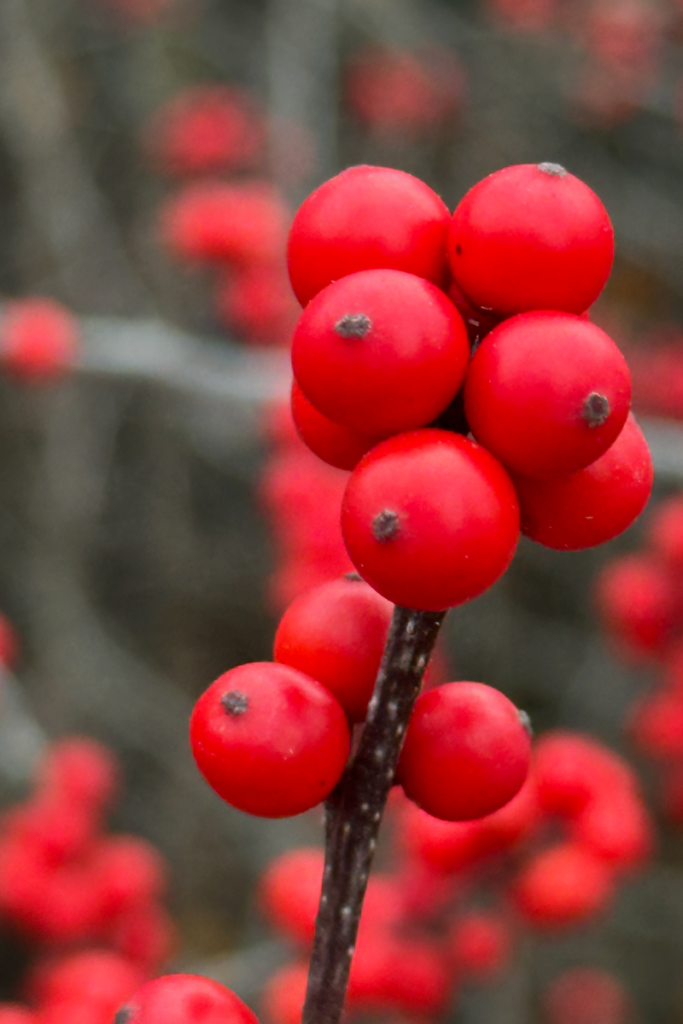
Male winterberry cultivars include ‘Jim Dandy’, which is early, and ‘Southern Gentleman’, which is later to bloom. Female cultivars include ‘Red Sprite’, which is short and blooms early, ‘Sparkleberry’, and ‘Winter Red’, which blooms later.
Book of the Month:
Pot-Pourri: A Flower Lover’s Garnering by Marion Henderson
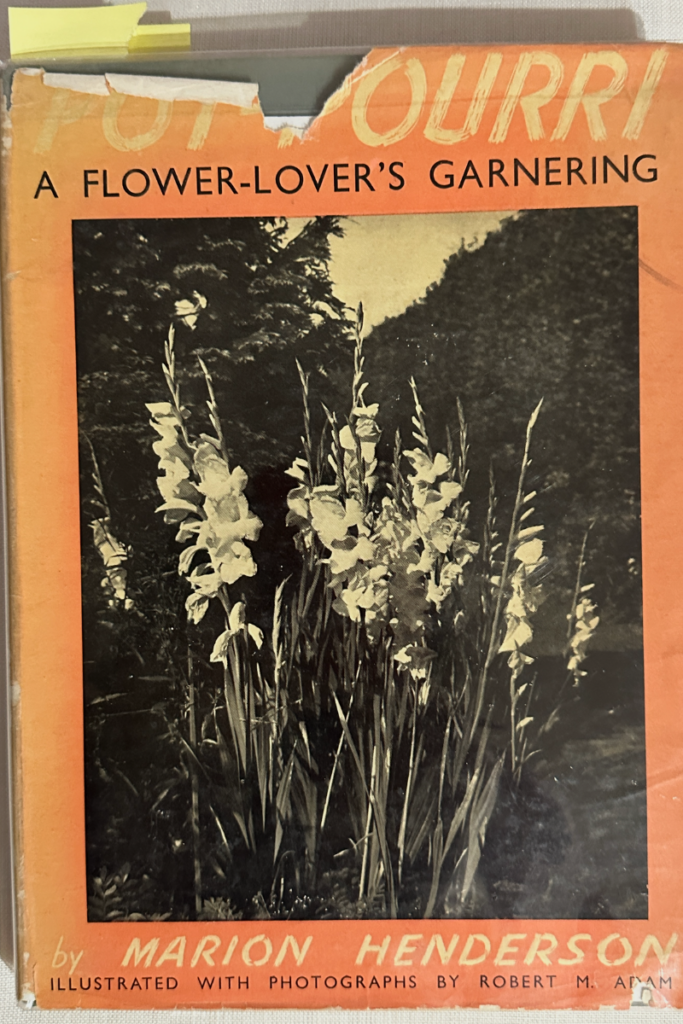
I love a book that you can dip into and find a nugget of thoughtful writing on almost every page. This book fits the bill because it is a series of mini read-alone essays that were written for magazines in England and America. The sub-heading is wonderful—“A Flower-Lover’s Garnering,” even if I did misread it as “A Flower-Lover’s Gardening” at first.
What Marion garners are thought-provoking observations from her garden in Scotland. One of my favorites is entitled, “Flowers and Old Clothes,” since the title resonated with me.
I read it and had a good giggle because so much of what she wrote was relatable. She explains why she mends the pockets of her old gardening coat, how it smells of past outdoor excursions, and how those fragrances bring back happy memories. Near the end of the piece Marion says, “nothing new or startling is ever worn by true gardeners and, the shabbier the clothes, the more qualified the gardener.” I know that this was true in my childhood when the patched elbows and knees became a badge of honor.
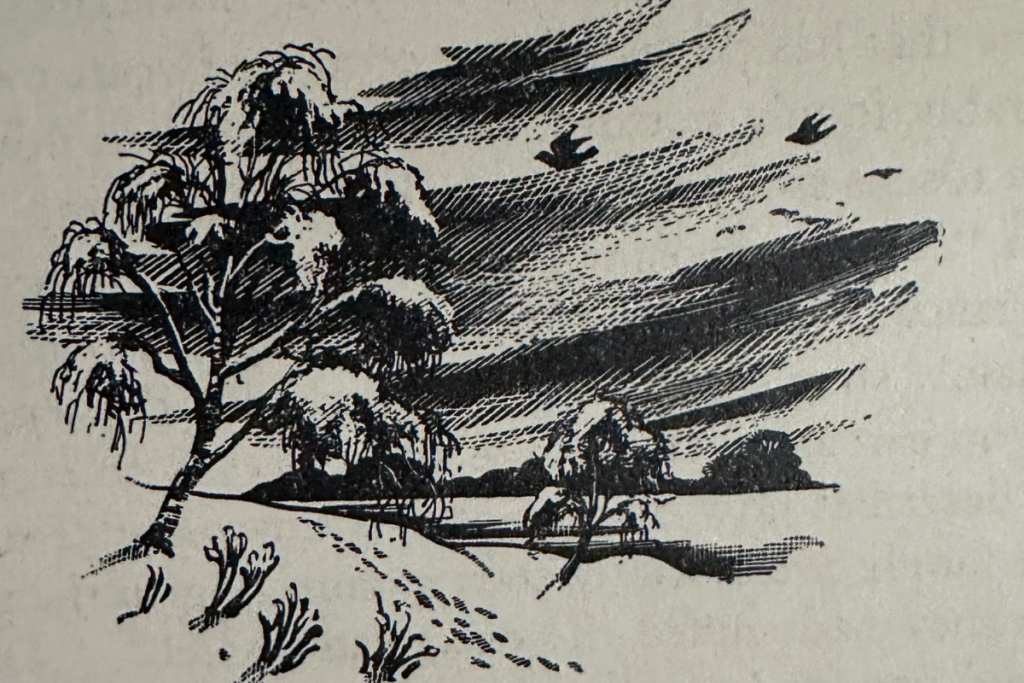
The quote at the beginning of this newsletter is in a chapter called, “Some Happy Moments in a Struggling Gardener’s Year.” She continues her thoughts from above in this way: “I look out on a chilly, frosty lawn that provides a platinum setting for the frosted trees, the rose bushes, and the shrubs which stand out in white, encrusted over with gleaming pearls. My happy moments flash across my mind.” She follows with a list of happy memories of the past gardening year.

As I finish up this last newsletter of the year, I hope that you will take a while to think about and even jot down some of your “happy moments” in the garden—both small and large. In this way, we reinforce why we garden and how much pleasure cultivating the soil brings to us.
I will finish with number 10 on Marion’s list of happy moments because it is one that I can relate to. She says: “10. To pick a bunch of blooms for a friend, matching the colours, picturing her expression when she receives the flowers. Is this not happiness?”
You can read this book for free from the Internet Archive here.
Note: I am not sponsored to promote books found in these newsletters. They are featured because I truly love them.
In Case You Were Gardening…
Minneapolis Seedswomen of the Early 1900s – November 11, 2024
Garden Book Roundup 2023 – December 11, 2023
Winter Seed Sowing in Old Milk Jugs – January 13, 2023
If you want to read past issues of this e-newsletter, go to the top of this email and find the button that is labelled ‘View this email in your browser.” Then there will be a button second from the left at the top that says “Past Issues.” Press that and you will see a list of the past emails in the archive.
If you would like to see photos of my garden at Northview and images of my garden travels, please follow me on Instagram @NorthviewGarden and @JennyRoseCarey
Bye for now,




Leave a Reply