
First of all, I have to say that the quote above is less than half of this sentence written by E. A. Bowles in 1914. My editors would have a fit! There is little to no punctuation. When, exactly, do you take a breath?
So, is E.A. right, and is August a bad month for flowers in the garden? It doesn’t have to be, but a lot of that depends on your climate. If you live where it is hot and dry, it is harder than if you have some summer rain.
No matter where you live, the rest of the sentence provides the solution to having only a few flowers in August. E. A. says, “I have made it a practice when in gardens and nurseries of noting plants that are good in August and trying them here.” This is a great way of solving the lack of floriferousness in any month that your own garden disappoints you. Go to local nurseries and public gardens. See what plants they are growing that you happen to like, and then, add some of the same ones to your garden.

August is a funny month for gardeners. Life often says that it is time to go to the shore, beach, mountains, lakes, or far-flung places with your family. If you are always away this month, then don’t bother to add more August flowers (obviously). You might decide to try to keep your existing plants alive with elaborate watering systems, a handy neighbor, or just picking up the pieces when you get home.
This August at Northview, we are trying to keep everything alive and looking great for our big wedding in the garden in mid-September. The blog below shows you some of our August into September flowers. Please note that the Open House Date is the Friday after the wedding—September 25th 2026, from 10 am to 12 noon. Come and see what the garden looks like in this late summer season. Hopefully, you won’t find any beer bottles in the hydrangeas!
Please email my lovely assistant Helene at jennyrosecarey@gmail.com to let us know that you are coming.
Speaking of Open Houses, here are the dates for 2027:
- April 16th
- June 4th
- September 24th
All days are from 10am to 12 noon. Please carpool because parking is limited, so bring a friend and walk around together. Wear garden-friendly clothes and shoes. Pink hats or outfits are encouraged. The dates are rain or shine.
Before You Garden: Growing Wedding Flowers
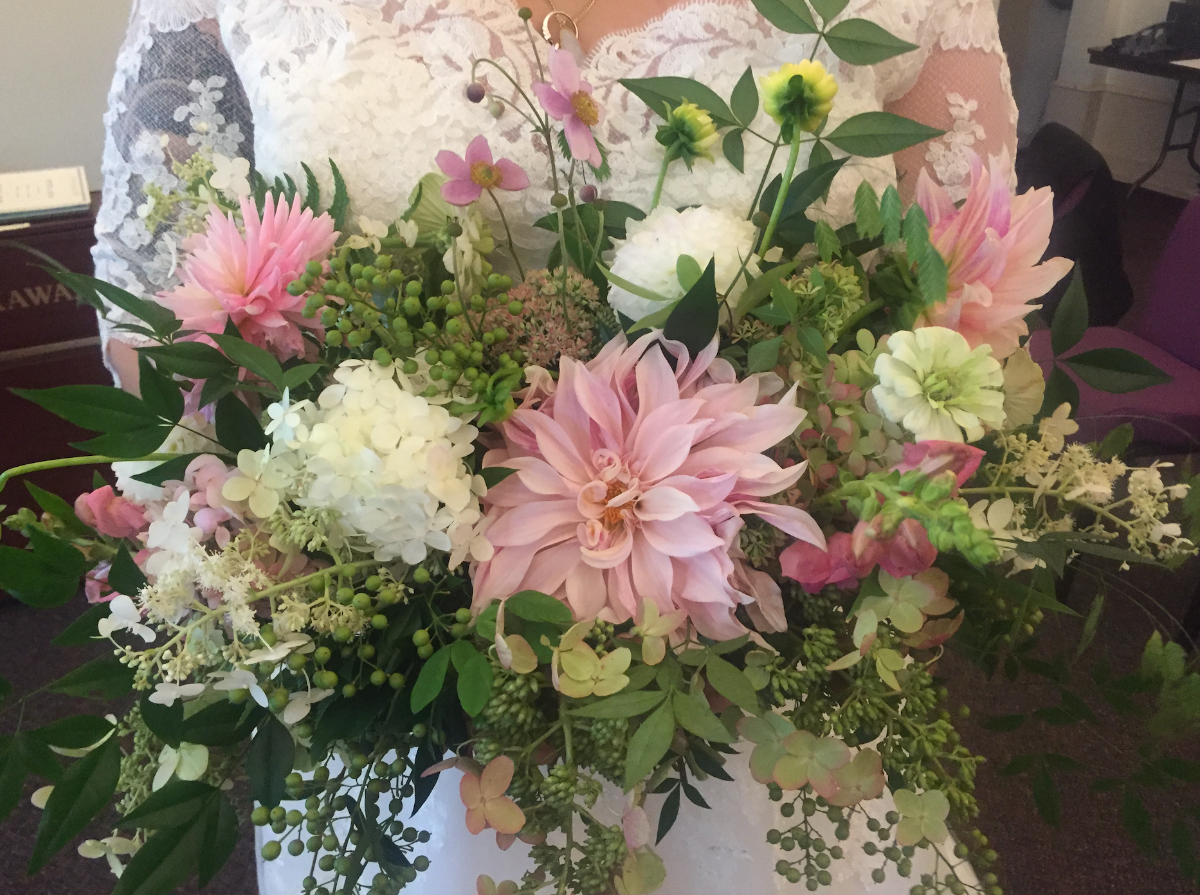
The blog this month features the Wedding Flowers growing in my own garden as I prepare to host the reception and provide as many flowers as possible for the tables. See what flowers we are growing, the challenges, and successes. Remember, the color scheme is not my usual pink, pink, and more pink (AI wants me to say ‘pinker’.) We are a little out of our comfort zone. Celeste, the bride, has chosen mahogany-burgundy, sage green, and cream as her colors—only a month to go—no pressure!
This article and more are on my blog—BeforeYouGarden.com
Check out all of the articles here—gardens, gardening, books, flowers, and more.
Curious About My Garden?
Throughout the spring and summer of 2027, I will be hosting three Open Garden days from 10am to noon at Northview, the four-and-half acres I call home. Full of intricately connected small gardens, whimsical fountains, native shade plants, and much more, a visit is sure to leave you with inspirations for your own gardens.
The entry fee to Open Garden Days is $20 per person. Parking is limited, so I advise carpooling if possible. Email me at jennyrosecarey@gmail.com to reserve your spot!
Last 2026 Date:
September 25th
(Note, in previous newsletters, I had shared that the September Open Garden day would be on Saturday the 26th. I apologize for any confusion!)
Plant of the Month:
Sunflowers (Helianthus annuus)

Sunflowers are easy to grow from seed and come into their glory during these sunny August days. They are loved by children, pollinators, birds, flower arrangers, painters, and regular gardeners.
I have always grown them—the taller the better. I followed in my Dad’s footsteps because he loves them at the end of his vegetable beds. I have a large painting that he did of a big sunflower that hangs in my kitchen.

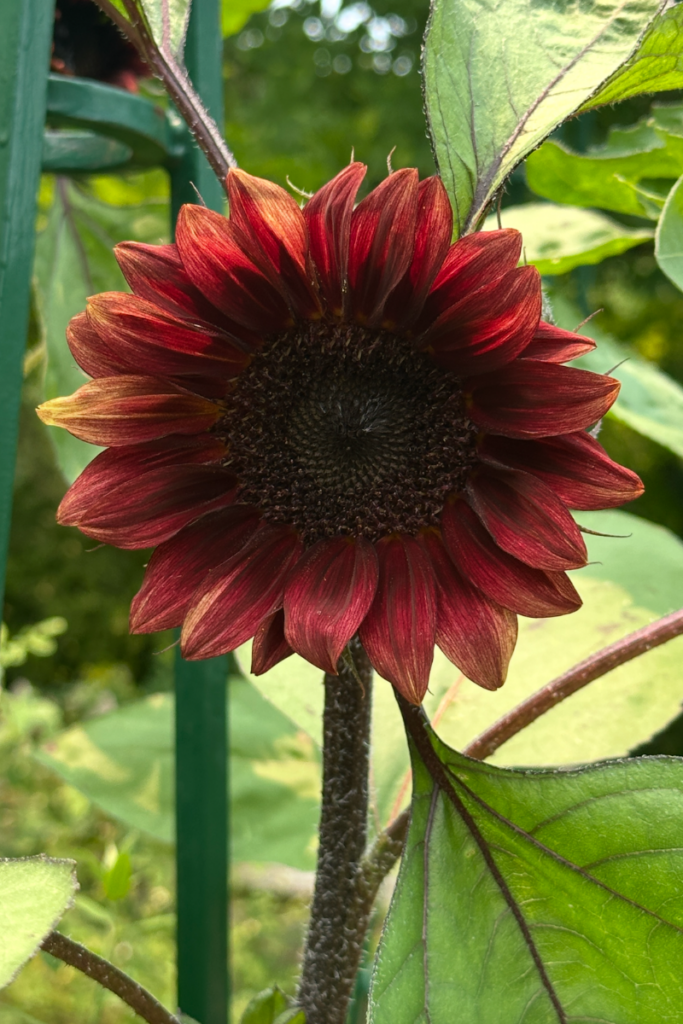
Other advances in plant breeding have brought dark colors like brown and burgundy into the color mix. These are the ones that we are growing this year, for the garden and wedding arrangements.
If you are thinking, like E.A., about what to have in your garden for August, how about some cheerful sunflowers? Start planning for next year by looking at sunflowers online and in seed catalogs to get an idea of which types, shapes, heights, and colors you might want to grow. There is a lot of choices, and they bring so much fun into your life. We all need more fun!
Book of the Month:
My Garden in Summer, E.A. Bowles

The Book of the Month, My Garden in Summer, is part of a trio of books written by the early 20th Century English plantsman and garden writer E. A. Bowles. He is not well-known today, but in his time, he was an influential voice in the gardening community.
Unsurprisingly, the other books in this set are called My Garden in Spring, and My Garden in Autumn and Winter. They were published in 1914 and 1915, right as World War I was beginning in Europe. Despite this inauspicious time for their launch, the books remained favorites and were reprinted many times. My copies are from the 1970s.
In the books, E. A. (Edward Augustus) describes his garden at Myddelton House, Enfield, England, where he had lived all his life. There is an E.A. Bowles Society created to carry on, not only his gardening legacy, but also the charitable works that were an important part of his life.
I enjoy reading E.A.’s books because he is such an astute observer of the little things that he found and so obviously enjoyed in his gardening life. Small nuances of plant form or structure, and larger combinations, all caught his eye. Some of his favorites were his rock garden, water plants, irises, roses, and, perhaps most importantly, his bulbous plants—especially crocuses.
E.A. has quite a few plants named after him that we can still grow today. The one bulb that I grow that was bred by him is Crocus ‘Snow Bunting’, which is a white spring bloomer. I used to grow Bowles Golden Sedge, but that disappeared one year—probably because of voles. The one that may be most familiar to you is the wallflower called Erysimum ‘Bowles’s Mauve’. It is meant to be perennial, but in my garden, acts like a biennial or short-lived perennial. These plants, and more, can be seen at the Royal Horticultural Society’s garden, Wisley, where there is a Bowles’ Corner garden planted as a tribute to him. E.A. served in many capacities with the RHS, until his death in 1954.
My Garden in Summer begins with some wit as he reaches out to say hello to the reader with his “trowel-hardened” hand. E.A. continues by describing the book as a mutual journey, saying how we will, “set out to see what Summer has wrought in this my garden.” It is a personal account with accurate and microscopic details that are a delight to read.
For example, in the chapter about roses, E.A. describes not only the reasons that he prefers certain roses (the beauty of the singles), but also the form of the shrub, (“natural and graceful”), and, thirdly, the fact that they are healthy. You get all of this, and more, as he describes the process of drawing them, their botanical features, and their garden attributes. I feel like I learn something in every chapter.
Here is the full text of My Garden in Summer––dip into it on a hot day when gardening is impossible for you and the plants.
In Case You Were Gardening…
Notes From English Country Gardens: Benton End, Suffolk, England – Published June 8, 2026
You Are Not Alone in Your Garden – Published October 8, 2023
The Scoop on Summer Staking – Published August 16, 2023
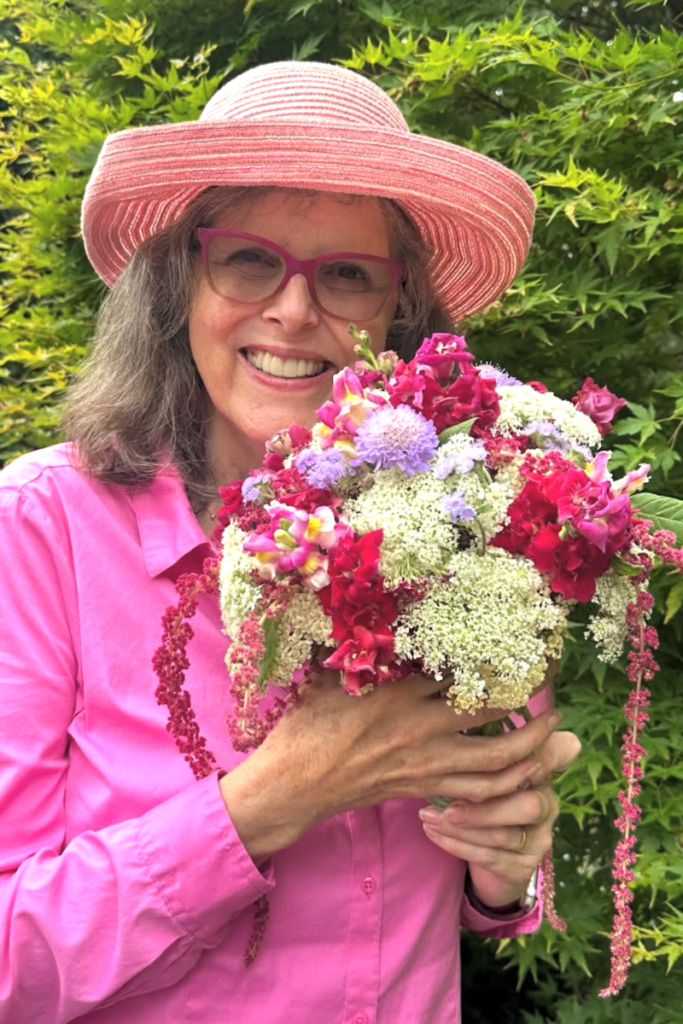
If you like this newsletter, please tell your gardening friends about it. It is easy to subscribe by contacting me via my website.
If you would like to see photos of my garden at Northview and images of my garden travels, please follow me on Instagram @NorthviewGarden and @JennyRoseCarey
Bye for now,

Want More? Check Out My Books!
While shady areas can be a challenging area for gardeners, Glorious Shade shows you how to make the most of it by helping you chose the right plants for the space and sharing key designing and maintenance tips.
The Ultimate Flower Gardener’s Guide gives gardeners the confidence needed to create the flower-filled garden of their dreams. Instead of concentrating primarily on color, it brings flower shape and texture to the fore, helping homeowners to create cohesive, yet unique, flower gardens.
The Essential Guide to Bulbs is a gorgeously photographed, comprehensive, and inviting resource. While many gardeners may be familiar with the early show of spring bulbs, there are so many more to choose from that provide three-season color, drama, and spontaneity in the garden.
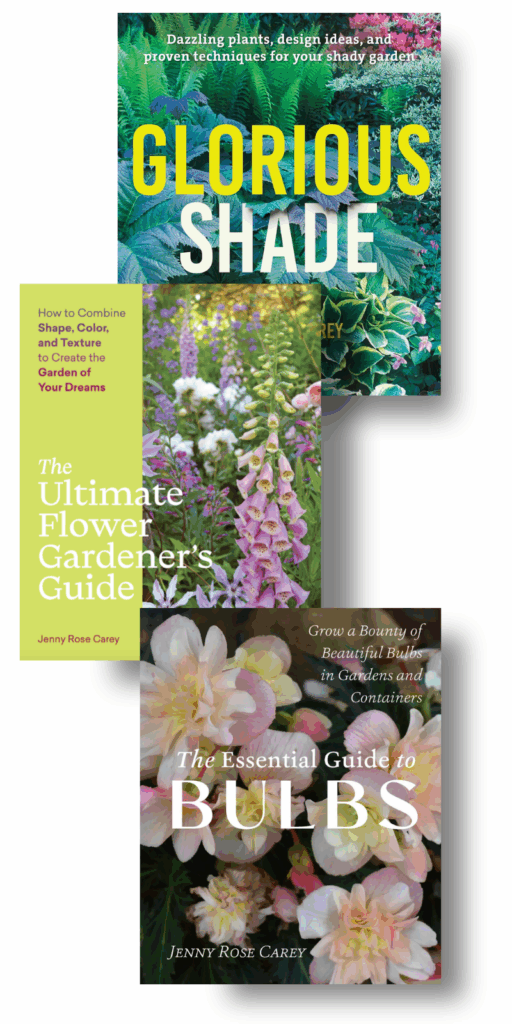
Not only are these books an excellent addition to your gardening book collection, I personally sign every book purchased directly from my website as a special thank you.



Leave a Reply