
Enjoying August in the Garden
What have you been enjoying in your garden this month? For me, it is a patch of cool shade near the driveway where we made an outdoor sitting area during Covid. The copper beech tree that shelters the area is one of the first large trees that we planted. Now birds rest and nest in it, a shade garden is beneath it, and we humans also benefit.
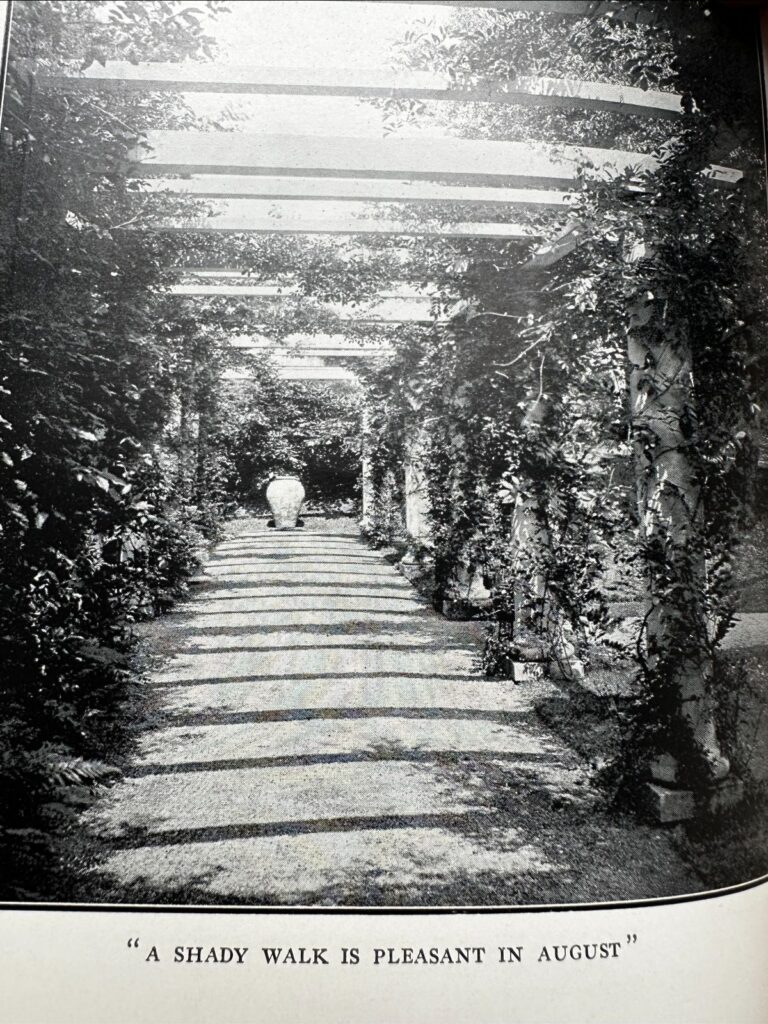
I found this little quote under a photo when I was reading this book by the garden writer Mabel Cabot Sedgwick. I thought of all the gardens that are lacking enough trees to provide them with a shady place to sit or walk.
If your garden is treeless or lacking shade, resolve now to plant at least one tree this autumn. It is a great time to plant while the soil remains warm, and the air is cooling. Position it where you can place a seat to sit on and see something pretty. Or position it along a route where you will be able to walk beneath its limbs as it grows. This is your gift to yourself and others that will inhabit your house and garden in the future. If in doubt, go to your state extension websites and look for trees that are native to your area. They will do well in your climate and soils.
Speaking of shade, – here is a YouTube video by Stone Cottage Adventures. Unfortunately, you have missed the book giveaway for Glorious Shade. She reviews my book and is very complimentary. (Thank you so much, Lauri.) She often talks about the shady areas around her house in Virginia, so if you have shade, it might be a good channel to subscribe to.
From My Blog: Summer Staking

Staking is a useful gardening skill. Good staking goes unnoticed. Bad staking always gets noticed.
“Perhaps the vital word for August is ‘stake.’… Putting small twiggy bare branches into the Michaelmas daisy plants, as Miss Jekyll suggests, is a capital plan for those spreading, many-stemmed plants. If this is done early, and the branch is run into the ground at an angle leaning forward, the plant will soon wipe out by its growth all traces of support.’” Mrs. Francis King, – The Flower Garden Day by Day, 1927 – Page 125
Travelogue: Chicago & Longwood
I had a lovely trip to the Chicago area to give three lectures. They were very well received and between lectures I was able to visit the Chicago Botanic Garden and The Morton Arboretum. Unfortunately, the Canadian wildfire smoke was blanketing the Chicago area, but gardens still had to be visited and plants had to be photographed. Here are some of the highlights of those visits.

Chicago Botanic Garden
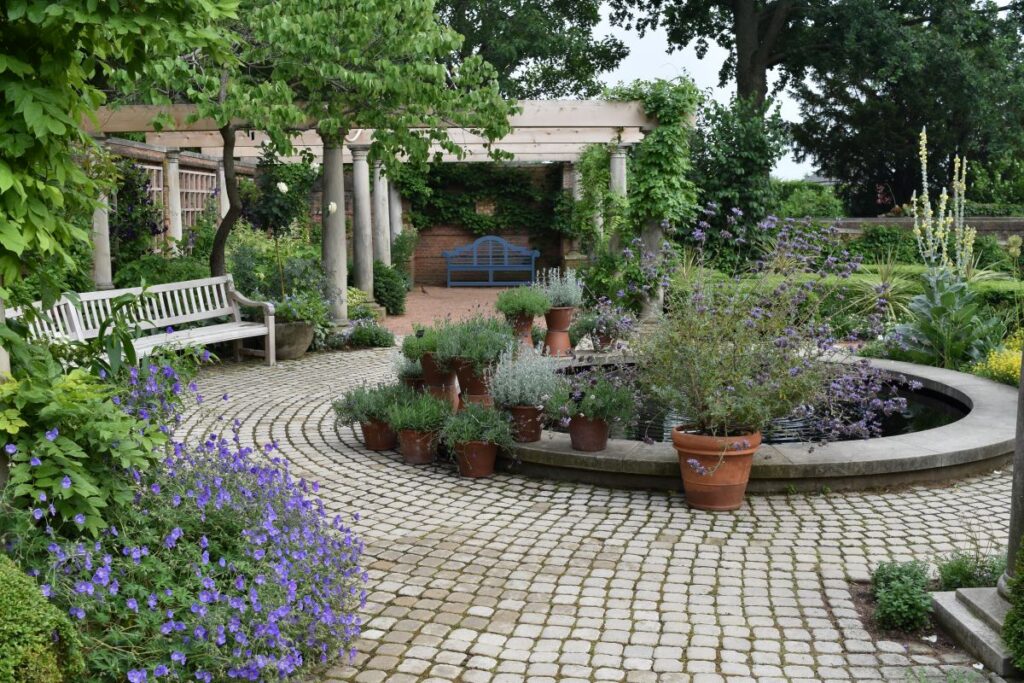
No surprise that the first place I visited at the Chicago Botanic Garden was the English Walled Garden. It was designed by the English landscape architect, author, and trend-setter, John Brookes. He lived at Denmans in Sussex in southeast England.
The English Walled Garden at the Chicago Botanic Garden is a charming walled area. There are varied garden rooms that each have their own theme. Right: Ghislaine de Feligonde rose



Morton Arboretum
I walked around part of The Morton Arboretum, despite the smoky skies. I loved the sculptures by the artist Olga Ziemska made largely of recycled materials. Stillness in Motion: The Matka Series, made of a steel armature and recycled branches, is part of her Of the Earth exhibit. It is the best garden sculpture that I have seen in a long time.
I also found The Ultimate Flower Gardener’s Guide in the bookstore!


Longwood Gardens
I have just finished teaching a course for Longwood Gardens called Designing Themed Gardens. (A shout-out to my students who might be joining this email.) I loved teaching the course and meeting all of you virtually or in person. I hope to be teaching another course, maybe next summer.
On a recent visit the construction of a new conservatory and visitor’s center was in full swing. The Fountains are always such a pleasure at Longwood.

Plant of the Month – Cosmos

Cosmos is a lovely late season annual for the flower garden. Its fluffy foliage sets off the daisy-shaped flowers. These plants look good in a flower bed or in a cutting garden area. When cut, cosmos lasts a few days in a vase. Cosmos is easy to grow from spring sown seeds or from small plants. The foliage grows first and then the flowers follow later in the summer.

Flower production really takes off when the days shorten and the night-time temperatures begin to drop. Cosmos is usually grown in garden beds but the short cultivars like the Sonata series are perfect for a large container with other annuals or summer bulbs.
If you choose a tall cultivar you may need to stake the plants to keep them upright. Use bamboo canes and biodegradable string. Keep the plants well-watered to get them established. Seeds that are sown straight into the garden seem to be more resistant to drought stress than those grown from little plants. Cosmos is unlikely to need fertilizing unless your soil is really bad. A dose of organic matter like compost in the spring is probably all that it needs.
Cosmos bipinnatus is sometimes called garden cosmos. It is a staple of cut flower beds. Flowers are produced over a long season as long as you cut off the old flowers on a regular basis or pick all the flowers as they develop, so that there is no need to deadhead.
Late in the season you can leave some flowers on the plant to make seeds. Let them dry on the plant and collect them in a paper bag to dry. Long-term storage is best in a sealed glass jar.
There are lots of cultivars to choose from, ranging from pure white, to various shades of pink, to dark magenta and even some light yellows. Flowers are either singles with one row of outer petals or semi-doubles or doubles. Some of my favorite cosmos varieties are shown in the photographs.
In the flower garden pair cosmos with annuals that bloom at the same time like zinnias, annual salvias, cleome, and gaillardia.
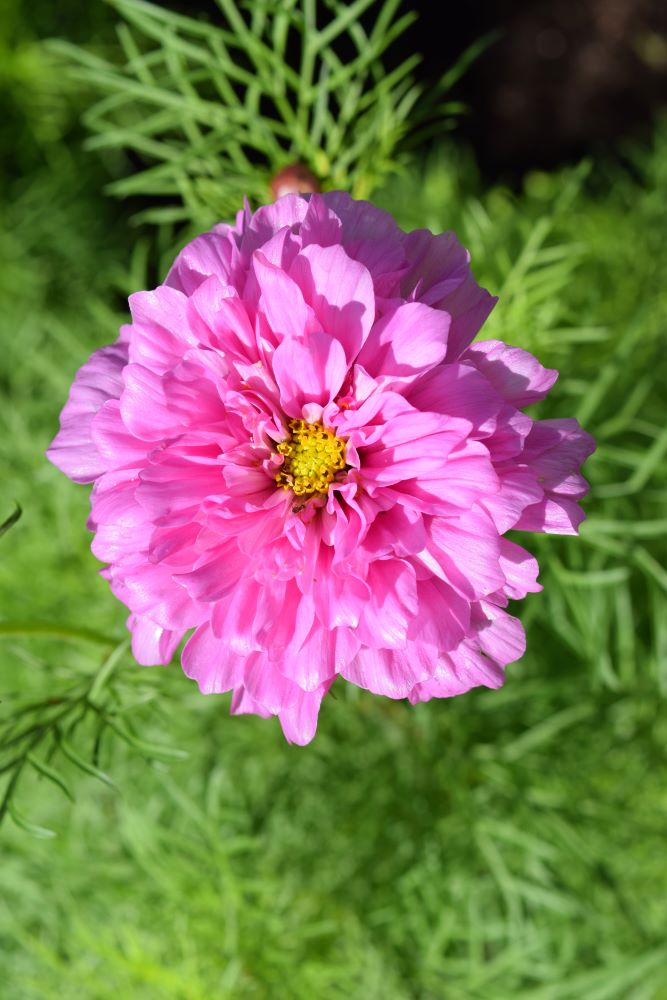

Rose Bon Bon
White


Cups and Saucers
Double Click Series
Book of the month:
The Garden Month by Month

The Garden Month by Month is an astounding book for its time. Mabel Cabot Sedgwick produced a bloom calendar of garden flowers arranged by months. The lists are extensive, detailed and show her sharp observational skills.
Mabel cataloged the flowers that bloomed in her New England garden by the time of flowering and also by color. The grids give a flower color that matches to a number as well as a color name. The numbers matched the color chart that was included in the beginning of the book.
Color printing was expensive and difficult in 1907 so to have this grid of colors available for reference was a fantastic help for gardeners who wanted to develop their flower gardens using color.
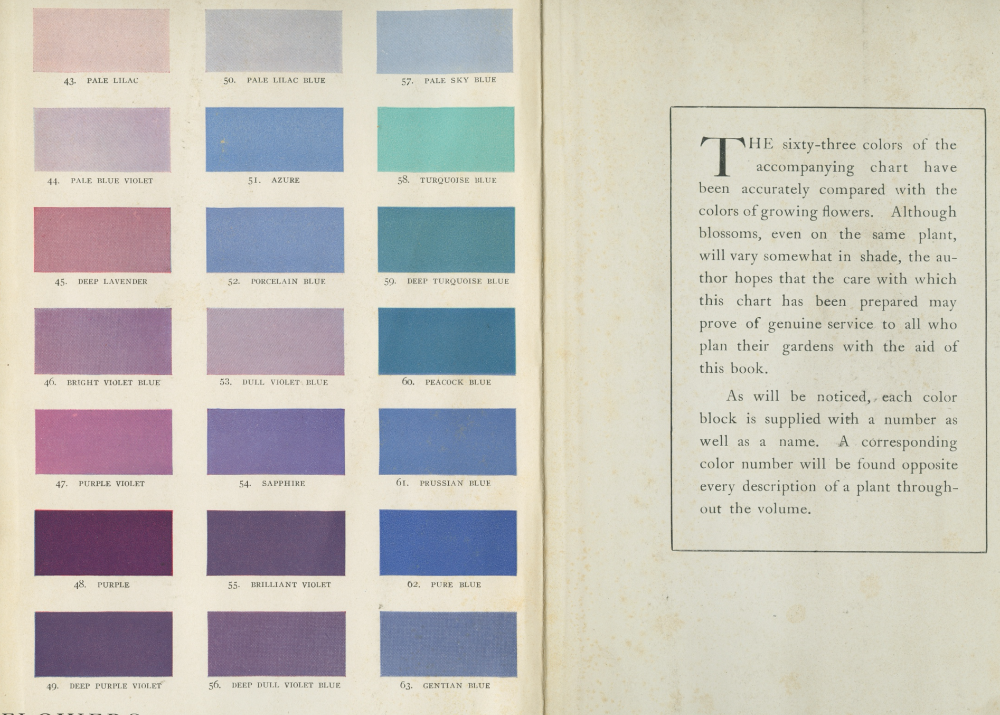
If you remember from an earlier email, the rage for color-themed or color-coordinated flower gardens had swept across the Atlantic from the garden of the English writer, Gertrude Jekyll. To design a garden by color you need to know what color the flowers actually are, and not just what they are being called by the nursery where you buy them. This is where Mabel helped the American gardener to look at her lists and find the colors that they needed in the month that they wanted a flower to bloom.
As Mabel says at the end of her preface, “I only hope that this book may help to make more gardens lovely and more gardeners content.” No lofty goals there! But a very good service to gardeners of her era who were obsessed with color.
Years after the book was released, Mabel and her husband, Ellery Sedgwick (editor of the Atlantic Monthly), bought the house and garden at Long Hill in Beverly, Massachusetts. Mabel designed the gardens and continued gardening there until she died in 1937.

Note: I am not sponsored to promote books found in these newsletters. They are featured because I truly love them.
If you like this newsletter, please tell your gardening friends about it. It is easy to subscribe by contacting me via my website.
If you would like to see photos of my garden at Northview and images of my garden travels, please follow me on Instagram @NorthviewGarden and @JennyRoseCarey.
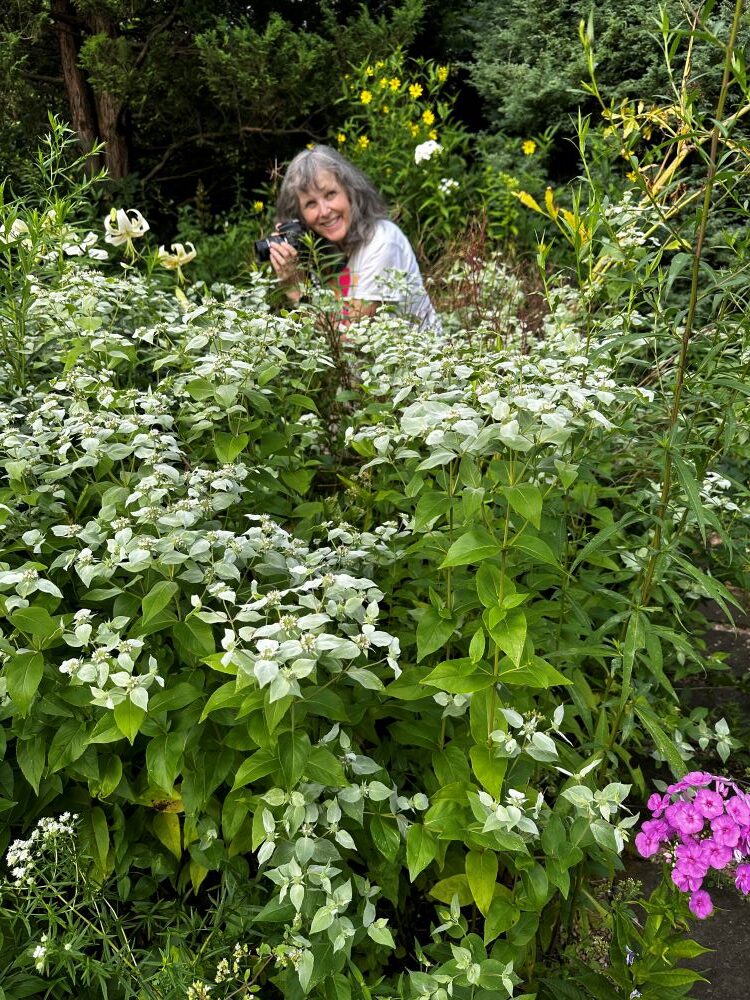
Goodbye from me, seen here photographing flowers in my thriving Herb Garden with lots of Pycnanthemum muticum (Mountain Mint) and some lovely fragrant lilies.
Enjoy the summer, gardening friends.
Cheers,




Leave a Reply