
I Love Winter Best?
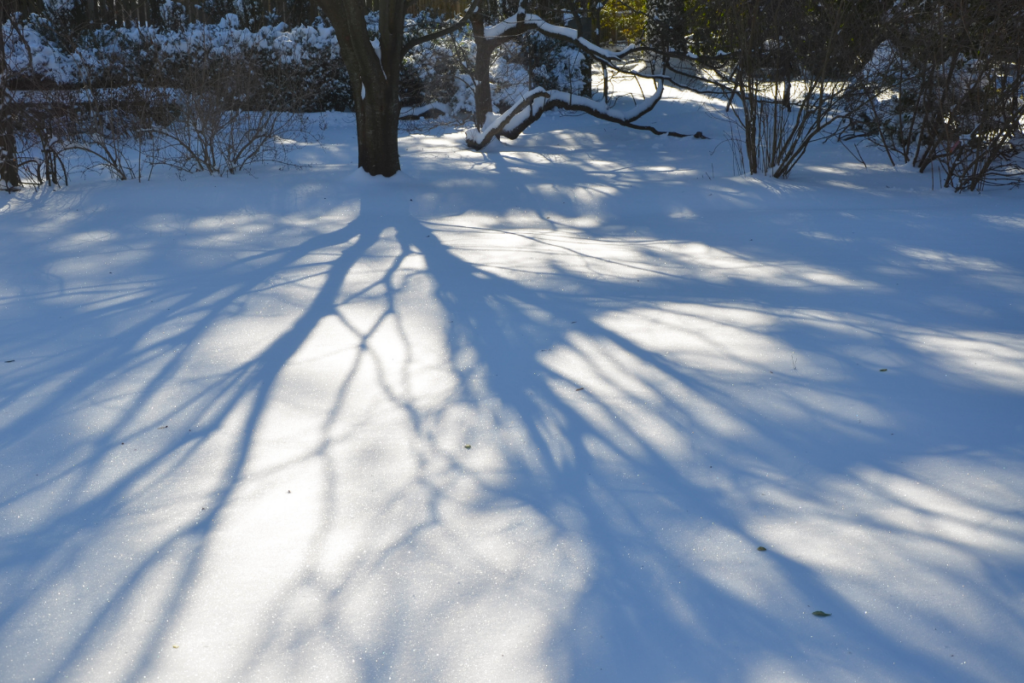
The esteemed and prolific mid-20th century American garden writer, Helen Van Pelt Wilson, is a fan of cold winter gardens. As she clearly states in the quote above, she loves “winter best.” She enjoys “the unique quality of winter” and thinks that “this fourth season is full of peace and beauty.”
If you live where there are four distinct seasons, what do you think about this fourth season of winter? For me, it is not my favorite time of year. Being a cold-hands person (with a warm heart), I am perpetually frozen at this time of year. I am sitting at my desk wearing four layers, and thinking that a blanket might be a good idea.
I fight against inaction when it is below freezing outside. To counteract this negative winter feeling, I have developed a Winter Garden of my own to tempt me to open the back door and take a turn around the garden. This garden consists of 45 winter-blooming witch hazels, scented shrubs that bloom now, brightly colored berries, and tiny bulbs that emerge through frozen ground or snow. My Winter Garden keeps me going through the darkest days of winter by providing a foretaste of spring.
My favorite place during cold months is still the cozy nook by the fireplace, paired with a good book, and a piping hot cup of tea. You can follow Helen, and relish this season, or be like me and barely get through it with the help of a witch hazel or two. However you live your winter life, February will soon be here, and it is the shortist month. We got this!
Winter Garden at Wakehust Place Kew’s Outpost in Sussex
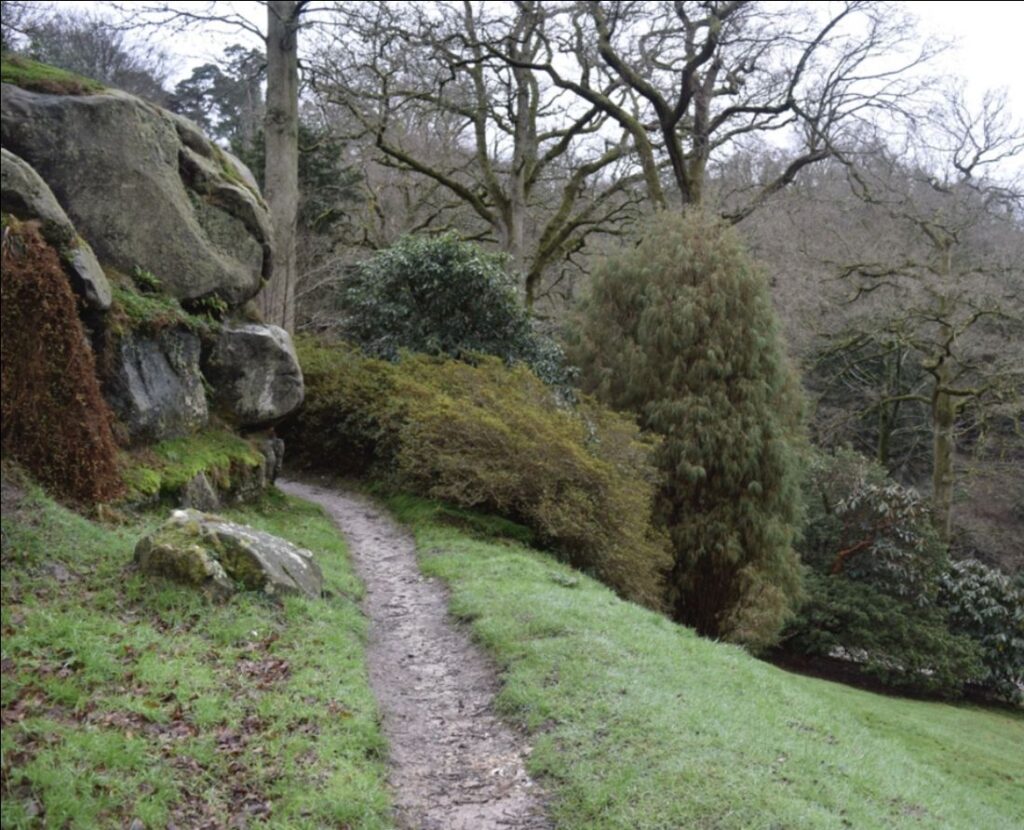
There are winter and early spring days when you cannot let go of your gardening habit, and you really need to refresh yourself with time spent outdoors – whatever the weather. If you need an outdoor walk any public park or garden will fit the bill. However, if your aim is to learn more about plants that have interesting features for the cold months, then you will need to seek out a Winter Garden.
Plant of the Month: Acer palmatum ‘Sango kaku’
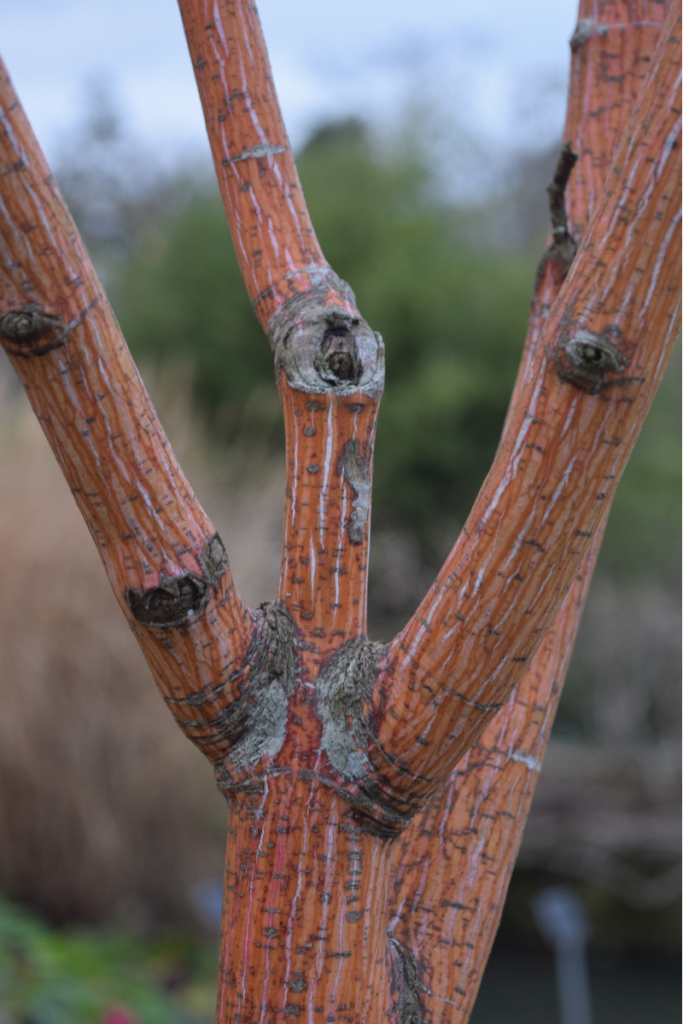
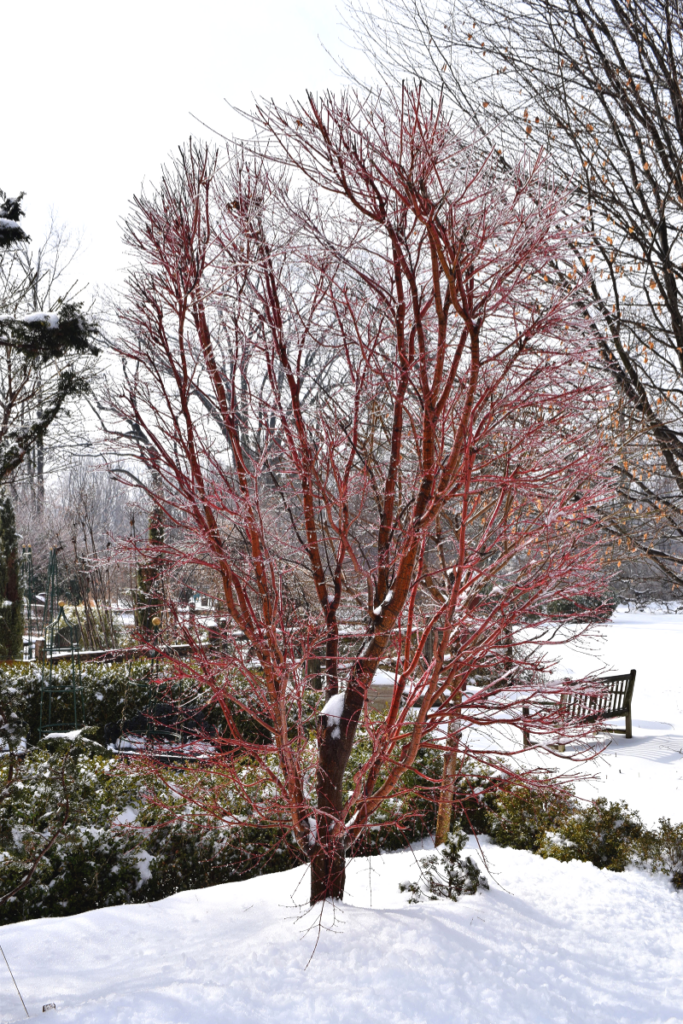
This month I am sharing one of my favorite winter trees – the coral bark maple – Acer palmatum ‘Sango kaku’. During the growing season, the bark is nondescript; but as soon as the leaves fall in autumn, and the cold weather sets in, the bark changes color to a reddish orange.
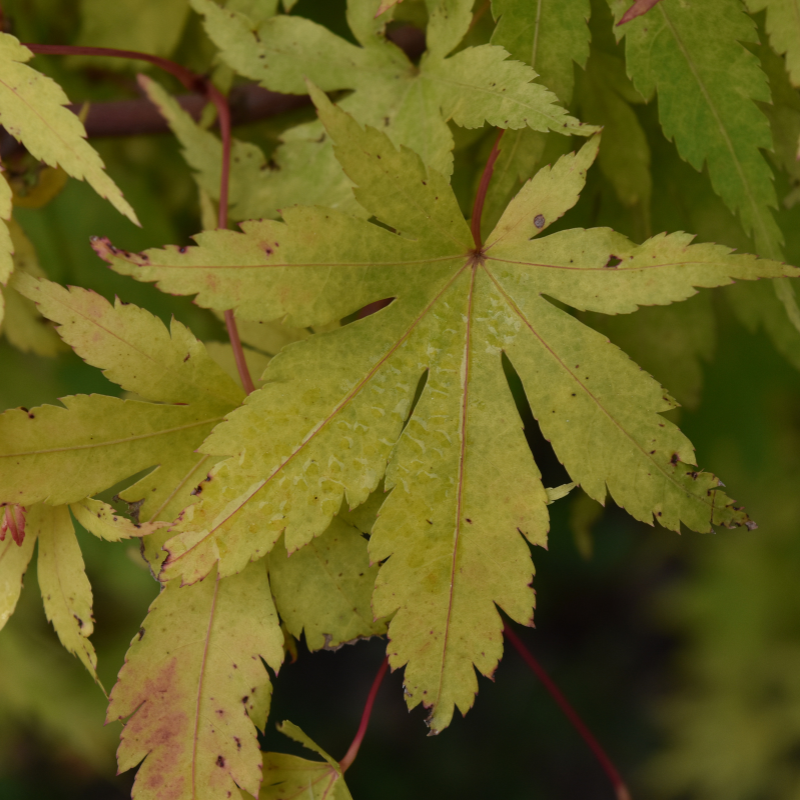
The best bark color is seen on the young twigs, so we trim them back occasionally to encourage fresh growth. The leaves are the traditional lobed maple shape. In spring, they are the freshest chartreuse-green imaginable, by summer they are solid green, and the fall color is bright yellow. All the seasonal changes make this a four-season tree here at Northview. We have two because we love them so much. There is one at the moss garden, and the other is by the driveway for easy winter viewing.
Book of the Month:
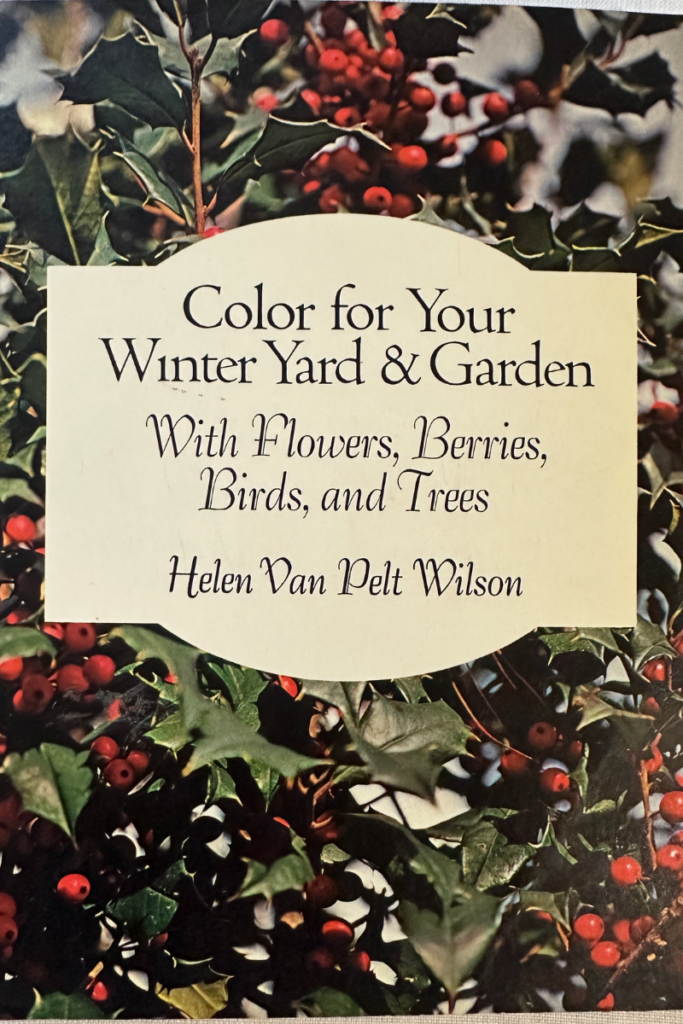
Color for Your Winter Yard and Garden
by Helen Van Pelt Wilson
You may not think about looking at a book specifically about gardening in winter, but it is a good reminder to include some plants for this time of year. Helen’s information is based on her love of winter gardening and her excellent skills of observation and description.
The book chapters include looking at your views through the windows, encouraging winter birds, small bulbs, deciduous trees, and evergreens. Helen particularly stresses using evergreen trees, shrubs, and ferns, and calls them the “Glory” of the Winter Garden.
She lauds deciduous trees for their “forms and traceries: especially when highlighted by snow. Helen says, “Once you begin to see trees, all sorts of arresting pictures will delight.” She writes about looking at tree bark and discovering different types. “With leafy distractions gone, we notice perhaps for the first time the fascinating peculiarities of bark.” For deciduous tree bark, she loves buttonwood, paperbark maple, and cherry. For an evergreen, she chooses the fantastic Pinus bungeana, lace-bark pine. I have a lace-bark pine and paperbark maples in my garden and can attest to their amazing bark colors and textures.
While this book is dated in some respects (like recommending the use of the Korean barberry that is now considered invasive in North America), it has some sensible advice, extensive plant lists, and words of encouragement. The photographs are mostly in black and white, but there are a few “new-fangled” color ones too. Black and white is great for showing deciduous trees outlined against snow. Helen describes this type of monochrome scene as being like “dry-point etchings,” but it is funny since the title of the book includes the word “color.”
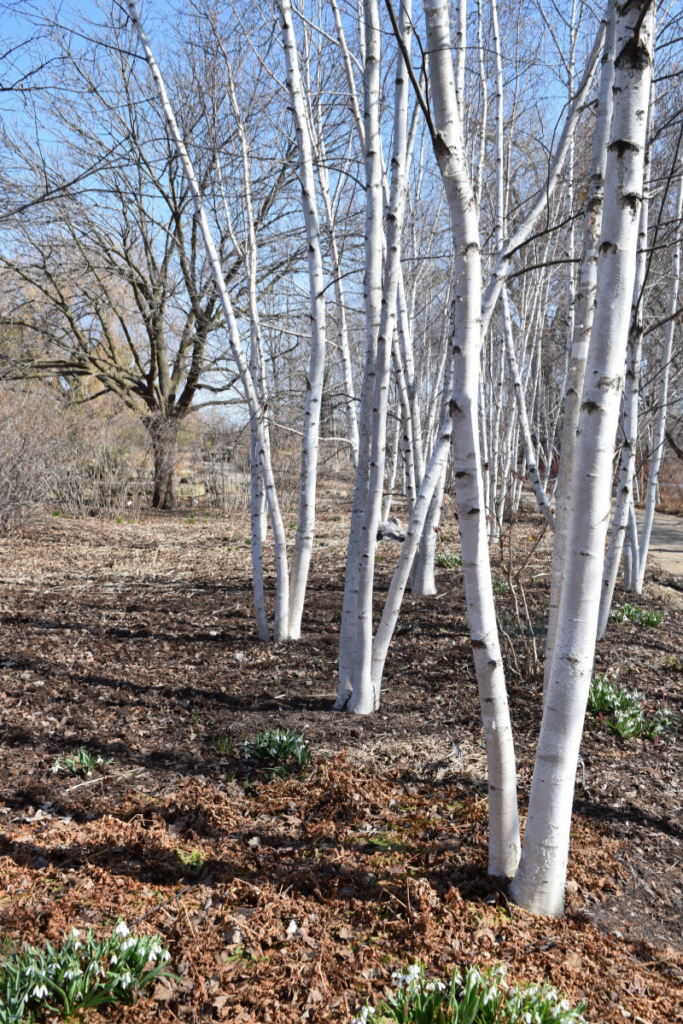
My favorite color descriptions and photos are of the late winter and early spring tiny bulbs. Helen calls them “the intrepid minor bulbs.” She says, “The tiny bulbs that bloom from late January through March are a rare delight and are ‘minor’ only in that their flowers are for the most part quite small. The pleasure they provide is considerable.”
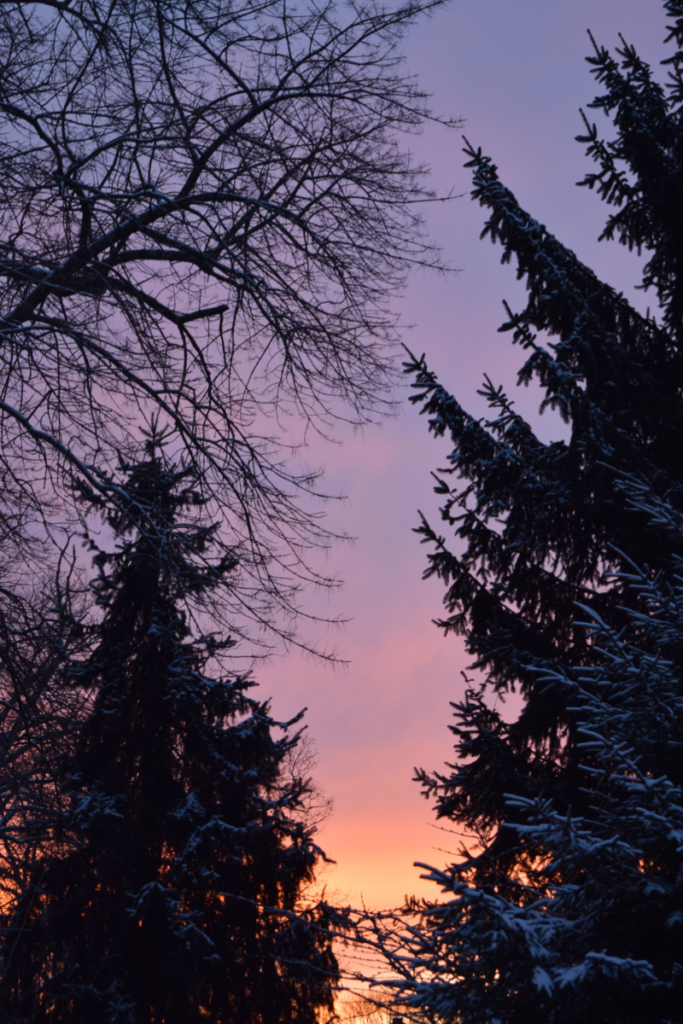
I will leave you with probably my favorite quote from this book. Helen says, “no winter color is more brilliant that that of the rising sun. I watch the gorgeous panorama from my breakfast table, the spectacle being late enough, in winter, for comfortable viewing.” Even if we do not leave the house, we can get some winter color from the sun. Thank you, Helen, for those inspiring words.
In Case You Were Gardening…
Eighteenth Century American Gardens and Plants at Colonial Williamsburg, Virginia
December 9, 2025
My New Book – The Essential Guide to Bulbs
October 20, 2025
A Quartet of Flower Histories for Winter Reading
January 7, 2025

I was delighted that Kathy Jentz of the Washington Gardener magazine picked my new bulb book “The Essential Guide to Bulbs” as one of her Top 10 gardening books of 2025!
If you like this newsletter, please tell your gardening friends about it. It is easy to subscribe by contacting me via my website.
If you would like to see photos of my garden at Northview and images of my garden travels, please follow me on Instagram @NorthviewGarden and @JennyRoseCarey
Bye for now,

Want More? Check Out My Books!
While shady areas can be a challenging area for gardeners, Glorious Shade shows you how to make the most of it by helping you chose the right plants for the space and sharing key designing and maintenance tips.
The Ultimate Flower Gardener’s Guide gives gardeners the confidence needed to create the flower-filled garden of their dreams. Instead of concentrating primarily on color, it brings flower shape and texture to the fore, helping homeowners to create cohesive, yet unique, flower gardens.
The Essential Guide to Bulbs is a gorgeously photographed, comprehensive, and inviting resource. While many gardeners may be familiar with the early show of spring bulbs, there are so many more to choose from that provide three-season color, drama, and spontaneity in the garden.
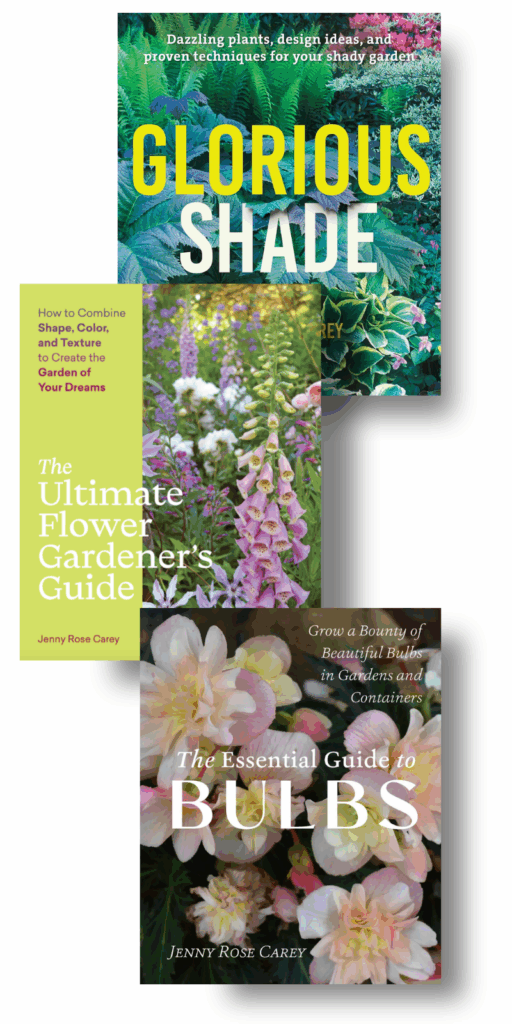
Not only are these books an excellent addition to your gardening book collection, I personally sign every book purchased directly from my website as a special thank you.


Leave a Reply