

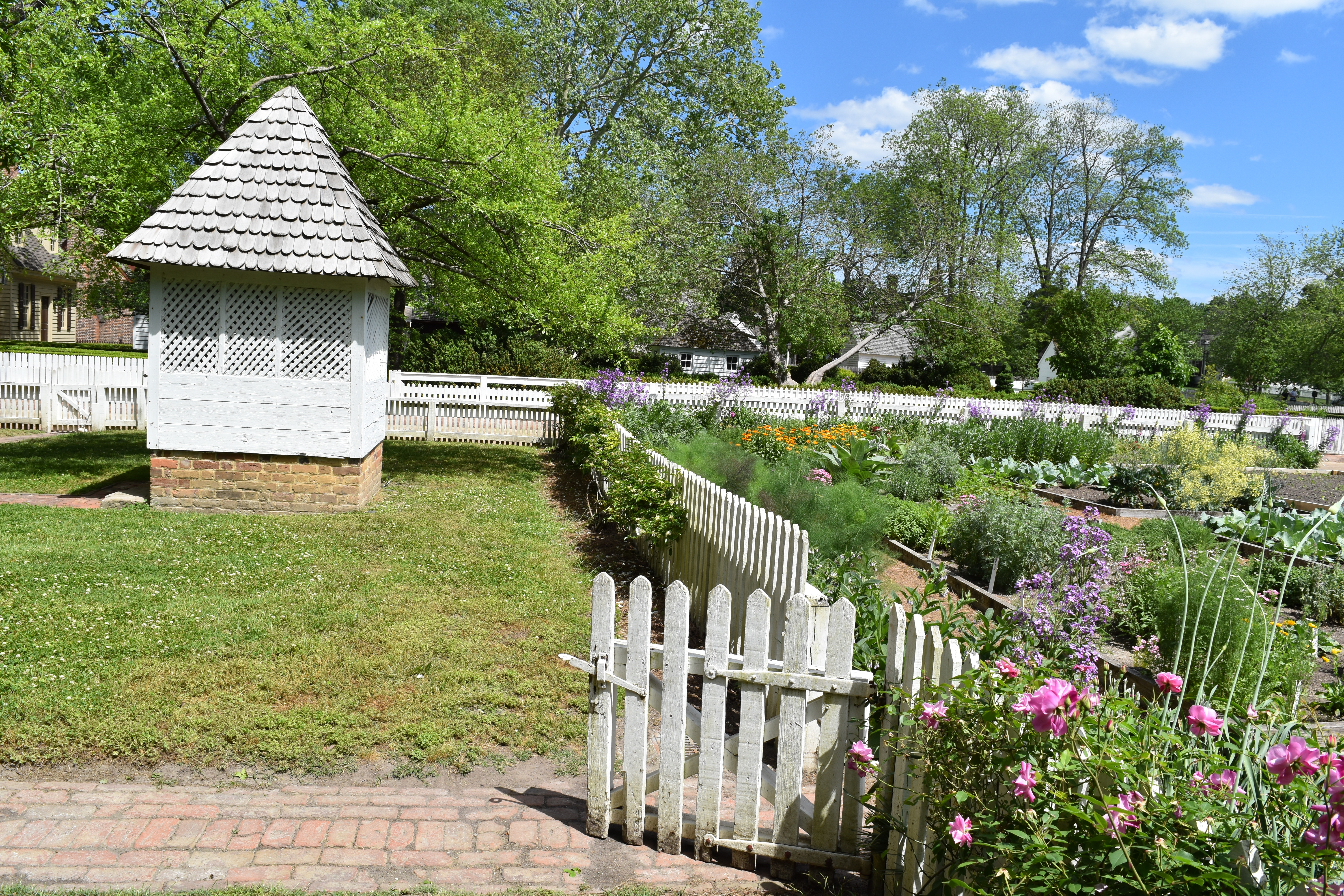
Colonial Williamsburg represents gardens and gardening in Virginia in the 18th Century.
Colonial Williamsburg
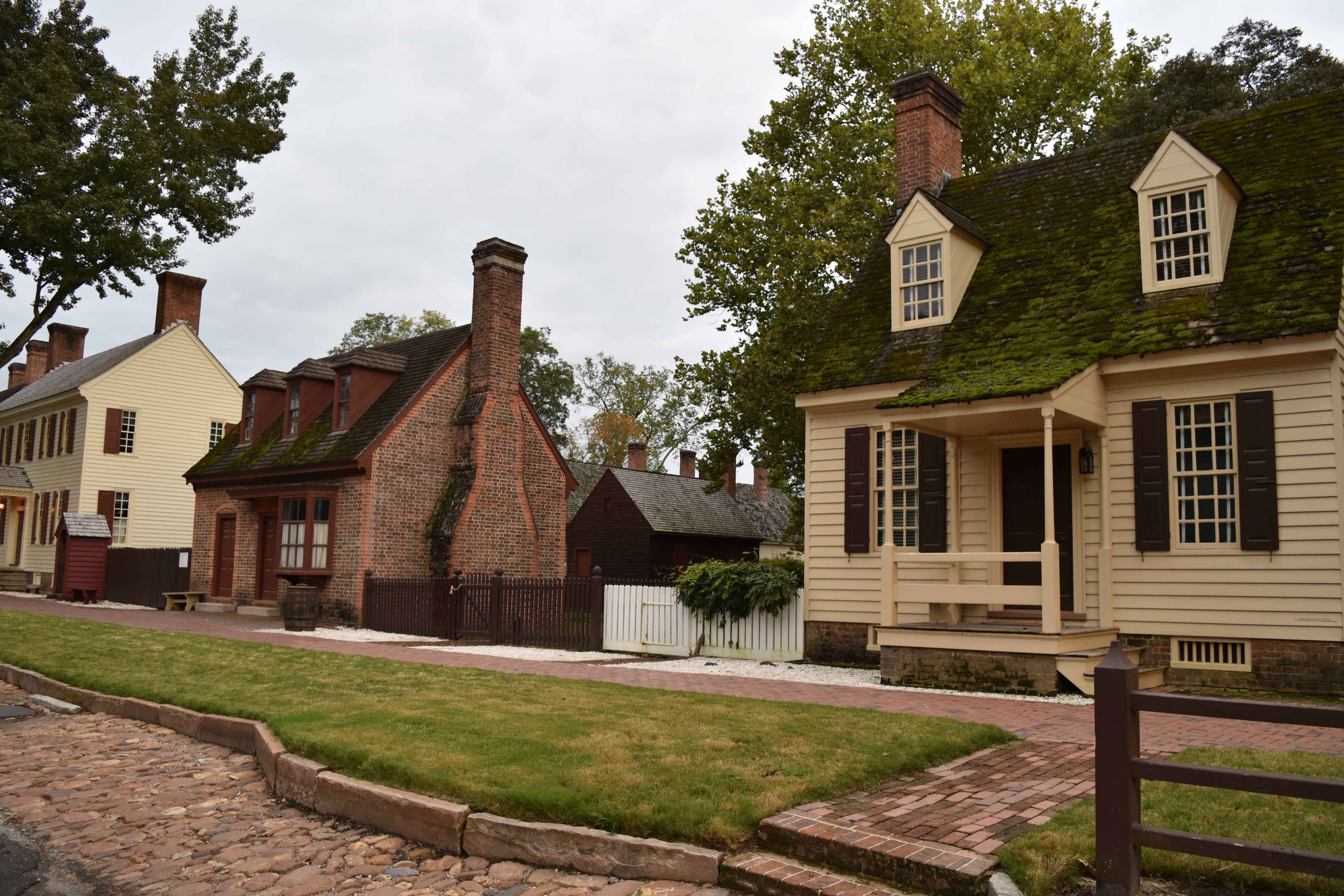
Duke of Gloucester Street is the main route through Colonial Williamsburg. It is lined by some old houses and others that are restorations.
The first time I visited Colonial Williamsburg in the early 1980’s I was smitten. To a British person it gave me a chance to learn about colonial American history and to see what old gardens looked like. I have visited again many times over the years but I always enjoy it and learn something new.
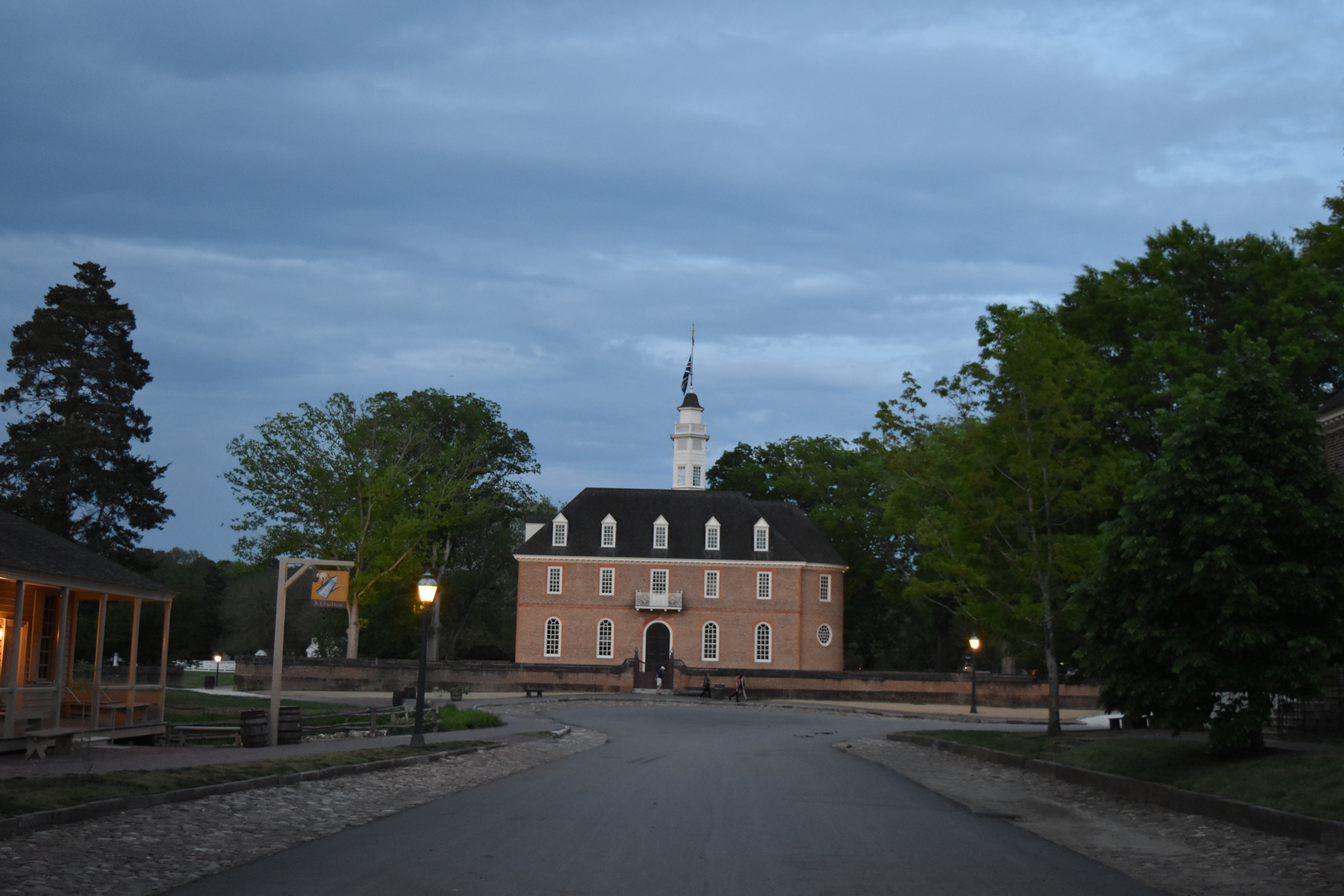
The re-created Capitol building is at the end of the Duke of Gloucester Street. The College of William and Mary is at the other end.
The site is an ambitious recreation of the buildings, grounds, and way of life of the original town of Williamsburg when it was the Capital of Virginia in the early 1700’s. The rector of the Bruton parish church – W. A. R. Goodwin – contacted John D. Rockefeller to see if he would finance the restoration. In the 1920’s Rockefeller decided to fund the project and Colonial Williamsburg began. Today we call this re-creation of colonial architecture and gardens ‘Colonial Revival’.
Williamsburg’s Governor’s Palace
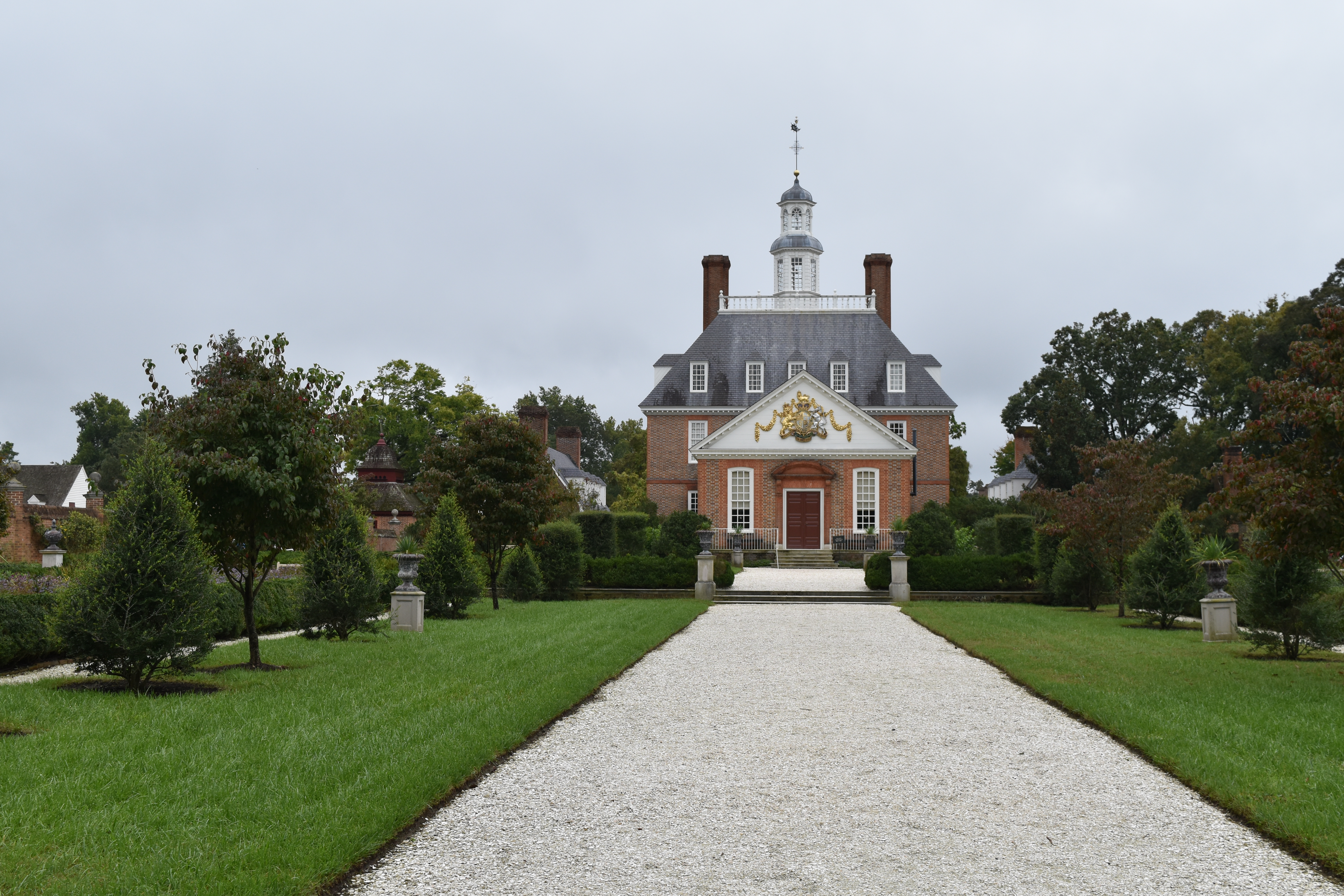
The Governor’s Palace at Colonial Williamsburg is a 1930’s re-creation of the original building from the 1700’s that burned down. This is the back view from the gardens.
The most prominent building that has extensive gardens is the Governor’s Palace that was re-created in the 1930’s. This was modeled on a drawing that was found in the Bodleian library at the University of Oxford. The landscape architect in charge of re-creating the gardens was Arthur Shurcliff. It sits at the end of Palace Green that is at right-angles to The Duke of Gloucester Street.

Boxwood hedges were a characteristic feature of the re-created gardens – in a style that later came to be called Colonial Revival.
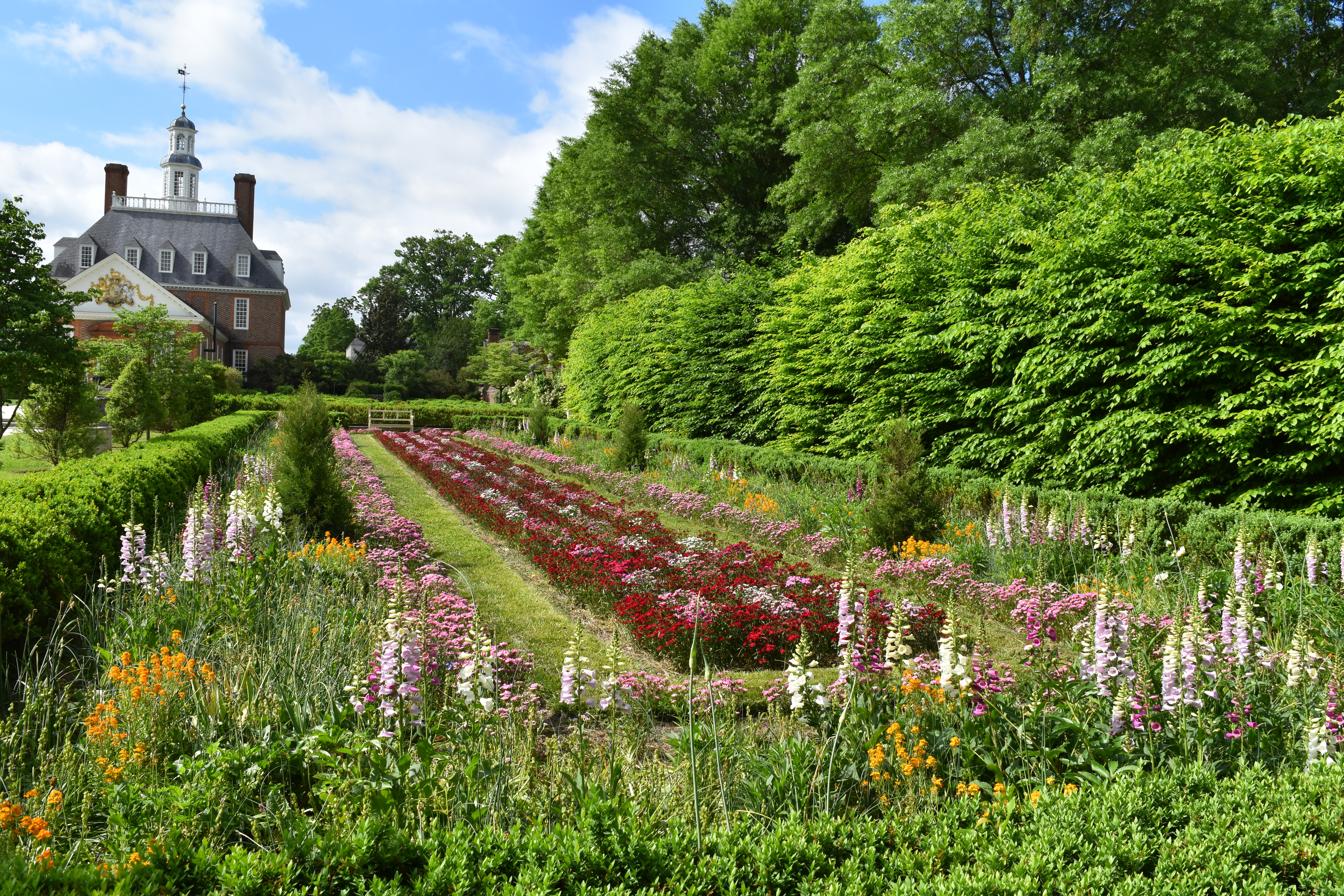
Plants and flowers that would have been grown in America in the colonial times are grown in the gardens.
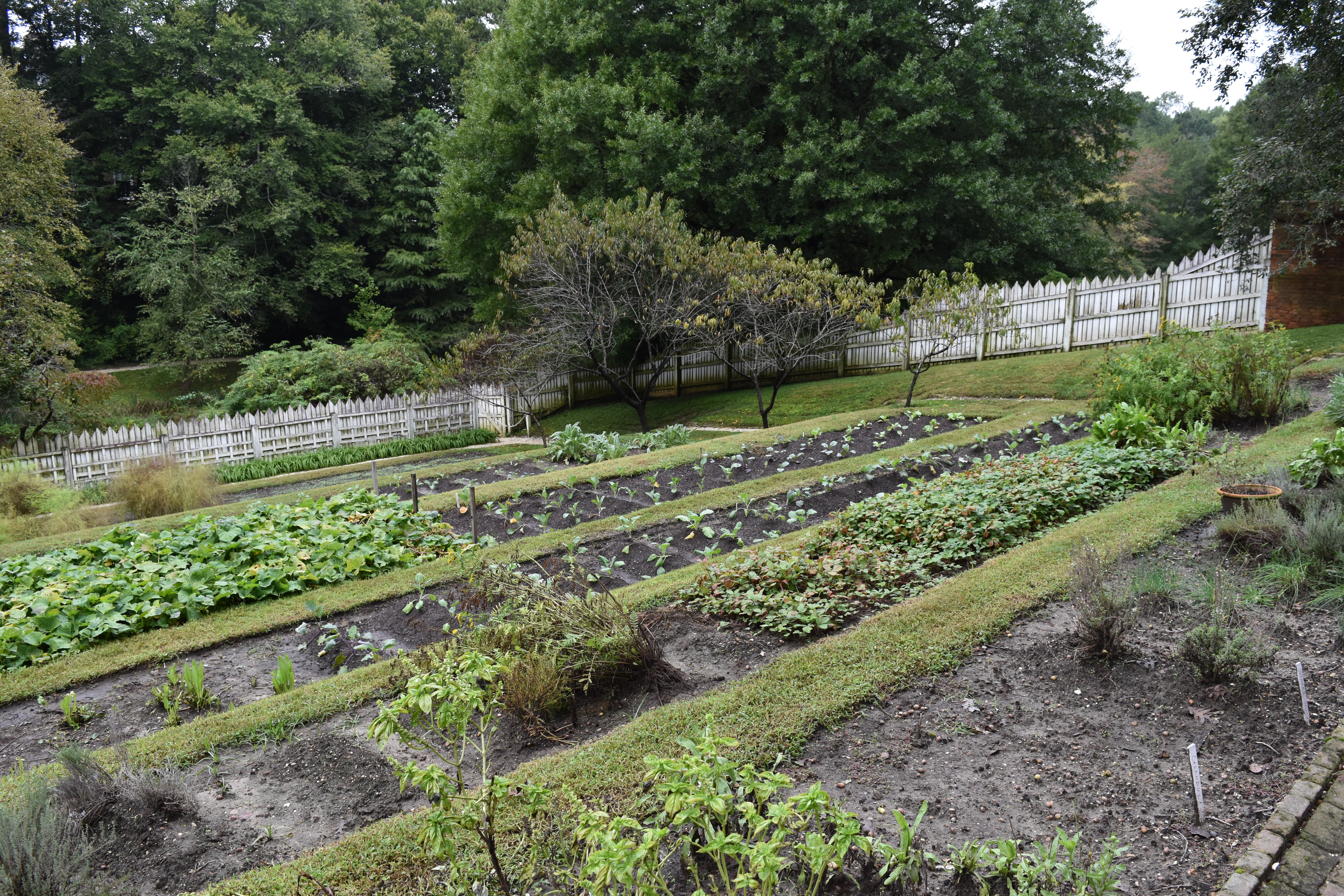
The garden to the left of the Governor’s Palace is terraced and shows how vegetables and fruit would have been a vital part of every colonial garden.
Other Gardens at Colonial Williamsburg
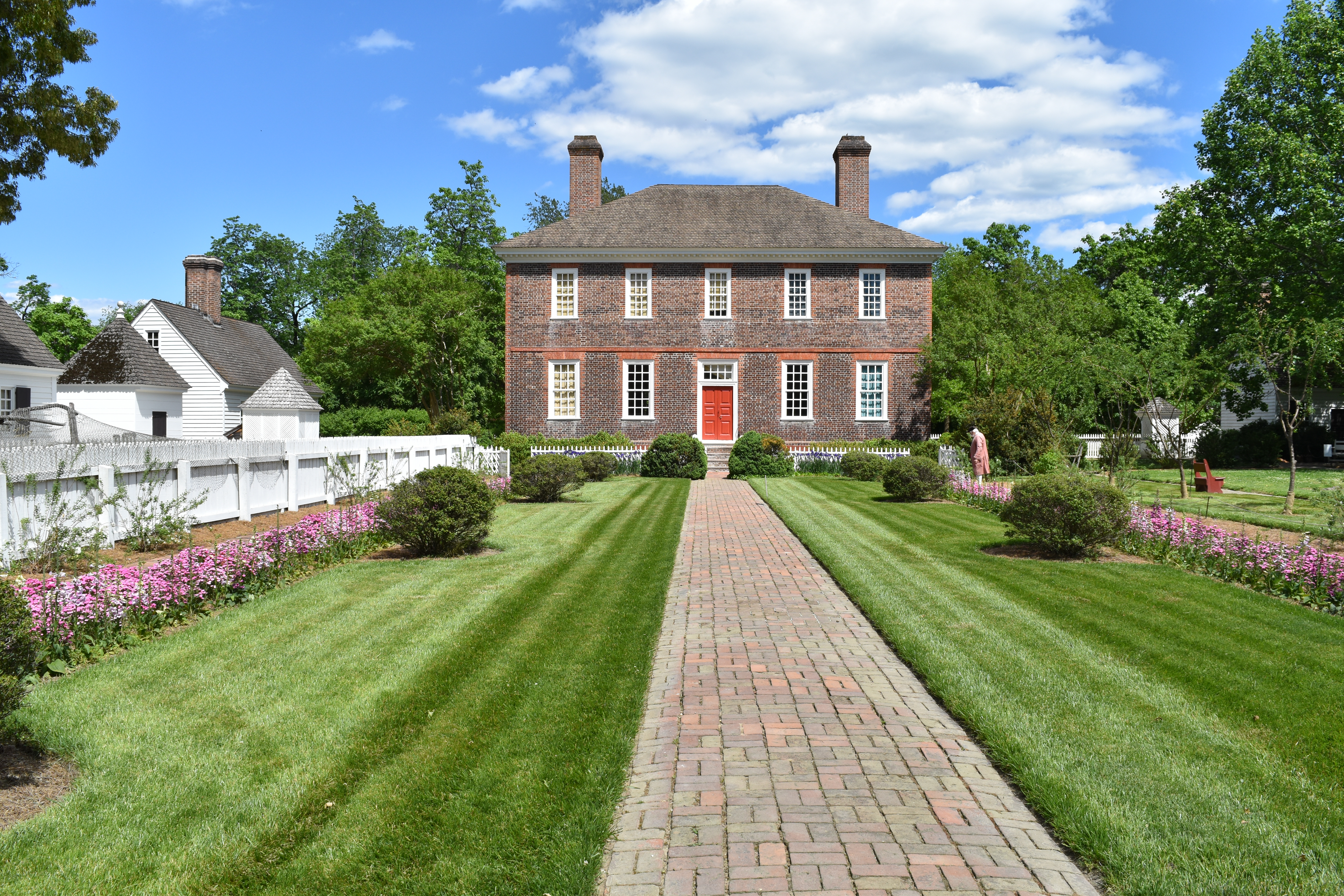
One of my favorite gardens is behind the Wythe House.

This small garden – packed with flowers is delightful – especially in springtime with foxgloves, gladiolus, and dianthus.
Fences and gates at Colonial Williamsburg
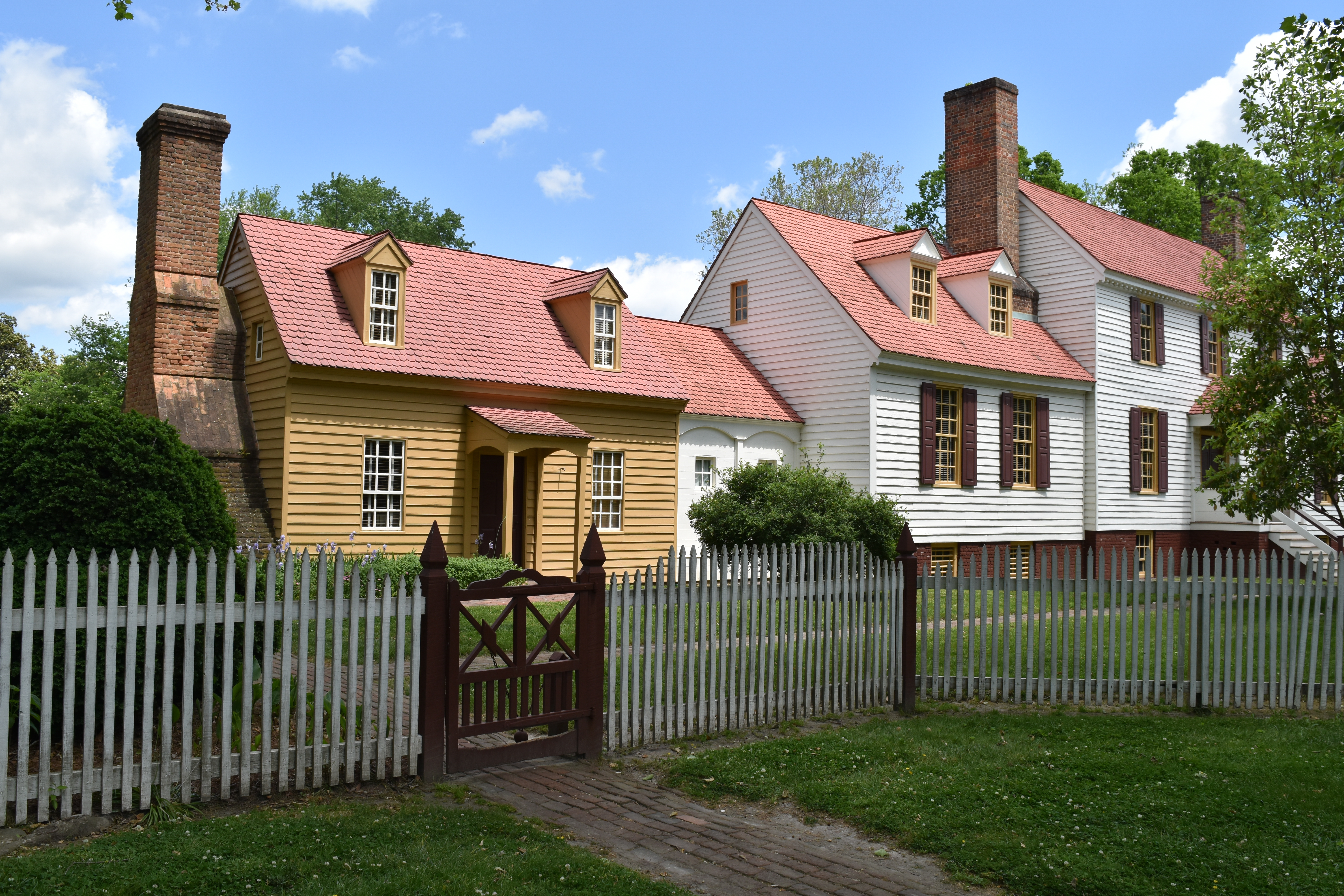
All the front and side gardens were fenced to keep out wandering livestock. I love the variety of fences – see gallery below.
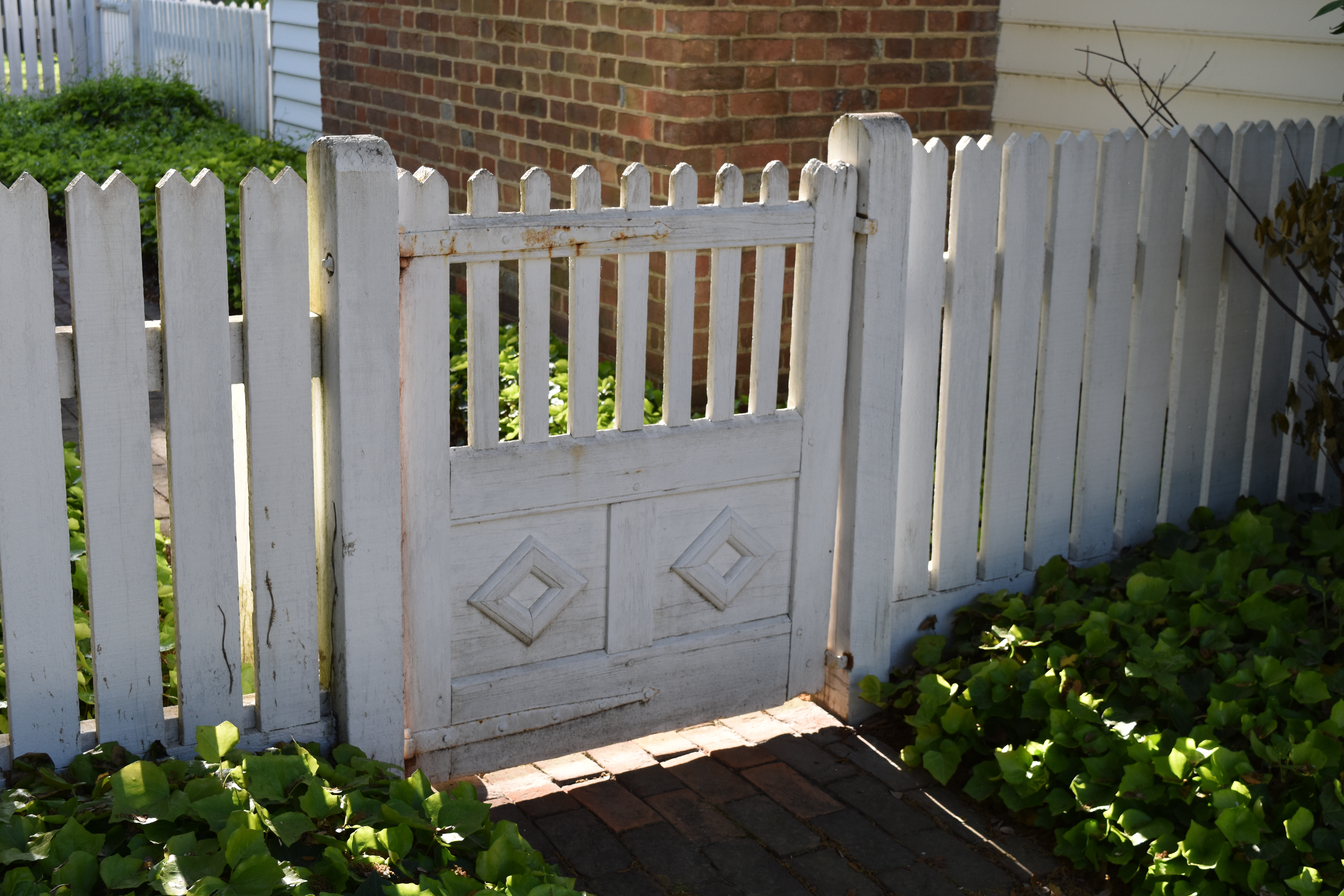
If you love learning about history, old handcrafts, buildings, and gardens then Williamsburg is a wonderful place to put on your visiting list. There are plants to admire, animals to see and costumed guides to inform you.
Old-fashioned flowers, herbs, and vegetables at Colonial Williamsburg

Sweet William, Dianthus barbatus
Vegetable and Herb Gardens at Colonial Williamsburg

Learn about how different people in Williamsburg grew crops.
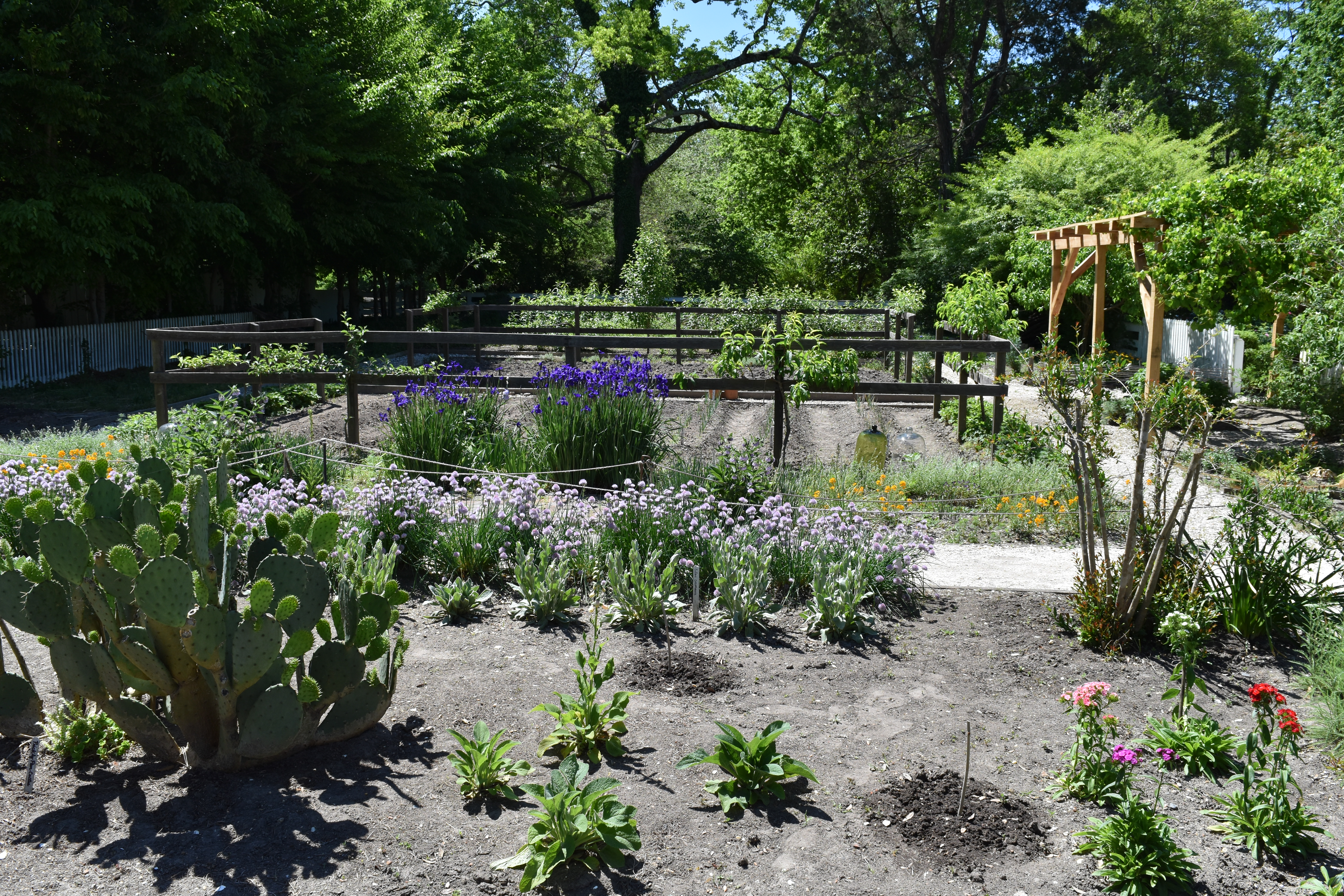
Hardy cactus (Opuntia) growing with Chives. Make sure you check out the Colonial vegetable garden near the windmill.
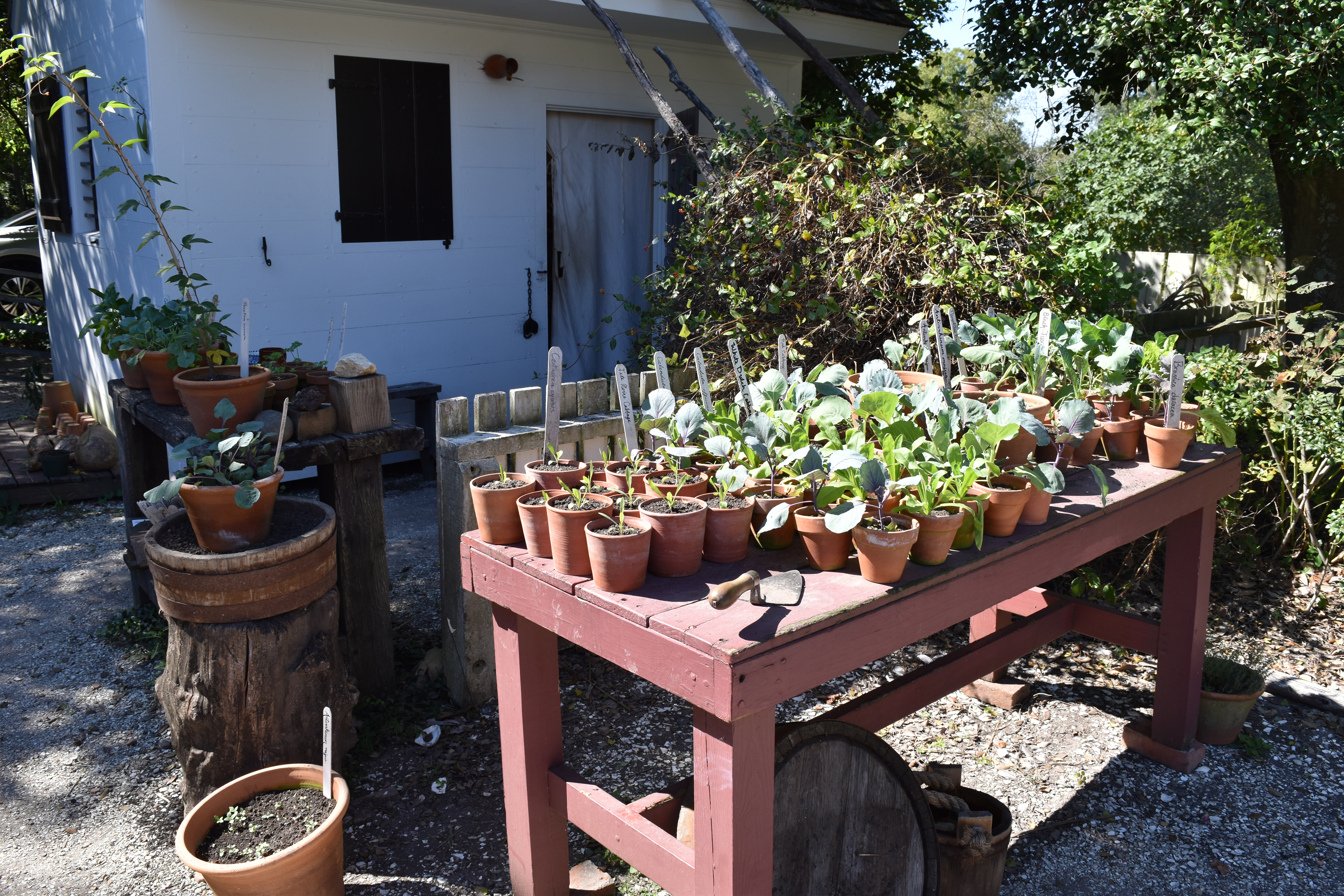
Growing colonial era vegetables from seed in terracotta pots.
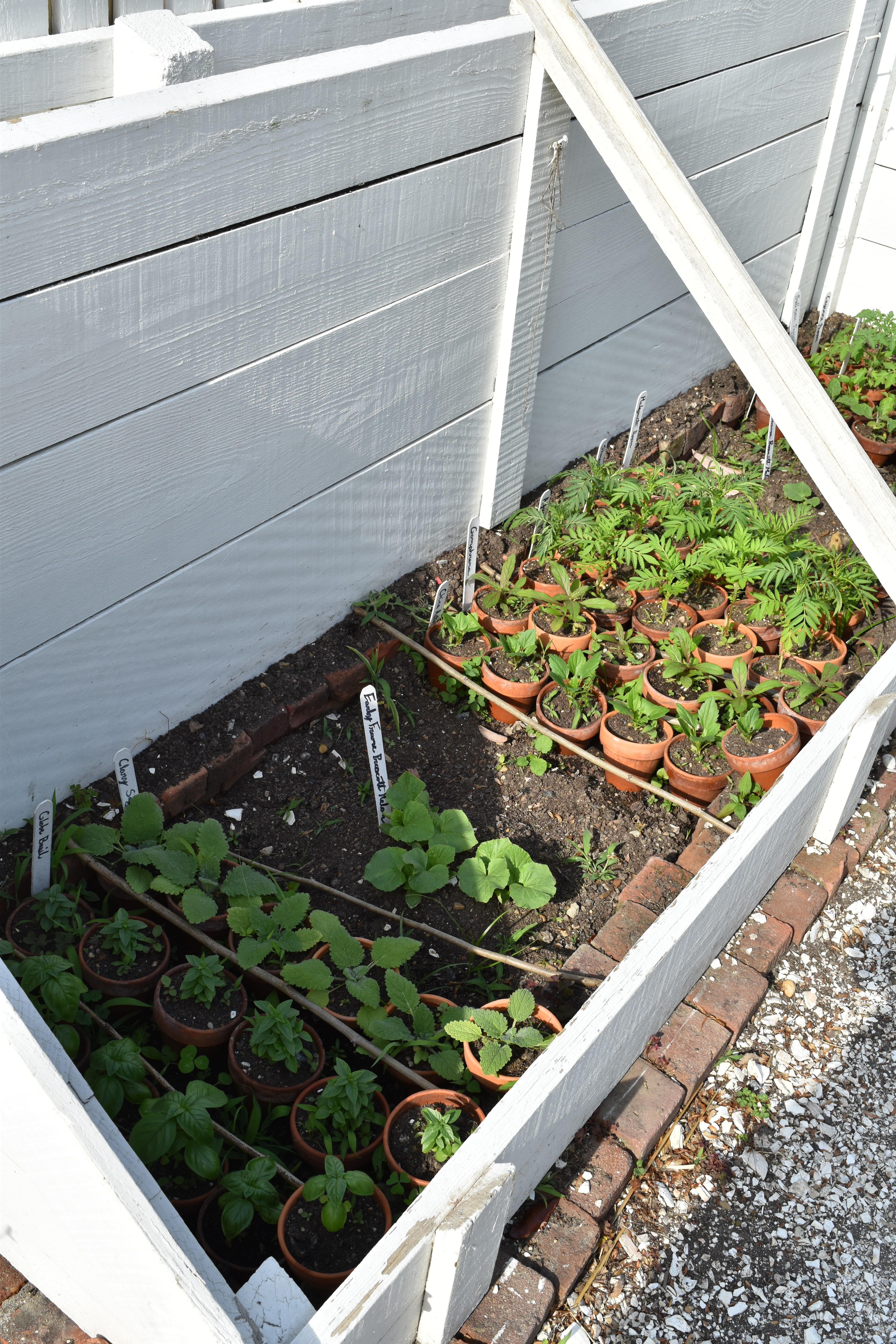
Cold frames and hot beds were used to protect plants during the winter months.
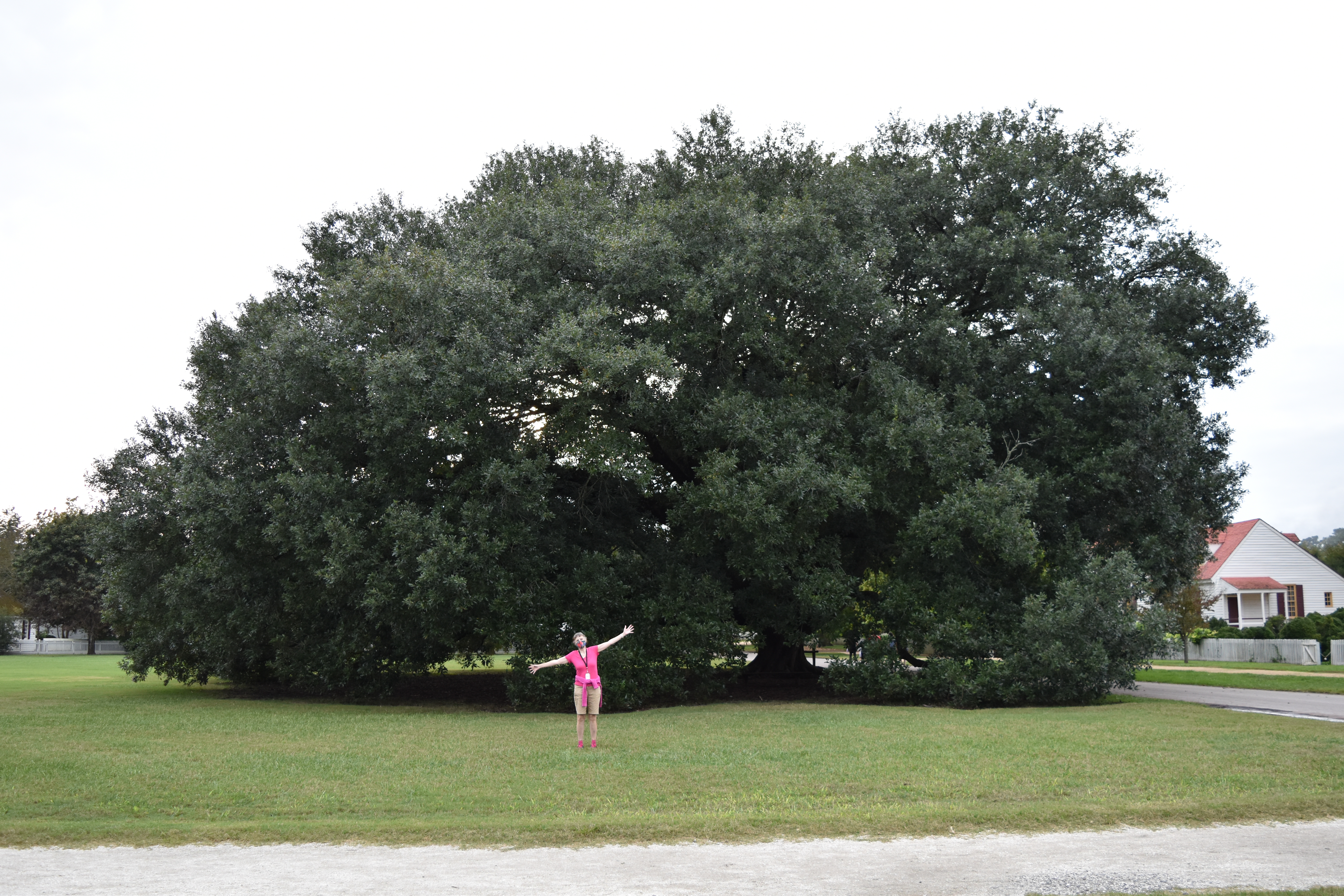
Jenny Rose Carey with her favorite tree at Colonial Williamsburg. It is a Compton Oak.
Bye for Now Gardening Friends. I hope that you visit Colonial Williamsburg to see the gardens, plants, buildings, and other treasures. Cheers, Jenny Rose Carey



Leave a Reply